

Merchant Account Comparison: How to Choose the Best Merchant Account for Your Business
Nov 4, 2026 | By Oliver Bennett
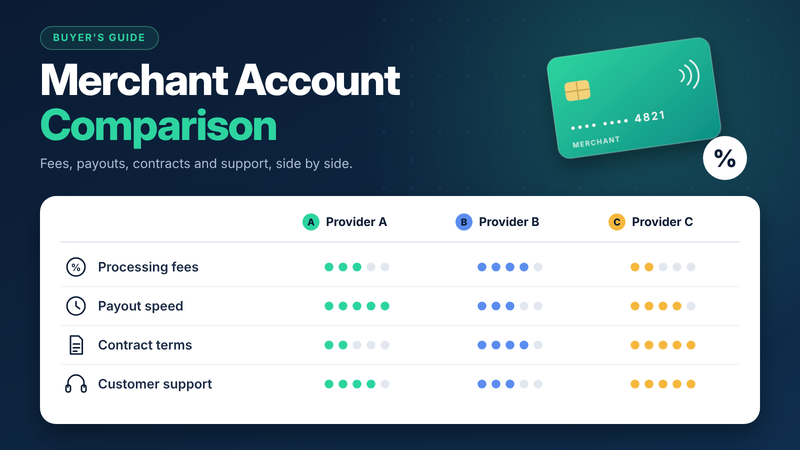
Choosing the right merchant account is important for any business that wants to accept card payments. Whether you run a small shop, an online store, a restaurant or a large company, you need a reliable payment system that makes it easy for customers to pay.
 Follow us
 Follow us
However, choosing a merchant account can be confusing. Different providers have different transaction fees, monthly charges, payment options and contract terms. Some are designed for small businesses, while others offer more advanced services for larger companies.
A merchant account comparison helps businesses understand these differences and find a provider that suits their needs and budget. Comparing different options can also help you avoid extra costs and choose a payment service that supports your business as it grows.
In this guide, we look at what merchant accounts are, which providers are worth considering and what you should check before choosing one.
RECOMMENDED FOR YOU

How to Start a Business with ChatGPT: Ideas, Marketing, and Growth
Oliver Bennett
Sep 14, 2026

How UK Entrepreneurs Drive Economic Growth and Create Jobs
Oliver Bennett
Oct 19, 2026
What Is a Merchant Account?
A merchant account is a business account that allows companies to accept payments through credit cards, debit cards and other payment methods.
When a customer pays by card, the payment provider processes the transaction. The money is then transferred to the business's bank account after the payment has been approved and settled.
Merchant accounts are commonly used by:
- Retail shops and supermarkets.
- Online stores and e-commerce businesses.
- Restaurants, cafés and hotels.
- Freelancers and service providers.
- Subscription-based businesses.
- Companies that accept payments over the phone.
Some providers offer traditional merchant accounts, while others combine payment processing and payment gateway services in one platform.
Why Is Merchant Account Comparison Important?
Not all merchant account providers offer the same prices and services. One provider may have low transaction fees but charge a monthly subscription. Another may charge slightly higher transaction fees but offer more useful features.
Comparing providers can help businesses:
- Save money: Find lower transaction fees and avoid unnecessary charges.
- Offer more payment options: Choose a provider that accepts different types of payments.
- Understand contract terms: Check cancellation fees and minimum contract periods.
- Receive payments faster: Compare how quickly providers transfer money into business accounts.
- Choose the right technology: Find payment systems that work with existing websites, tills and business software.
- Improve payment security: Choose providers with fraud protection and secure payment features.
A proper comparison helps you find a service that offers good value instead of simply choosing the cheapest option.
Merchant Account Comparison: Providers to Consider in 2026
There are several merchant account providers in the UK. Each offers different payment services, pricing and features. Here are five providers businesses can consider.
1. Square – Best for Small Businesses
Square provides card payment services, card readers and point-of-sale (POS) software. It is a useful option for small shops, cafés, restaurants and service providers that want a simple way to accept payments.
Square's standard UK pricing includes a 1.75% fee for in-person card payments and 1.4% plus 25p for online payments made with UK cards. Its basic plan does not have a monthly subscription fee. However, businesses still need to pay transaction fees and any applicable hardware costs.
2. Stripe – Best for Online Businesses
Stripe is a popular payment platform for online shops, subscription services and businesses that accept payments through websites and mobile apps.
It supports online payments, recurring payments and international transactions. It also connects with different e-commerce platforms and business tools.
Stripe's standard UK pricing for domestic cards is 1.5% plus 20p per successful transaction. Its basic payment processing service does not have a standard monthly subscription fee.
3. SumUp – Best for Startups and Mobile Businesses
SumUp offers portable card readers and payment services for small businesses, freelancers, market traders and mobile service providers.
Its card readers allow businesses to accept contactless, chip and PIN payments. SumUp also offers different pricing plans, including pay-as-you-go options and subscriptions.
This gives small businesses the flexibility to choose a plan based on how often they accept card payments.
4. Worldpay – Best for Established Businesses
Worldpay provides card payment services for businesses that accept payments in physical shops and online.
Its services include card machines, online payment processing and other merchant services. Worldpay offers different pricing plans depending on the business and its payment needs.
Businesses usually need to request a quote to understand the transaction fees, monthly charges and contract costs.
5. Adyen – Best for Growing and International Businesses
Adyen provides payment processing services for businesses that operate in different countries and sell through multiple channels.
Its platform supports online, in-store and mobile payments. Businesses can also accept different payment methods and currencies through one system.
Adyen charges a processing fee along with a fee based on the payment method. It can be a suitable option for growing companies and businesses that handle international payments.
Merchant Account Comparison Table
The following table gives a quick overview of the five providers and their main features.
Provider Best For Main Features Square Small businesses POS software, card readers and online payments Stripe Online businesses Online payments and recurring billing SumUp Startups and mobile sellers Portable card readers and simple payment processing Worldpay Established businesses Online and in-store payment services Adyen International businesses Multiple payment methods and international payments
These providers have different pricing structures and services. Some combine payment processing and account services, while others offer more traditional merchant account arrangements.
Always check the latest prices and request a quote before choosing a provider.
Key Factors to Compare Before Choosing a Merchant Account
Looking at provider names and prices is not enough. Businesses should check several important factors before signing an agreement.
1. Transaction Fees
Transaction fees are among the main costs of accepting card payments. Providers may charge a percentage of each payment, a fixed amount or a combination of both.
Some providers also charge different rates for online and in-store payments. Payments made with international or business cards may cost more.
Compare the fees based on the types of payments your business receives most often.
2. Monthly and Setup Fees
Some providers offer payment processing without monthly charges. Others may charge a monthly service fee.
Before choosing a provider, check for extra costs such as:
- Account setup fees.
- Monthly service charges.
- Payment gateway fees.
- Card machine rental.
- Software subscription fees.
- PCI compliance charges.
These costs can increase your total payment expenses, so it is important to understand them in advance.
3. Payment Processing Time
Settlement time means how long a provider takes to transfer payment money into your business bank account.
Some providers offer next-day payouts, while others may take several working days.
Faster payments can help small businesses manage their daily expenses and cash flow. Ask each provider about its normal payout time, weekend payments and any charges for faster transfers.
4. Supported Payment Methods
Customers want simple and convenient ways to pay. A good payment provider should support the methods your customers use regularly.
Check whether the provider accepts:
- Visa and Mastercard.
- Debit and credit cards.
- Contactless payments.
- Apple Pay and Google Pay.
- Digital wallets.
- Online and recurring payments.
If you sell products or services internationally, check whether the provider supports foreign currencies and payments from other countries.
Read Also- Sara Davies Net Worth 2026: How the Dragons’ Den Star Built Her £37 Million Business Empire
5. Security and Fraud Protection
Payment security is important for every business. Companies need to protect customer payment details and reduce the risk of fraud.
Look for providers that offer secure payment processing, encryption, fraud monitoring and customer authentication tools.
Businesses that handle card information must also follow PCI DSS (Payment Card Industry Data Security Standard) requirements. Using a payment provider does not remove every security responsibility from the business.
6. Contract Terms and Customer Support
Always read the contract before choosing a merchant account. Some providers offer flexible payment services, while others may require a minimum contract period.
Check the following:
- Cancellation fees.
- Contract length.
- Automatic renewals.
- Minimum monthly charges.
- Card machine rental agreements.
Customer support is another important factor. If your payment system stops working, you need help quickly to avoid losing sales.
How to Choose the Best Merchant Account for Your Business
The best merchant account depends on your business size, monthly sales and the way you accept payments.
Here are some simple recommendations:
- Small businesses: Consider Square or SumUp for simple payment services and entry-level pricing.
- Online stores: Stripe is worth considering because of its online payment features and integrations.
- Retail shops: Compare Square, SumUp and Worldpay for card machines and in-store payments.
- Restaurants and cafés: Look for providers that offer POS systems, contactless payments and sales management tools.
- International businesses: Consider Adyen for businesses that need multiple currencies and international payment options.
- Growing companies: Compare providers that offer flexible pricing, detailed reports and support for higher payment volumes.
Before making a decision, calculate your monthly card sales and average transaction value. Ask at least three providers for quotes using the same business details. This will make it easier to compare their actual costs.
FAQs
1. What is the best merchant account for a small business?
Square and SumUp are worth considering for small businesses because they offer simple payment services and flexible options. The right choice depends on your sales volume, payment needs and budget.
2. How much does a merchant account cost in the UK?
Merchant account costs depend on the provider and the services you choose. Businesses may need to pay transaction fees, monthly charges, setup costs, card machine rental and payment gateway fees. Some providers offer basic services without monthly subscription fees.
3. What is the difference between a merchant account and a payment gateway?
A merchant account is used to receive and process card payments before the money reaches the business bank account. A payment gateway securely transfers payment information between the customer, business and payment processor.
Some modern payment providers offer both services together.
4. Can a small business get a merchant account?
Yes. Small businesses, freelancers, sole traders and startups can apply for merchant services. Providers may check the business type, expected sales, transaction volume and financial details before approving an application.
5. Are merchant accounts better than payment service providers?
Neither option is always better. Traditional merchant accounts may offer customised pricing for businesses with higher sales volumes. Payment service providers often offer easier setup and simpler pricing for smaller businesses.
The best choice depends on your business size, payment needs and expected sales.
Conclusion
A merchant account comparison helps businesses find a payment provider that offers the right combination of affordable fees, useful features and reliable service.
Square and SumUp are good options to consider for smaller businesses, while Stripe is suitable for online sellers. Worldpay may work well for established businesses, and Adyen is worth considering for companies that accept international payments.
Before choosing a provider, compare transaction fees, monthly charges, payment settlement times, security features and contract terms. The cheapest option is not always the best.
A good merchant account should make it easier to accept payments, improve the customer experience and support your business as it grows.
SEO Meta Title: Merchant Account Comparison: Best Providers for Businesses in 2026
Meta Description: Compare merchant accounts in the UK. Explore fees, features, payment options and leading providers to find the right solution for your business.
Suggested URL Slug: merchant-account-comparison
Primary Keyword: Merchant Account Comparison
Related Keywords:
- Best merchant accounts
- Merchant account providers
- Merchant account fees
- Compare merchant services
- Small business merchant accounts
- UK payment processing providers
Recommended Stories for You

Oliver Bennett Sep 12, 2026

Team SR Jan 6, 2025

Olivia James Oct 6, 2026

Oliver Bennett Jan 3, 2025

Oliver Bennett Sep 19, 2026

Kailee Rainse Sep 26, 2026
Trending Stories
Business Credit Cards For Startups

Unique Business Ideas In Marseille For 2024

Top Incubators And Accelerator Of UK

Startup Ecosystem Of Netherlands

List of European Ecommerce Unicorn

How To Start A Business Uk?

Grants From The Government To Start A Business

Passive Income Business Ideas 2024