

How to Start a Social Enterprise Business: A Complete Guide
Nov 14, 2026 | By Oliver Bennett
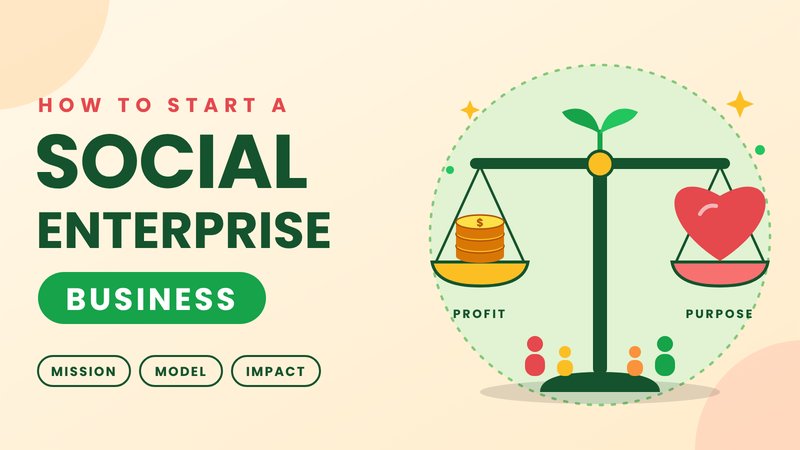
A social enterprise business is a business that earns money while working to solve a social or environmental problem. Like a normal business, it sells products or services to customers. However, its main goal is not just to make money. It also wants to make a positive difference in people's lives or protect the environment.
 Follow us
 Follow us
For example, a business that employs women from rural areas to make handmade products is a social enterprise. It earns money by selling those products while also creating jobs and supporting local communities.
Similarly, a company that collects plastic waste and turns it into reusable products helps reduce pollution while earning revenue.
The Social Enterprise Academy India explains that social enterprises use business activities to create positive changes in society and the environment. They usually earn money by selling products or services and use their profits to support their mission.
RECOMMENDED FOR YOU

Moldova’s Startup Scene Soars: Tax Fast Registration and Female Leadership Lead the Way
Kailee Rainse
May 8, 2025


In simple terms, a social enterprise aims to make money while doing something good for society.
How Does a Social Enterprise Business Work?
A social enterprise works much like a regular business. It creates a product or service, finds customers, sells its offerings and earns money. The main difference is that it also focuses on solving a social or environmental problem.
For example, a social enterprise working with farmers may provide them with better tools, training and access to markets. Farmers get support, while the business earns money by selling agricultural products or offering services.
Most social enterprises follow these basic principles:
- Social purpose: They work to solve a particular problem in society or the environment.
- Earning money: They sell products or services to generate income.
- Using profits: They use some or most of their profits to support their social mission.
- Measuring results: They check how their work helps people or the environment.
- Long-term growth: They try to earn enough money to keep their business running without depending only on donations.
This model helps social enterprises grow their businesses while creating positive changes.
Types of Social Enterprise Businesses
Social enterprises can work in many industries. Their main focus depends on the problem they want to solve.
Here are some common types of social enterprise businesses.
1. Education and Skill Development
These businesses help people get access to affordable education and training. They may offer online courses, computer classes, job training and skill development programmes.
For example, a company that provides low-cost computer training to students in rural areas can help them learn digital skills and find better job opportunities.
2. Healthcare and Wellbeing
Healthcare social enterprises work to make medical services and health information more affordable and accessible.
They may offer low-cost health check-ups, online doctor consultations, affordable medical equipment and healthcare services in areas where facilities are limited.
3. Agriculture and Rural Development
These businesses help farmers and rural communities improve their income and working conditions.
They may provide better farming tools, training, technology and access to markets. Some also help farmers sell their products directly to customers instead of depending on several middlemen.
4. Environment and Waste Management
These social enterprises focus on protecting the environment and reducing waste.
For example, they may collect and recycle plastic, turn agricultural waste into useful products, sell reusable packaging or provide affordable renewable energy solutions.
5. Employment and Women's Empowerment
Some social enterprises create job opportunities for people who find it difficult to get regular employment.
They may employ women, people with disabilities, rural workers and people from low-income communities. Along with jobs, these businesses can also provide training and help workers develop new skills.
Examples of Social Enterprise Businesses
Several organisations show how businesses and social work can come together.
- Goonj: An Indian organisation that supports rural communities by connecting unused materials from cities with people who need them.
- SELCO India: Works to make sustainable energy solutions available to people and communities with limited access to electricity.
- Mirakle Couriers: An Indian social enterprise that creates employment opportunities for people with hearing and speech disabilities.
- Barefoot College: Works with rural communities through education, skill training and projects such as solar energy programmes.
These organisations show that social enterprises can work in different industries and help solve real problems.
Benefits of Starting a Social Enterprise Business
Starting a social enterprise can benefit both the business owner and the people or communities it supports.
1. Helps Society
A social enterprise can work on problems such as unemployment, lack of education, limited healthcare facilities and pollution. Its business activities help address these issues.
2. Earns Its Own Income
Many social enterprises make money by selling products or services. This income helps them pay their expenses and continue their work without depending completely on donations.
3. Supports Local Communities
These businesses can create jobs, support small producers and make important services more accessible. This can also help improve local economies.
4. Builds Customer Trust
Many customers prefer businesses that care about people and the environment. A genuine social mission can help a business build a good reputation and attract loyal customers.
5. Creates Partnership Opportunities
Social enterprises can work with NGOs, government organisations, companies, investors and community groups. These partnerships can help them get funding, reach more people and grow their business.
How to Start a Social Enterprise Business
Starting a social enterprise requires proper planning, just like starting any other business. However, you also need a clear goal for the social or environmental change you want to create.
Here are the main steps to follow.
1. Find a Social or Environmental Problem
First, decide which problem you want to solve. It could be related to education, healthcare, unemployment, waste management, farming or clean energy.
Research the problem and understand who is affected by it. Talk to local people and potential customers to learn what kind of help they need.
2. Develop a Business Idea
After choosing a problem, think about a product or service that can help solve it.
For example, if farmers are struggling to find buyers, you could create a platform that connects them directly with customers. If plastic waste is a major issue, you could start a business that turns discarded plastic into reusable products.
Your idea should solve a real problem and have a clear way to earn money.
3. Prepare a Business Plan
Create a business plan that explains what your enterprise will do and how it will work.
Include your business goal, target customers, products or services, pricing, startup costs and expected income.
You should also decide how you will measure the positive changes created by your business. A clear plan can help you approach investors, partners and other supporters.
Read Also- 15 Best Small Business Ideas in Europe in 2026: Low-Investment Opportunities
4. Choose the Right Legal Structure
In India, social enterprise is not a separate legal business category. You can register your organisation under a suitable structure based on your business model and funding needs.
Some common options include:
- Private limited company: Suitable for businesses that want to grow commercially and raise investment from shareholders.
- Section 8 company: A non-profit company registered under the Companies Act, 2013. It works towards goals such as education, social welfare and environmental protection. It cannot distribute profits as dividends.
- Trust or society: Often used for charitable and community-focused activities.
- Cooperative: Allows a group of people to work together and share benefits under the applicable rules.
Choose a structure that matches your goals, funding plans and the way you want to use your income. It is a good idea to take legal and tax advice before registering.
5. Arrange Funding
You need money to start and run your social enterprise. The funding options depend on your business model and legal structure.
You can consider personal savings, business loans, government grants, crowdfunding, impact investors and equity investment.
In India, eligible organisations can also explore funding opportunities through the Social Stock Exchange framework. However, they must meet the relevant SEBI rules and eligibility requirements.
6. Start Your Business and Track Its Impact
Start with a small project or service to test your business idea. Collect feedback from customers, check your expenses and make improvements where needed.
It is also important to measure your social impact. For example, a business focused on employment can track how many jobs it has created. A waste management enterprise can measure how much waste it has collected or recycled.
This will help you understand whether your business is achieving its main goal.
Social Enterprise vs Traditional Business
| Feature | Social Enterprise | Traditional Business |
|---|---|---|
| Main focus | Social or environmental benefits | Financial returns |
| Revenue | Sales of products or services | Sales of products or services |
| Use of profits | Supports its social mission | Usually benefits owners or shareholders |
| Success | Business growth and social impact | Mainly financial performance |
| Main goal | Earn money while creating positive change | Grow the business and make profits |
A social enterprise can make a profit just like a traditional business. The main difference is that its social mission is an important part of its business decisions and how it uses its profits.
Challenges of Running a Social Enterprise
Running a social enterprise can be rewarding, but it also comes with some challenges.
One of the biggest challenges is managing both business expenses and social goals. The enterprise needs to earn enough money to survive while also making a positive difference.
Finding funding can also be difficult, especially when the business is new. Some customers may not be willing to pay for certain products or services. Measuring social impact can also take time and effort.
Competition from larger businesses can make things more difficult. To manage these challenges, social enterprises need a clear business plan, careful financial management and strong relationships with the communities they support.
Conclusion
A social enterprise business is a way to earn money while helping people or protecting the environment. It combines business activities with a clear social mission and works on issues such as unemployment, poor access to education, healthcare problems and pollution.
To start one, you need to find a real problem, develop a useful business idea, prepare a business plan and choose the right legal structure. You should also make sure your business can earn enough money to continue its work.
With good planning and a clear purpose, a social enterprise can become a successful business while creating long-term benefits for society.
Frequently Asked Questions (FAQs)
1. What is a social enterprise business in simple words?
A social enterprise is a business that earns money by selling products or services while working to solve a problem affecting society or the environment.
2. Can a social enterprise make a profit?
Yes. A social enterprise can make a profit. However, its main goal is to create social impact, and it generally uses a significant part of its surplus to support its mission.
3. What are some examples of social enterprises in India?
Goonj, SELCO India, Mirakle Couriers and Barefoot College are examples of Indian organisations that work towards social or environmental goals.
4. How do social enterprises get funding?
They can get money through business sales, loans, grants, crowdfunding, impact investors and eligible investment programmes. The available options depend on their legal structure.
5. Is a social enterprise the same as an NGO?
No. Many NGOs mainly depend on donations and grants, while social enterprises usually earn money by selling products or services. Some organisations may combine business activities with non-profit work.
6. How can I start a social enterprise in India?
First, identify a social problem and develop a business idea to address it. Then prepare a business plan, choose a suitable legal structure, arrange funding and start operations. You should also track the positive changes your business creates.
Recommended Stories for You

Kailee Rainse Dec 23, 2024

Oliver Bennett Nov 9, 2023

Oliver Bennett Oct 14, 2024

Team SR Jun 30, 2024
Oliver Bennett Oct 11, 2024

Oliver Bennett Jun 1, 2024
Trending Stories

Unique Business Ideas In Marseille For 2024

Grants From The Government To Start A Business

Leading AI Startup in Europe

Unique Business Ideas in Luxembourg

Unique Business Ideas In Amsterdam For 2024

Best Startup Industries In 2024 – 2025

Best AI Content Detector Tools

Series A Funding NEWS Europe – July 2024