

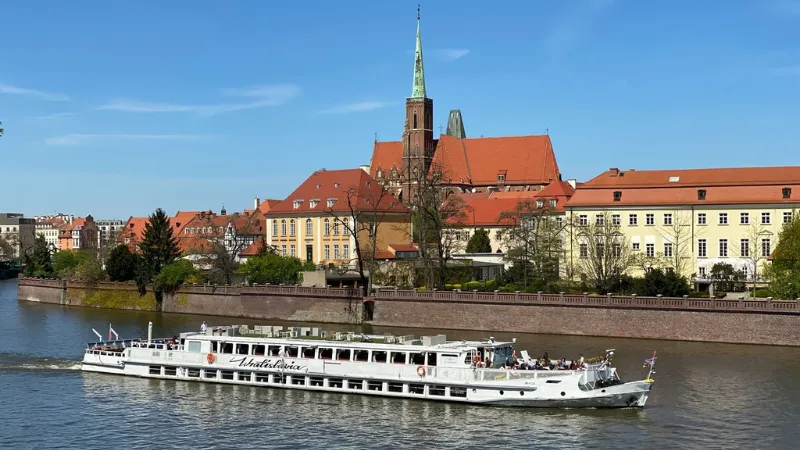
A growing number of London-based startups are rethinking how they bring remote and hybrid teams together. Instead of flying employees to conference centres or beach resorts, companies are choosing slow travel routes across Europe that prioritise connection over speed.
 Follow us
 Follow us
The shift reflects broader changes in workplace culture where intentional experiences trump efficiency, and where the journey itself becomes part of the team-building process.
As reported, 91% of offsite organizers operate in remote or hybrid models, underscoring the role offsites play in bridging physical and cultural gaps.
With distributed teams now the norm rather than the exception, businesses are seeking alternatives to quick corporate getaways. Slow travel routes, which emphasise overland transport, cultural immersion, and gradual movement through landscapes, are emerging as a compelling solution for fostering genuine collaboration.
RECOMMENDED FOR YOU
Hospitality Startups: How Advanced Education Gives You a Competitive Edge
Team SR
Jul 23, 2026


A Question People Actually Search: Why Does Recovery From Surgery Take So Long?
Team SR
Sep 19, 2026
Why Startups Are Choosing Slow Routes
The appeal lies in what happens between destinations.
These companies report that the quality of in-person interaction at these planned gatherings exceeds the quality of daily office interaction because every minute together is purposeful.
Train journeys that wind through the Rhine Valley or follow the Danube through multiple capitals create unscripted moments where colleagues can converse without scheduled agendas. The slower pace allows relationships to develop organically.
One London fintech startup recently organised a weeklong offsite from London to Budapest, travelling via Eurostar, regional trains, and river ferries. Rather than arriving at a destination exhausted from flights, the team used travel days as working sessions, brainstorming workshops, and informal check-ins. Colleagues who rarely spoke beyond Slack messages found themselves sharing meals in Strasbourg station cafés and discussing product strategy whilst crossing the Austrian Alps.
Places that have rich history offer a unique backdrop for these slower journeys. The pace creates space for teams to decompress, connect, and reflect away from the urgency that defines startup life in the capital.
European Cities by Rivers That Draw Remote Teams
Europe's most visited cities often sit along major waterways, making them natural waypoints for slow travel itineraries.
The Danube is Europe's second-longest river and one of its most captivating. Stretching through 10 countries and four iconic capital cities, Belgrade, Bratislava, Budapest and Vienna, it offers an unforgettable journey through the heart of Europe.
These cities attract remote teams seeking both cultural richness and logistical convenience.
Europe received over 793 million international arrivals in 2025, surpassing pre-pandemic levels.
Many of these visitors travelled to river cities that combine historic architecture with reliable transport links.
Paris, also known as the City of Light, is the most visited city in Europe, with more than 30 million visitors a year. It also has several world heritage sites, including the banks of the River Seine.
London startups frequently choose Paris as a starting point before moving eastwards through France and Germany.
Amsterdam's canals make it another popular choice.
Despite its relatively small size, Amsterdam is still a major European tourism destination thanks to its beautiful architecture, lovely canals, and liberal social policies.
The city serves as both a destination and a departure point for teams heading to the Rhine corridor or Dutch Waterways.
The Logistics of Overland Corporate Travel
Planning a slow offsite requires more coordination than booking flights and hotel blocks. Teams must navigate rail connections, arrange accommodation along routes, and build flexibility into schedules. Yet many founders report the effort is worth the payoff.
Modern trains produce far fewer emissions per passenger than aircraft, making rail travel one of the most sustainable ways to explore multiple European countries. River cruise options can also complement rail journeys, offering immersive travel experiences through scenic landscapes.
Startups are partnering with travel agencies that specialise in sustainable group travel and workation planning. These providers handle the complexity of multi-country itineraries whilst allowing companies to maintain their own agenda. Some routes incorporate coworking spaces in cities like Prague, Vienna, and Krakow, where teams can settle for a few days between travel legs.
The infrastructure supports this approach.
Eurostar saw ridership surpass 30 million passengers in 2023, and overnight rail routes across Europe have expanded so quickly that operators are struggling to keep pace with demand.
Increased frequency and improved connections make it easier for groups to move between regions without the friction that once made overland travel impractical for business purposes.
Productivity Gains From Slowing Down
The business case for slow travel extends beyond sustainability optics.
These gains materialize gradually, highlighting the importance of adopting a long-term perspective when evaluating remote work policies and investments, as the full productivity benefits may not be immediately apparent but could be substantial over time.
Offsites that prioritise gradual movement and shared experiences create stronger team cohesion than short bursts of activity at resort hotels.
Research from the U.S. Bureau of Labor Statistics has explored connections between remote work arrangements and productivity metrics. Whilst findings vary across industries, studies consistently show that intentional face-to-face time supports collaboration quality. Slow travel offsites provide that face-to-face time in environments that reduce stress and encourage creativity.
Studies on wellbeing suggest that slowing down during travel has measurable mental health benefits.
Slow adventure has the potential to improve people's general health and wellbeing through mindful enjoyment and consumption of the outdoor experience and thus bring people back to a state of mental and physical equilibrium.
For startup employees accustomed to constant urgency, the enforced slowness of train travel becomes a feature rather than a bug.
What This Means for Startup Culture
The shift towards slow travel offsites signals deeper changes in how startups think about team development. Speed and efficiency, long considered startup virtues, are being balanced with sustainability and intentionality. Companies that adopt slow travel for offsites often find the philosophy bleeds into other areas of operations, from product development timelines to hiring practices.
London's position as a European startup hub makes it an ideal launching point for these journeys.
The city continues to rank among the top three global startup ecosystems, following only San Francisco and New York thanks to its dynamic blend of talent, capital and infrastructure.
That connectivity extends to transport links. Within hours of leaving London, teams can be on the continent, beginning routes that take them through multiple countries over days or weeks.
The trend also reflects generational shifts.
With better access to funding, remote work, and digital tools, entrepreneurs will be able to launch and scale ideas faster than ever before. With the rise of remote work, cross-border investment, and digital tools, the startup ecosystem is more connected and global than ever before.
Younger founders and employees increasingly prioritise experiences and sustainability over conventional corporate perks. Slow travel offsites align with those values whilst serving legitimate business purposes.
Challenges and Adaptations
Not every company finds slow travel practical. Time constraints, budget considerations, and team size all factor into decision-making. Larger organisations may struggle to coordinate complex itineraries for dozens of employees. Startups with tight runways might view the time investment as unaffordable compared to quick flight-based offsites.
However, advocates argue that slow travel need not mean extended absence. Even a three-day journey from London to Amsterdam via Brussels can provide meaningful connection time whilst remaining manageable for most teams. The key is intentionality rather than duration.
Weather and seasonal factors also influence planning. Summer sees higher demand for trains and accommodation along popular routes. Shoulder seasons in spring and autumn often provide better availability and more comfortable conditions for travel-based offsites.
The Future of Corporate Offsites
As remote and hybrid work become permanent fixtures, the offsite has evolved from occasional team perk to strategic necessity. Slow travel represents one answer to the challenge of maintaining culture across distributed teams. By turning travel itself into a bonding experience, companies create shared memories that extend beyond conference rooms and hotel lobbies.
The approach won't replace all corporate travel. Urgent client meetings and industry conferences still require speed and efficiency. But for the specific purpose of team building, slow routes offer advantages that justify the additional planning and time investment.
London startups pioneering this approach are setting patterns that others will likely follow. As transport infrastructure continues improving and sustainability becomes non-negotiable, slow travel offsites may become the norm rather than the exception. The shift reflects a maturing startup culture, one that recognises lasting teams aren't built in a day but gradually, through shared experiences and intentional time together.
Recommended Stories for You

Team SR Sep 4, 2026

Team SR Mar 6, 2026


Team SR Apr 24, 2026

Team SR Jun 25, 2026

Team SR Mar 30, 2026
Trending Stories

A Startup Founder’s Guide to Choosing the Right Digital Growth Channels

Technical Applications for Modernizing Oil and Gas

What Free Really Means When You Register an LLC: State Fees, Service Fees, and First-Year Tools

How to Choose a Nonprofit Board Seat That Fits Your Life, Not Just Your Calendar
Winning New Customers: How FinTech Startups Can Stand Out In A Competitive Market
From Spreadsheet to WhatsApp: Smarter Follow-Up for Growing Teams

From First Apartment to Graduation: What Students Need From a Boston Property Manager

The Business Behind The Job: What Customers Never See In A Construction Company