

The Compliance Checklist Every Toronto Startup Forgets — Until It’s Too Late
Jun 9, 2026 | By Team SR
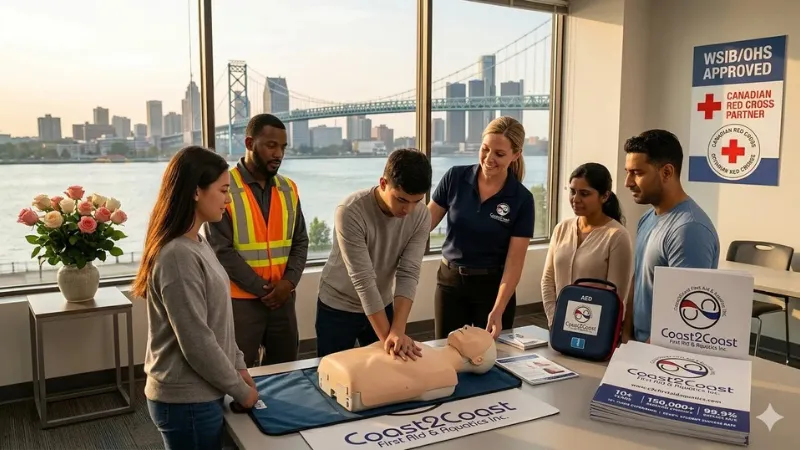
Toronto is Canada’s undeniable startup capital. From the massive innovation hubs at the MaRS Discovery District to the hyper-agile tech collectives operating out of restored brick-and-beam lofts in Liberty Village, the city is a global powerhouse of entrepreneurship. Founders obsess over product-market fit, venture capital term sheets, burn rates, and intellectual property. Yet, amidst all this meticulous corporate planning, the most critical operational requirement is completely ignored. To truly protect your team and legally secure your business, you must book Coast2Coast workplace first aid training in Toronto. Human capital is a startup's most valuable asset, and failing to protect the physical lives of your early employees is the ultimate operational failure.
 Follow us
 Follow us
In the chaotic, fast-paced world of early-stage startups, health and safety protocols are often viewed as archaic red tape meant for heavy manufacturing companies or large enterprise corporations. Startup culture prides itself on being disruptive and unconventional. We fill our open-concept offices with bean bag chairs, ping-pong tables, catered snacks, and espresso machines. We build environments designed to maximize creativity and output, but we operate under a highly dangerous illusion: the assumption that a comfortable, modern office is inherently immune to severe medical emergencies.
When a lead developer collapses from sudden cardiac arrest during a late-night coding sprint, or your co-founder begins choking during a team lunch, venture capital funding and user acquisition metrics instantly cease to matter. The only metric that dictates survival is whether the people in the room possess the physical capability, the training, and the psychological clarity to step in and save a life before Toronto emergency services can navigate through the downtown gridlock.
The WSIB 2026 Modernization: The Legal Reality Check
Beyond the profound moral imperative of protecting your founding team, there is a strict, uncompromising legal framework governing workplace safety in Ontario. Startups are not exempt from the law. The Workplace Safety and Insurance Board (WSIB) dictates that every single business with employees on a payroll must strictly adhere to Regulation 1101.
RECOMMENDED FOR YOU

Right Fuel Card Review 2026: Keeping Fuel Costs Predictable As You Scale
Team SR
Aug 13, 2026


More importantly, June 2026 marks a massive, historic shift in Ontario's safety regulations. The WSIB has officially launched its modernized First Aid Program, aligning the province with the national CSA Z1210:24 standards. If your operations manager or HR lead is unaware of this transition, your startup is likely already operating out of compliance.
Under these newly standardized Canadian training guidelines, the old certification terminology has been permanently retired and replaced to provide clearer definitions of an employee's medical capability.
- What was formerly known as Emergency First Aid is now Basic First Aid.
- What was previously called Standard First Aid is now Intermediate First Aid.
Ontario WSIB First Aid Requirements (Per Shift, Per Location)
| Number of Employees Present | Minimum Legal Certification Requirement |
| 1 to 5 workers | At least one employee holding a valid Basic First Aid certificate. |
| 6 to 15 workers | At least one employee holding a valid Intermediate First Aid certificate. |
| 16 to 200 workers | At least one employee holding an Intermediate First Aid certificate, plus a dedicated first aid station. |
| 200+ workers | Intermediate First Aid certified personnel, plus a fully equipped, dedicated First Aid Room. |
These legal requirements apply per shift and per physical location. Startups are notorious for having irregular hours, with engineers working late into the night or coming in on weekends. You cannot rely on a single certified office manager who only works from 9:00 AM to 5:00 PM. You must cultivate a widespread network of trained professionals across your entire organization to ensure seamless, continuous legal compliance regardless of who is burning the midnight oil.
The 4 Hidden Hazards of the Startup Ecosystem
There is a lingering misconception that severe medical emergencies only happen to roofers, construction workers, or heavy machinery operators. In reality, the modern startup environment introduces a highly specific, often invisible set of intense health risks.
When you connect the dots between "hustle culture" and human physiology, the need for comprehensive safety training becomes undeniable.
1. The "Crunch" Culture Crisis: Sudden Cardiac Arrest
Startups survive on intense momentum. The relentless stress of product launches, consecutive hours spent staring at monitors, massive caffeine intake, and predominantly sedentary lifestyles heavily strain the cardiovascular system. Sudden Cardiac Arrest (SCA) happens when the heart's internal electrical system violently short-circuits, causing the employee to collapse instantly.
- The Required Intervention: Your team must act immediately. Training teaches them how to safely lower their colleague to a hard floor, aggressively delegate someone to dial 911, and begin high-quality chest compressions. By pushing hard and fast in the center of the chest (5 to 6 cm deep at 100 to 120 beats per minute), they act as a manual pump, keeping the patient's brain oxygenated. Furthermore, staff will learn how to confidently deploy an Automated External Defibrillator (AED) to deliver a life-saving electrical shock.
2. The Free Lunch Hazard: Silent Choking
Catered lunches, breakroom snacks, and working through meals are staples of the startup experience. Employees are eating quickly between video pitches, talking rapidly with coworkers, and often walking while chewing. When a piece of food completely blocks an airway, the victim cannot cough, speak, or scream for help.
- The Required Intervention: First aid training teaches your team how to quickly identify the universal, silent signs of choking (hands clutching the throat, panicked wide eyes). They will learn how to immediately administer a sequence of firm back blows and forceful abdominal thrusts (the Heimlich maneuver) to mechanically force the obstruction out of their coworker's trachea, resolving a lethal situation in under sixty seconds.
3. Stress-Induced Neurological Events: Strokes and Seizures
The extreme psychological pressure of securing funding, defending against cyber-attacks, or managing a major public relations crisis can trigger severe strokes in vulnerable individuals. Additionally, the intense visual stimulation of multiple monitors and prolonged screen exposure can trigger severe migraines or even photosensitive seizures.
- The Required Intervention: Training empowers your staff to spot the subtle, early warning signs of these crises. They will learn the FAST acronym to identify a stroke (Face drooping, Arm weakness, Speech difficulty, Time to call 911). For seizures, they will learn exactly how to clear the physical area of hazards (pushing away sharp desks and rolling chairs), cushion the person's head, and place the individual in the safe recovery position once the convulsions have ceased.
4. Hardware Lab and Fulfillment Traumas
If your startup is developing physical hardware, robotics, or managing your own direct-to-consumer fulfillment warehouse, kinetic trauma is a daily risk. A slip on a loading dock, a fall from a step-ladder, or a severe laceration from a box cutter can instantly cause catastrophic injuries.
- The Required Intervention: Employees learn that the standard adhesive bandages found in basic office kits are utterly useless for major trauma. They are taught how to apply aggressive, continuous direct pressure to a deep wound using heavy trauma pads, how to properly splint suspected fractures, and how to treat the injured worker for clinical shock by keeping them warm and lying flat until Toronto paramedics arrive.
Rewiring Corporate Culture: Defeating the Bystander Effect
One of the most profound organizational benefits of providing company-wide first aid training is the total elimination of the Bystander Effect.
When an emergency happens in a crowded open-concept office, human nature dictates that everyone assumes someone else—usually a founder or a manager—is going to take charge. This psychological diffusion of responsibility results in paralyzing, lethal inaction. People freeze, and precious minutes are lost.
When a startup actively invests in comprehensive training for a wide margin of its staff, they are essentially installing an emergency operational protocol directly into their workforce. A trained employee does not panic. They replace the profound fear of the unknown with a structured, step-by-step algorithmic response. They learn to assess the scene, delegate tasks with clear authority, and immediately begin physical interventions.
Blended Learning: Agile Training for Agile Teams
The absolute biggest resistance founders have toward implementing wide-scale safety training is the perceived loss of operational productivity. In a business where output is measured in daily sprints, sending a large portion of your core team to sit in a classroom for a full two-day stint is entirely unappealing.
Fortunately, the safety training industry has heavily modernized, creating a system perfectly tailored for the tech sector: The Blended Learning Model.
This model connects the dots between thorough education and operational efficiency. It delivers the maximum amount of critical information with the absolute minimum amount of operational downtime.
- Asynchronous Digital Theory: Employees complete the comprehensive, interactive theoretical modules online through a sleek digital portal. They can complete this entirely at their own pace—whether that is during scheduled professional development hours, between client calls, or from their home office on a remote workday.
- High-Intensity Physical Sprints (In-Person Practice): Once the digital theory is 100 percent complete, the team attends a highly condensed, high-intensity practical session at a training facility in Toronto (or the instructors can be brought directly to your boardroom). Instead of listening to long lectures, they spend the entire session doing hands-on physical practice. They perform compressions on Bluetooth-enabled feedback mannikins, deploy training AEDs, and physically practice bandaging.
By utilizing the blended format, Toronto startups remain fully compliant with Ontario law, drastically increase the safety of their workplace, and sacrifice only a fraction of the billable hours required by traditional, outdated classroom courses.
The Ultimate Cap Table Investment
At its core, a startup is only as valuable as the human beings who write the code, secure the partnerships, and innovate the products. We spend massive amounts of venture capital on team-building retreats, wellness programs, and corporate seminars to boost morale and retention. It is time we start investing that same level of care and resources into protecting the actual physical lives of the people in the room.
Providing employee first aid training is a powerful, undeniable statement of company culture. As your Toronto startup scales its operations and sets aggressive revenue targets for 2026, ensure that your growth strategy includes a robust safety foundation.
Frequently Asked Questions
1. What do the 2026 WSIB First Aid modernization changes mean for my startup?
As of June 2026, the WSIB has aligned Ontario's workplace first aid training with the national CSA Z1210:24 standards. The most notable change is the terminology used for certifications. The old "Emergency First Aid" is now legally referred to as Basic First Aid, and "Standard First Aid" is now known as Intermediate First Aid. Startups must ensure they are booking training under these new names with officially approved WSIB providers to remain compliant with Regulation 1101.
2. Does our remote/hybrid tech workforce in Toronto still need to be certified?
Yes. The WSIB regulations apply directly to the physical workplace. Even if your developers only come into your Toronto office two days a week for collaborative whiteboard sessions, the requirement for trained first aiders applies based on the maximum number of employees physically present on site during any given shift. It is a highly recommended corporate best practice to train a wide surplus of your staff so that regardless of who chooses to come into the office on a hybrid schedule, a certified first aider is always present.
3. If an employee performs CPR on a colleague and they are injured, can our startup be sued?
In Ontario, the Good Samaritan Act protects individuals who voluntarily provide emergency medical assistance. If an employee acts in good faith, within the scope of their training, and is not grossly negligent, they are legally protected from personal liability for damages that result from their life-saving actions. This law exists specifically to encourage bystanders to act confidently without fear of legal retribution.
4. Are startups legally required to have an AED (Automated External Defibrillator) in the office?
While specific industries (like high-risk construction sites under new 2026 regulations) have distinct mandates, the general WSIB Regulation 1101 does not currently mandate the installation of an AED in standard corporate tech offices. However, having an AED is universally considered an essential corporate best practice. When a sudden cardiac arrest occurs, every minute without a defibrillator decreases the chance of survival by 7 to 10 percent. Equipping your startup's office with an AED is one of the most effective safety investments you can make.
Recommended Stories for You


Team SR Feb 23, 2026
Oliver Bennett Dec 29, 2025


Team SR May 8, 2026

Team SR Jul 27, 2026
Trending Stories

Credit Math For An AI Map Generator On Seed Budget

5 technical choices that make the difference between growth and stagnation

Is Gamification as a Service the Next Major Battleground for Startups?

Top 10 Backlink Agencies Businesses Trust for Real Authority
Are Working Students the Quietest Demographic Relying on the Essay Writing Service EssayService.com?

Why UK Startups Need Better Access to Legal Documents as They Scale

How Local Taxi Services Help Keep Highland Tourism Moving

What to Know Before Adding Battery Storage to Your Home