

Strategy Sold 32 Bitcoin. Blockforia on Why That Small Number Sent a Very Large Signal
Jun 23, 2026 | By Team SR

"You do not sell your Bitcoin."
 Follow us
 Follow us
Michael Saylor wrote those words on X in October 2025. They were not a suggestion. They were a creed, a statement of identity from the man who had built his entire corporate legacy on the principle that Bitcoin is accumulated, never liquidated. For five years, Strategy, formerly known as MicroStrategy, had been the world's most committed institutional Bitcoin buyer. Saylor had mocked those who sold. He had borrowed billions to buy more. He had made "never sell" a central part of Bitcoin culture.
Then on June 1, 2026, Strategy filed a Form 8-K with the U.S. Securities and Exchange Commission disclosing that it had sold 32 Bitcoin for approximately $2.5 million in late May.
Thirty-two Bitcoin. Out of 628,791. A rounding error on a balance sheet that size. And yet crypto trading volume spiked within hours of the disclosure.
RECOMMENDED FOR YOU



Why 32 Bitcoin Matters More Than the Number Suggests
The number isn't the story. The signal is.
Strategy's entire identity in Bitcoin markets rests on the premise of unconditional accumulation. Every week for years, Saylor's firm announced new purchases. The MSTR stock price became a leveraged proxy for Bitcoin itself. Institutional investors, retail traders, and Bitcoin commentators all treated Strategy's buying as structural demand, a permanent upward force that would be there regardless of price conditions.
The moment that demand flipped, even fractionally, the market noticed. Bitcoin fell 2.35% on the day of the disclosure. U.S. spot Bitcoin ETFs saw outflows exceeding $1.5 billion, the largest fund exit of 2026, in the days surrounding the announcement. The selling was broad.
What shook traders was not the amount. It was the precedent. A company that had never sold had sold. "Never" turned out to mean "until it didn't."
The Context Saylor Provided
When Saylor addressed the disclosure, he framed it as tactical rather than strategic. On an earnings call preceding the sale, he had said Strategy "will probably sell some Bitcoin to fund a dividend just to inoculate the market." The language was carefully chosen. The sale was presented as a demonstration of flexibility, a way to show skeptics and short sellers that Strategy had options beyond perpetual accumulation.
"The haters, the skeptics and the short-sellers don't recognize that we're just selling a Bitcoin derivative, and we have the option to sell the Bitcoin," he told Fortune magazine.
The framing may be accurate. Strategy's holdings remain enormous, its conviction apparently intact. But the market's reaction illustrated something important about how Bitcoin's largest institutional holder functions as a psychological anchor for the entire market. When Saylor speaks, traders listen. When Strategy moves, markets move. The 32 Bitcoin sale was less about the Bitcoin and more about what it revealed regarding the limits of "never."
A Market Under Pressure
The sale did not occur in a vacuum. Bitcoin had reached an all-time high of approximately $126,000 in late 2025 before declining substantially. By June 2026, it was trading near $72,000, roughly 43% off its peak. U.S.-Iran tensions were feeding a broader risk-off environment. The Bitcoin treasury company model that Saylor had pioneered, and that dozens of smaller public companies had attempted to replicate, was under stress.
Several of those smaller companies had entered the Bitcoin treasury game near the peak. With Bitcoin at a significant discount from that level, their positions were underwater. The model that looked like genius at $100,000 looked considerably more complicated at $70,000.
Strategy itself had issued perpetual preferred shares paying 11.5% annual yields to continue buying. For that structure to work, Bitcoin needed to appreciate faster than the obligations compounded. At current prices, that calculation was not straightforward.
What It Means for Bitcoin Buyers
For anyone watching from the sidelines and considering whether to buy Bitcoin, the Strategy episode illustrates something that gets lost in institutional narratives: conviction has limits, and markets are adaptive.
The long-term case for Bitcoin, its fixed supply, its resistance to debasement, its growing institutional acceptance, remains structurally intact regardless of what Strategy does on any given week. But the idea that any single entity's buying represents a permanent price floor is precisely the kind of assumption that markets eventually test.
Blockforia, operated by BFinance EOOD in Sofia, Bulgaria, provides regulated European access to Bitcoin for users making their own assessments of the market rather than following institutional signals. The platform holds Bulgarian Operating License BB-49 and was founded by a team of Bitcoin technologists, lawyers and auditors focused on compliant, accountable onboarding. For users who want exposure to Bitcoin without leverage, without complexity, and without dependence on what any single company decides to do with its balance sheet, straightforward regulated access remains available.
Bitcoin is a volatile asset. Users should do their own research and understand the financial and regulatory risks before investing. The fact that Strategy sold 32 Bitcoin is information. What you do with it is a different question entirely.
The Lesson in the Number
Strategy holds over 600,000 Bitcoin. It sold 32. The holding is not in jeopardy. But the episode serves as a useful reminder that the largest institutional Bitcoin holders are not custodians of retail investors' money. They are companies with their own financial pressures, their own obligations, and their own strategic calculations.
Bitcoin the asset and Bitcoin the corporate treasury strategy are not the same thing. Understanding the difference matters more when prices are falling than when they are rising. That distinction, obscured during bull markets, tends to become visible precisely when you most need to have already understood it.
Recommended Stories for You
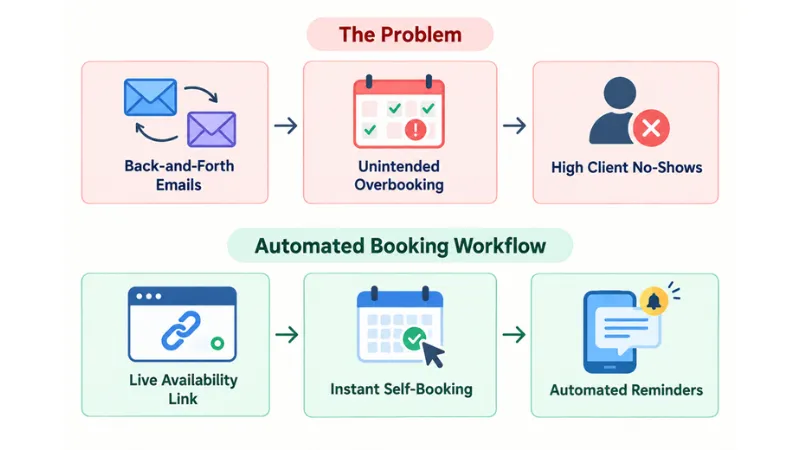
The Best Booking Software for Small Business Owners Who Want to Stop Managing Schedules Manually
Sophie Carter Oct 9, 2026

Team SR Sep 11, 2026

Team SR Jul 24, 2026


Oliver Bennett Dec 29, 2025

Team SR Sep 16, 2026
Trending Stories

WoW Forever Camping Guide: How Campfires and Professions Work Together

8 SEO Automation Tools Ranked by the Hours They Give Back (2026)

Top Career Skills Universities Don’t Teach (But Every Founder Needs)

Agentic AI Development: Transforming Patient Care and Hospital Operations

Why Niche Branding Is the Smartest Growth Move for Early-Stage Startups

Getting ready for the first day of school: a parent’s checklist that actually helps

A Startup Founder’s Guide to Choosing the Right Digital Growth Channels

Technical Applications for Modernizing Oil and Gas