

Mosaic SoC Raises $3.8M To Develop Low-Power Spatial Intelligence Chips
Apr 30, 2026 | By Oliver Bennett
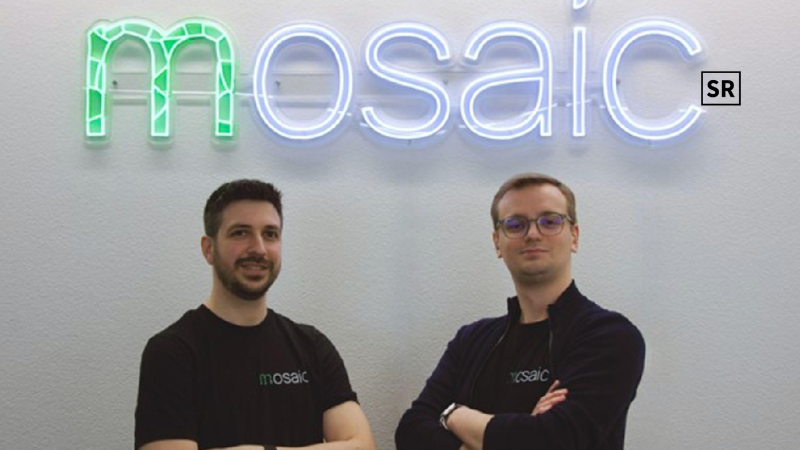
Mosaic SoC, a startup building dedicated perception chips for spatial intelligence in low-power devices, has raised a $3.8 million pre-seed round led by Founderful, with participation from Kick Foundation.
SUMMARY
- Mosaic SoC, a startup building dedicated perception chips for spatial intelligence in low-power devices, has raised a $3.8 million pre-seed round led by Founderful, with participation from Kick Foundation.
 Follow us
 Follow us
The company is focused on enabling the next generation of consumer devices, such as AR glasses, always-on computer vision systems, and AI-powered wearables, which require real-time understanding of the world while operating within strict power limits. Today, most of these capabilities depend on power-intensive processors and GPUs, making compact wearable designs difficult to achieve.
While modern devices increasingly include cameras and sensors, they often lack efficient on-device intelligence to process that data. The required computing power is typically handled by heavy processing systems that consume significant energy, generate heat and limit product design flexibility.
For Original Design Manufacturers (ODMs) developing next-generation AR and mobile hardware, increasing compute power often adds complexity. Mosaic SoC addresses this by offering a dedicated perception chip that provides a foundational layer of spatial intelligence, along with a full application layer that can be integrated into broader systems.
RECOMMENDED FOR YOU

UP&Charge funding news – Île-de-France-based UP&Charge Raises €1.5Million in a Seed Funding
Oliver Bennett
Aug 15, 2024
Ambio Raises €5.1 Mn in Seed Funding to Use AI to Simplify Recycled Plastics Procurement
Oliver Bennett
Oct 14, 2026

[Funding alert] London-based Detected Raises €2.2 Million in Funding
Oliver Bennett
Jan 15, 2024
The company was founded by Moritz Scherer and Alfio Di Mauro, both PhD graduates from ETH Zurich with expertise in system-on-chip architecture.
Read Also - Online Oceans Raises £4M To Scale Autonomous Maritime Security Fleets
Mosaic SoC builds specialized chips that process visual and sensor data so devices can understand their surroundings in real time. The company describes this as “turning space into signals.”
Its chips are designed to be small and energy-efficient enough to enable smart glasses that look like regular eyewear, while still providing full spatial awareness. The aim is to unlock new device designs that were previously not possible.
The technology allows devices to create a local map of their environment, helping them identify objects, remember locations or even generate floorplans instantly. In smartphones, Mosaic SoC can act as a co-processor for the front camera, enabling always-on tracking and object detection at very low power.
This means devices can start recording only when specific events or objects are detected, saving battery life while maintaining continuous awareness.
A key advantage is its architecture. Instead of using traditional single- or dual-core ARM designs, Mosaic SoC uses a custom multi-core system with eight or more cores, optimized for high efficiency and always-on perception in power-limited devices.
In its first year, the company has already earned revenue through engineering (NRE) contracts with ODM partners. As production scales, Mosaic SoC expects to move toward recurring revenue from chip sales.
Mosaic SoC is building AI deployment toolchains and compilers that let firmware developers fully leverage the architecture, with plans to evolve from a chip provider into a platform supplier where applications are developed, deployed, and optimised around its silicon.
Antonia Albert, Investor at Founderful, added: “The next billion smart devices will see and understand the world around them. Mosaic SoC's product is the chip that makes that possible at scale. Moritz and Alfio have the architecture, the platform vision, and the team to make it happen. We are proud to back them with Founderful on their journey to define the spatial computing era.”
About Mosaic SoC
Mosaic SoC founded in 2024 designs integrated circuits that enable devices to understand their surroundings in real time. Its platform combines custom silicon and software for spatial intelligence including SLAM and object detection. The system delivers efficient always on AI for wearables, robotics and mobile devices with reduced power use.
Recommended Stories for You

Kailee Rainse May 31, 2025

Kailee Rainse Mar 12, 2026

Oliver Bennett Apr 17, 2026

Oliver Bennett Nov 4, 2023

Kailee Rainse Nov 8, 2025

Kailee Rainse Jan 29, 2026
Trending Stories

Mona AI funding news – Germany-based Mona AI Secures €2Million in Seed Funding

Benjamin Faes news – Benjamin Faes Appointed CEO of RWS

Capmont Technology funding news – Munich-based Capmont Technology Secures €100 Million in Funding

Semeris funding news – London-based FinTech Startup Semeris Secures $4.3 Million in Funding

Bunch Raises €30.1M Series B To Modernise Europe’s Private Markets Infrastructure

[Funding alert] Bolognese Biotech startup Cellply Secures €3.6 million in Funding

Spanish startup Uxia raises €1 million to build AI-driven synthetic-user tools for product teams

HyLight Raises €13 Mn to Expand Hydrogen-Powered Inspection Airships