

London-Based Callosum Raises $10.25M Funding Round Led By Plural
Feb 26, 2026 | By Kailee Rainse
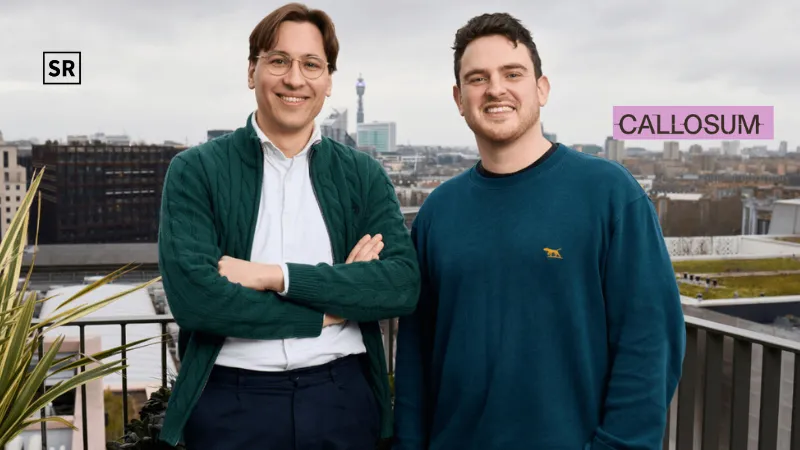
London-based AI software startup Callosum has closed a $10.25 million funding round led by European early-stage venture firm Plural signalling strong investor interest in multi-chip AI infrastructure at a time when capital remains concentrated around a handful of dominant compute platforms.
SUMMARY
- London-based AI software startup Callosum has closed a $10.25 million funding round led by European early-stage venture firm Plural signalling strong investor interest in multi-chip AI infrastructure at a time when capital remains concentrated around a handful of dominant compute platforms.
 Follow us
 Follow us
The round also included backing from the Advanced Research and Invention Agency (ARIA) and angel investors such as Charlie Songhurst, Stan Boland of FiveAI, and John Lazar, a fellow of the Royal Academy of Engineering.
Callosum develops system-level software that enables different chip architectures to work together seamlessly. Rather than relying solely on large, homogeneous GPU clusters its platform orchestrates and balances AI workloads across diverse processors, including alternative accelerators and cloud-native chips.
Read Also - Poland’s FlyFocus Raises €4.5M To Scale European-Made Drone Production
RECOMMENDED FOR YOU

Yondr funding news – Amsterdam-based Yondr has Raises $150 Million in Funding
Oliver Bennett
May 31, 2024
Matteco funding news – Paterna-based Matteco Raises €15Million in a Series A Round Funding
Kailee Rainse
Oct 24, 2024
Led by Danyal Akarca and Jascha Achterberg, the company operates at the intersection of AI orchestration and heterogeneous hardware scheduling.
Its technology allows AI models to run across mixed hardware environments, enabling more flexible and sovereign infrastructure.
The new funding will primarily support research and development, U.S. market expansion and deeper integration with bespoke hardware aligned to its multi-chip strategy.
Recommended Stories for You

Oliver Bennett Oct 3, 2024
Kailee Rainse Jan 27, 2026
Oliver Bennett Oct 18, 2023

Kailee Rainse May 31, 2025
Kailee Rainse Oct 13, 2025
Kailee Rainse Jul 4, 2025
Trending Stories
Cellbyte Raises $2.75M Funding In Seed Round
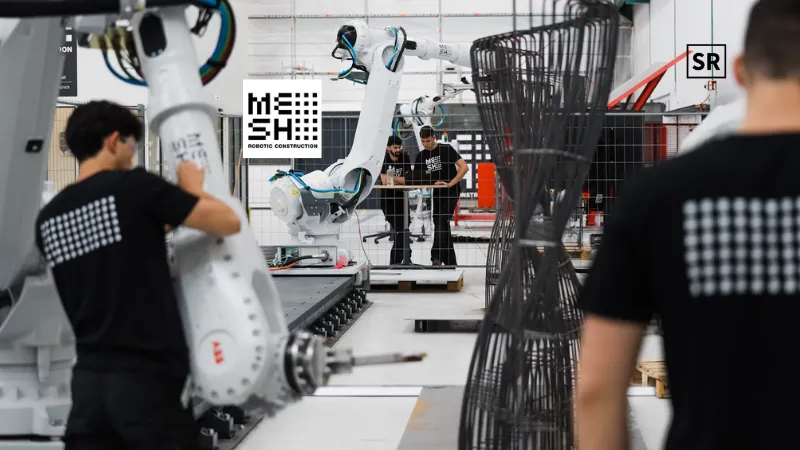
MESH Raises $3.8M Funding To Automate Rebar Construction Worldwide
ShanX Medtech Secures €24 M To Bring Ultra-Rapid Antimicrobial Susceptibility Diagnostics To Market

Lassie Raises $75M In Series C Round To Expand Pet Care Services In Europe
Capacity Acquires Swiss AI Company Starmind

SALZSTROM funding news – Austrian-based SALZSTROM Raises over $1 Million in Pre-Seed Funding

Wyrld funding news – Hamburg-based Wyrld Raises €1 Million in Pre-Seed Funding

Qorium Secures €22M To Scale Sustainable Leather