

French Biotech Brenus Pharma Raises €11 Million, Total Funding Reaches €38 Million
Jul 22, 2026 | By Oliver Bennett
Lyon-based Brenus Pharma, a clinical-stage biotech startup developing treatments to help prevent cancer from returning has raised an additional €11 million ($12.6 million) in an extension of its Series A funding round
 Follow us
 Follow us
With this latest investment, the company's total funding has reached €38 million since it was founded.
The funding round received strong support from existing investors, including Angelor, UI Investissement, Crédit Agricole, Noshaq, Orsa, BIO JAG, and Bpifrance, showing their continued confidence in Brenus Pharma's technology and growth plans.
“We are proud to welcome international investors who share our vision, and grateful for the continued confidence of our existing backers. This funding will enable us to complete the Phase I program and continue accelerating our in vivo immunotherapy platform by advancing our next drug candidate. I would also like to thank our historical investors for their trust and support,” said Paul Bravetti, CEO of Brenus Pharma.
RECOMMENDED FOR YOU


Cavell Raises €1.5 Million to Make Healthcare More Efficient and Patient-Oriented
Kailee Rainse
May 5, 2025

Berlin’s Peec AI Secures €18 Million Amid Rising Demand For AI-Powered Brand Visibility Tools
Kailee Rainse
Nov 18, 2025
“We couldn’t be more confident in our first investment in France. The company combines truly differentiated technology with early clinical validation and team executing at pace. This is exactly the type of European innovation we want to support as we expand our portfolio internationally. We look forward to supporting Brenus as it advances its innovation toward a new treatment for patients with significant unmet medical needs,” said Dae Kyeong Bae, Senior Vice President at Korea Omega Investment Corp.
Founded in 2019 by Benoit Pinteur, Brenus Pharma is developing an off-the-shelf immunotherapy platform that helps the body's immune system detect and fight cancer more effectively. Its technology is designed to make cancer cells easier for the immune system to recognize.
The company's technology copies the way tumour proteins appear, helping the immune system identify and attack cancer cells. It is designed to treat hard-to-treat solid tumours and can adapt as the tumour changes, offering a new option where current cancer treatments are less effective.
Recommended Stories for You
Kailee Rainse Feb 6, 2025
Kailee Rainse Jan 30, 2025
Oliver Bennett Aug 17, 2024
Kailee Rainse Nov 7, 2025
Oliver Bennett Apr 17, 2024
Oliver Bennett May 2, 2026
Trending Stories

Qorium Secures €22M To Scale Sustainable Leather

Ireland-Based Luna Systems Secures €1.5M Funding

Gizmo Raises $22M Series A To Expand AI-Powered Learning Platform

Wyrld funding news – Hamburg-based Wyrld Raises €1 Million in Pre-Seed Funding

Uk HealthTech Startup Calibre Raises €2.8M Funding In Pre-Seed Round
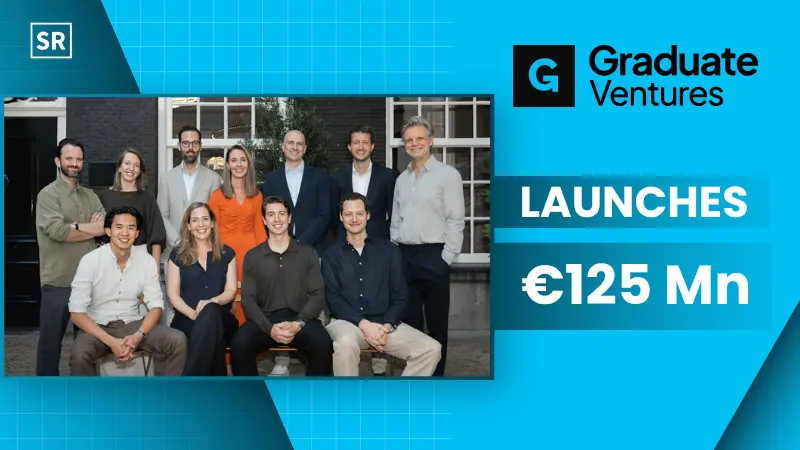
Graduate Ventures Launches €125 Mn Second Seed Fund to Back Dutch Startups
[Funding alert] Munich-based RobCo Secures $42.5Million in Series B Round Funding
€76M Footprint Fund I To Back 30 early-Stage climate And DeepTech Startups In Northern Europe