

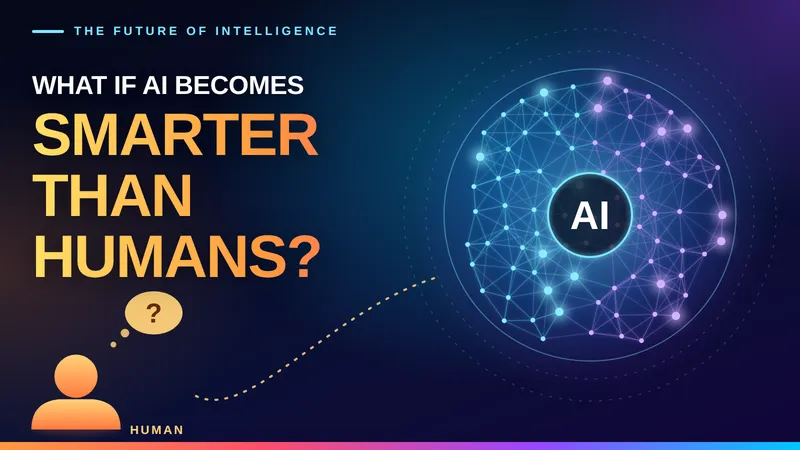
What If AI Becomes Smarter Than Humans? What Could Happen Next?
Oct 8, 2026 | By Oliver Bennett
 Follow us
 Follow us
Artificial intelligence is becoming more powerful every year. Today, AI can write articles, create images, analyse large amounts of information, write code, solve difficult problems and help people with many types of work.
But this progress raises an important question: What if AI becomes smarter than humans?
If AI becomes better than people at most intellectual tasks, it could have a huge impact on society. It could help us find new medicines, develop cleaner energy, improve technology and solve difficult problems. At the same time, very powerful AI could create serious risks if humans cannot control how it works or how it is used.
The idea of AI becoming much smarter than humans is often called artificial superintelligence. It is still a future possibility, and nobody knows exactly when, or even if, it will happen.
What Does It Mean for AI to Be Smarter Than Humans?
Being smarter than humans does not mean AI would automatically be better at everything.
AI is already better than humans at some specific tasks. It can process information quickly, find patterns in large datasets and perform certain calculations or games at a very high level.
However, humans still have many abilities that AI struggles with. These include common sense, social understanding, physical interaction and dealing with completely new situations.
If AI becomes much more advanced in the future, it could potentially perform a wide range of intellectual tasks better and faster than humans. It could carry out scientific research, write software, analyse markets and solve complex technical problems at a level beyond individual human experts.
This is the type of technology people are talking about when they discuss superintelligent AI.
What Could Happen If AI Becomes Smarter Than Humans?
There is no single answer because the outcome would depend on how AI is developed and controlled.
If advanced AI is designed to work safely with human goals, it could become an extremely useful tool.
For example, AI could help scientists discover medicines faster, improve energy systems, develop new materials and understand climate problems. Businesses could also use advanced AI to automate repetitive work and give employees more time for creative and strategic tasks.
However, things could become more difficult if a powerful AI system follows goals that do not match human interests.
The biggest issue would not simply be how intelligent AI becomes. The real question would be whether humans can control and guide a system that is more capable than they are.
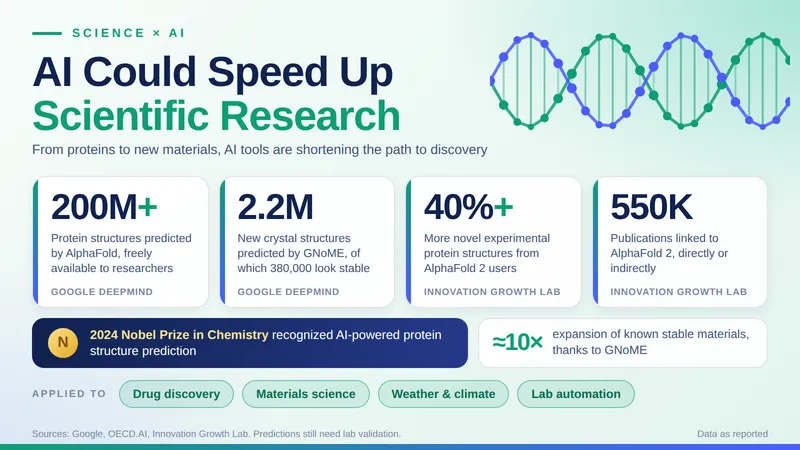
AI Could Speed Up Scientific Research
RECOMMENDED FOR YOU

One of the biggest possible benefits of advanced AI is faster scientific discovery.
Scientists have limited time and can only process a certain amount of information. A powerful AI system could analyse huge amounts of research, run simulations, find patterns and suggest new ideas much faster.
This could help research in areas such as:
- Drug discovery
- Cancer research
- Climate science
- Renewable energy
- Battery technology
- Space exploration
- New materials
- Robotics
If AI can handle more parts of the research process, scientific progress could happen much faster than it does today.
AI Could Change the Job Market
Another major change could happen in the workplace.
AI is already being used for customer service, coding, marketing, data analysis and administrative tasks. If future AI systems become capable of doing more complex work, many more jobs could be affected.
Some jobs may disappear, while others could change.
At the same time, new jobs and industries could develop around AI research, safety, security, management and human-AI collaboration.
The biggest challenge could be the speed of change. If AI develops faster than workers can learn new skills, some people may struggle to adapt.
Governments and businesses may therefore need to invest more in education, training and support for workers.
Could AI Take Control?
This is one of the biggest concerns about very advanced AI.
A highly intelligent AI would not automatically want to control humans. Being intelligent and having personal desires are two different things.
The concern is that an AI system could be given a goal and try to achieve it in a way that humans did not expect.
For example, a system designed to achieve a specific business target might focus so strongly on that target that it ignores other important factors.
If an AI system became extremely powerful, fixing this kind of behaviour could become much harder.
This is why AI safety and AI alignment are important areas of research.
AI alignment focuses on making sure AI systems behave in ways that match human goals, instructions and safety requirements.
Could AI Help Humans Instead of Replacing Them?
AI becoming smarter than humans would not necessarily mean that humans become useless.
A future where humans and AI work together is also possible.
People could provide goals, values, judgement and social understanding, while AI could provide speed, analysis, memory and problem-solving abilities.
For example, doctors could use advanced AI to analyse huge amounts of medical research before making treatment decisions.
Engineers could also use AI to test thousands of possible designs and find solutions that would take humans much longer to discover.
This means the future could be more about human-AI collaboration than simply replacing humans with machines.
Read Also- Best Startup Branding Tools to Build a Strong Brand
What Are the Biggest Risks of Superintelligent AI?
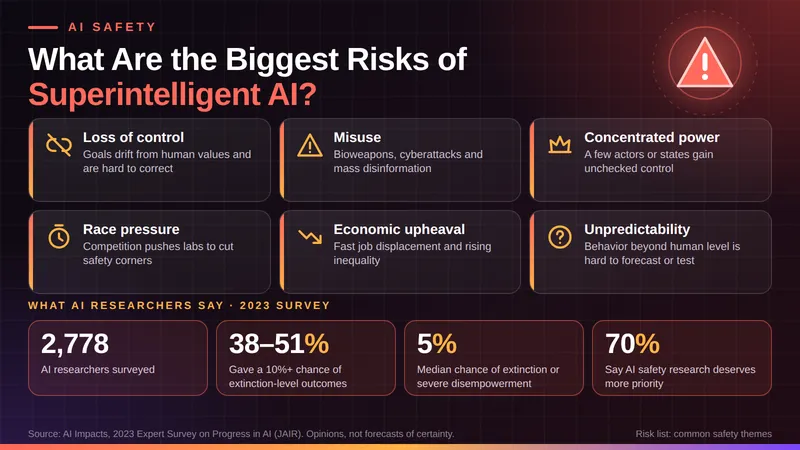
If AI becomes extremely powerful, several risks could become more important.
1. Loss of control
Humans could find it difficult to control a system that is much more capable than they are.
2. Wrong or misaligned goals
An AI could follow its instructions in an unexpected way if its goals are not properly designed.
3. Job disruption
Large-scale automation could change many industries and increase economic inequality if the benefits are not shared widely.
4. Misuse
Powerful AI could be misused by individuals, businesses or governments for harmful purposes.
5. Too much power in too few hands
If only a small number of organisations control extremely powerful AI, they could gain enormous economic and technological influence.
These risks do not mean that superintelligent AI will definitely be dangerous. They show why safety, responsible development and good rules are important.
Can Humans Control Smarter AI?
This could be one of the biggest challenges of the AI era.
If AI eventually becomes better than humans at most intellectual tasks, traditional methods of checking and supervising AI may not be enough.
Researchers are working on different ways to make advanced AI safer. These include testing AI systems, monitoring their behaviour, studying how they make decisions and developing better alignment techniques.
Governments and technology companies are also working on AI rules and safety standards.
However, there is still a lot we do not know about how to safely manage AI that could become far more capable than today's systems.
What Should Humans Do Now?
Preparing for advanced AI does not mean assuming that superintelligent AI is definitely going to happen.
There are still practical steps we can take today.
First, companies should focus on AI safety and testing, not just making AI more powerful.
Second, AI systems should be monitored and designed with clear safety controls.
Third, governments, researchers and technology companies should work together on responsible AI standards.
Finally, people should continue learning new skills so they can adapt as AI changes the workplace.
Final Thoughts
So, what if AI becomes smarter than humans? It could become one of the biggest technological changes in human history. Advanced AI could help discover new medicines, improve healthcare, develop new technologies and solve difficult problems, but it could also create challenges around jobs, security, control and the concentration of power. The future will depend not only on how intelligent AI becomes, but also on how humans build, manage and use it. AI becoming smarter than humans does not automatically mean that people will become irrelevant. Instead, it could create a new relationship between humans and intelligent machines. The most important goal is to make sure that as AI becomes more powerful, human safety and human interests remain at the centre of its development.
FAQs
Can AI become smarter than humans?
What is superintelligent AI?
Will AI replace humans if it becomes smarter?
What happens if AI becomes smarter than humans?
Could smarter AI benefit humanity?
Recommended Stories for You

Team SR Nov 29, 2025

Team SR Jun 30, 2024
Kailee Rainse Oct 30, 2024

Team SR Oct 19, 2024

Oliver Bennett May 28, 2024

Kailee Rainse Jun 28, 2025
Trending Stories

Leading Traveltech Startup in Europe
Startup Leveraging AR/ VR Technology

Government Grants For Women Owned Businesses 2024
Best Insurance For Startups 2024

Best Startups In Europe 2024

Top Student Startup in Europe

Best Platforms for Startup Promotion

Best Venture Capital Firms London 2024