
 Follow us
 Follow us
Artificial intelligence (AI) is changing how businesses operate in Germany. Companies are using AI to improve productivity, reduce costs, automate tasks and develop new products. From automotive manufacturing and healthcare to finance and energy, AI is creating new business opportunities across the country.
Germany has a strong industrial base, leading research institutions and a growing startup ecosystem. These strengths make it an important market for AI innovation. As more businesses adopt AI tools, demand is increasing for solutions that solve real business problems.
In this article, we explore the top 10 AI business sectors in Germany in 2026, their main applications and the opportunities they offer to startups and established companies.
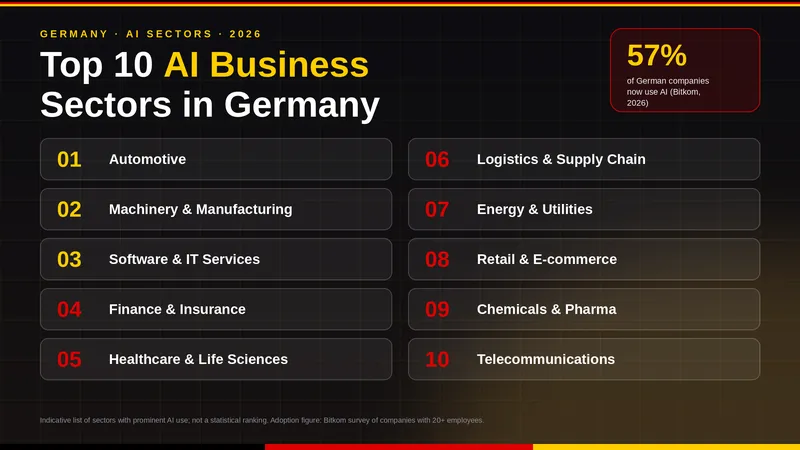
Top 10 AI Business Sectors in Germany: Overview
| No. | AI business sector | Key applications | Business opportunities |
| 1 | Manufacturing and Industry | Quality control, predictive maintenance | Industrial AI, smart factories |
| 2 | Automotive and Mobility | Driver assistance, battery analytics | Vehicle software, fleet management |
| 3 | Healthcare and Life Sciences | Medical imaging, drug discovery | Healthtech, clinical data tools |
| 4 | Finance and Insurance | Fraud detection, risk analysis | Fintech AI, compliance software |
| 5 | Logistics and Supply Chain | Route planning, inventory forecasting | Warehouse automation, logistics AI |
| 6 | Energy and Clean Technology | Energy forecasting, smart grids | Energy optimisation, battery analytics |
| 7 | Agriculture and Food Production | Crop monitoring, quality inspection | Precision farming, agricultural robotics |
| 8 | Cybersecurity and Data Protection | Threat detection, security monitoring | AI security, privacy technology |
| 9 | Retail and E-commerce | Product recommendations, demand forecasting | Retail automation, marketing AI |
| 10 | Software and Enterprise Services | Workflow automation, AI assistants | Enterprise AI, AI agents |
1. AI in Manufacturing and Industry
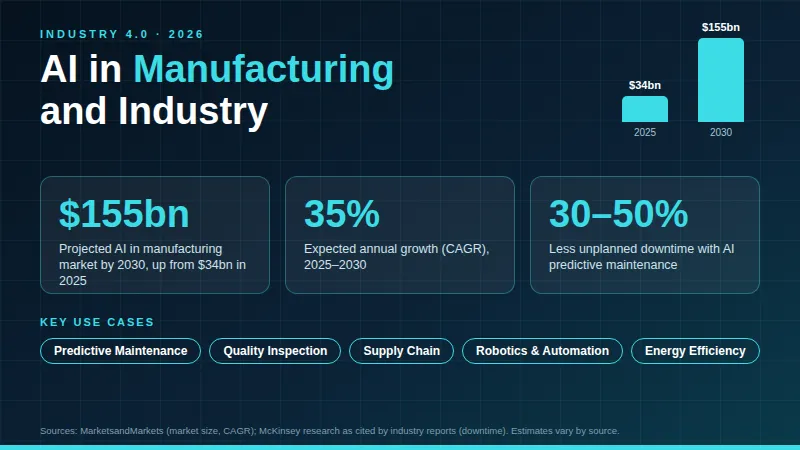
Manufacturing is one of the most important AI business sectors in Germany. The country's established engineering and industrial base creates opportunities to use AI in factories, production facilities and industrial equipment.
Main applications:
- Predictive maintenance: Identify possible equipment failures before machines break down.
- Quality control: Use AI-powered cameras to detect defects during production.
- Smart factories: Automate production processes and monitor performance in real time.
- Industrial robotics: Help robots perform repetitive or complex tasks.
Business opportunities: Startups can develop industrial AI software, automated inspection systems, robotics and predictive maintenance platforms.
2. AI in Automotive and Mobility
RECOMMENDED FOR YOU

List of Largest Fast Food Restaurant Chains Worldwide | Top 10 Restaurant Chains
Oliver Bennett
Jan 6, 2025
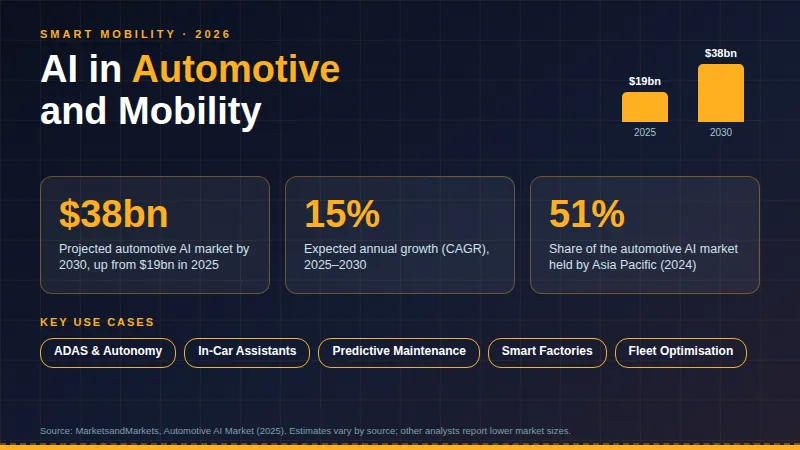
Germany's automotive industry is exploring AI to improve vehicle design, production, safety and transportation. AI is also becoming important as manufacturers develop electric vehicles and connected mobility systems.
Main applications:
- Driver assistance and autonomous driving research.
- Battery monitoring and performance analysis.
- Vehicle testing and manufacturing automation.
- Fleet management and traffic optimisation.
Business opportunities: AI-powered vehicle software, battery analytics, fleet management tools and intelligent transportation systems.
Fully autonomous driving still faces technical, safety and regulatory challenges, creating a need for further development and testing.
3. AI in Healthcare and Life Sciences
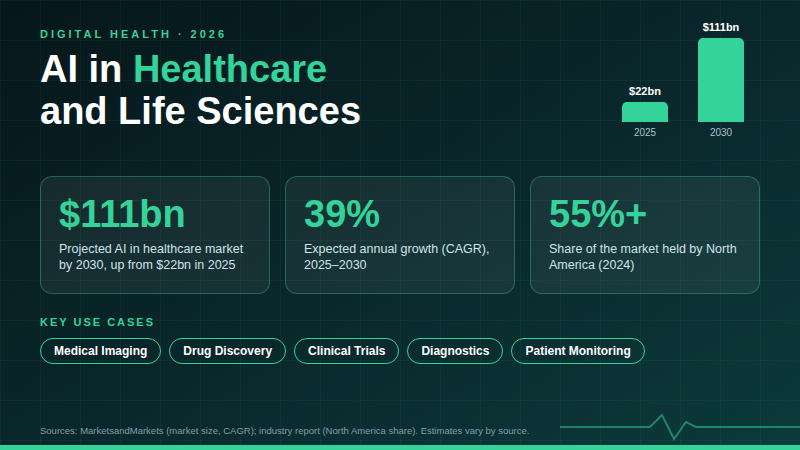
Hospitals, pharmaceutical companies and healthtech startups are using AI to improve medical research and healthcare operations.
Main applications:
- Analysing medical images to support clinical assessments.
- Identifying patterns in patient data.
- Supporting drug discovery and pharmaceutical research.
- Automating appointments, documents and administrative work.
Business opportunities: Medical imaging software, AI-assisted diagnostics, drug discovery platforms and hospital management tools.
Healthcare AI must meet relevant privacy, safety and regulatory requirements before being used in clinical settings.
4. AI in Finance and Insurance
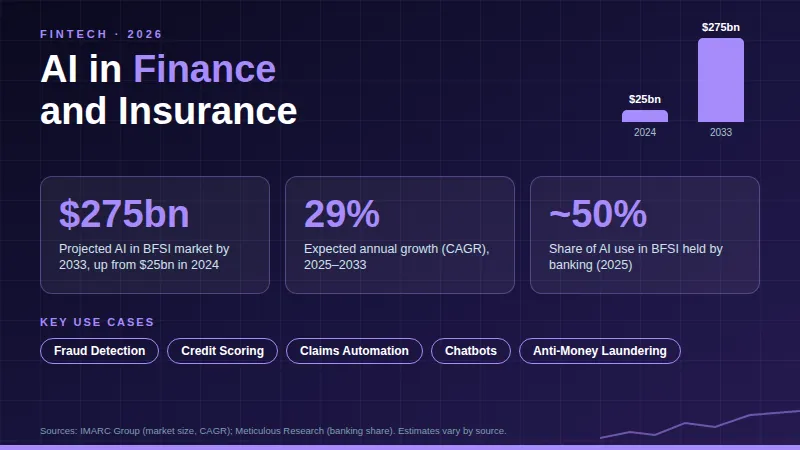
Banks, insurers and financial technology companies can use AI to process data, identify risks and improve customer service.
Main applications:
- Detecting suspicious transactions and potential fraud.
- Automating document processing and financial reporting.
- Analysing credit and financial risks.
- Supporting customer service through AI assistants.
Business opportunities: Fraud detection software, compliance automation, financial analytics and AI-powered customer support.
Businesses in this sector must pay close attention to data protection, cybersecurity and financial regulations.
5. AI in Logistics and Supply Chain Management
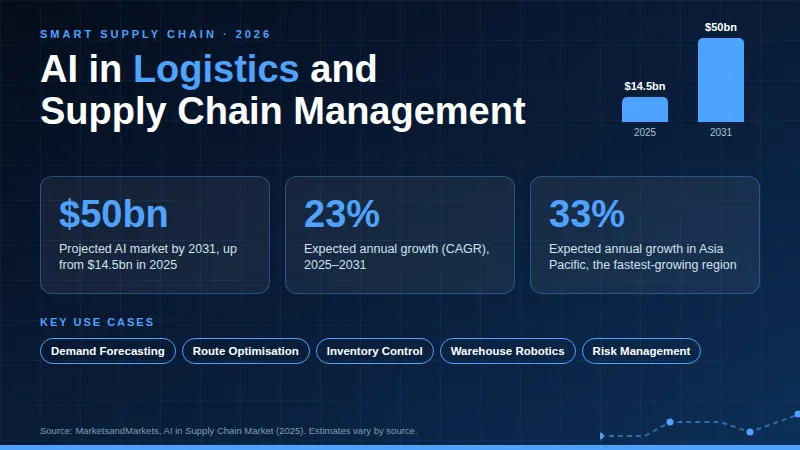
Germany's central position in Europe makes logistics and supply chain management important areas for AI adoption.
Main applications:
- Planning efficient delivery routes.
- Forecasting demand and managing inventory.
- Automating warehouse operations.
- Identifying supply chain delays and disruptions.
Business opportunities: Warehouse robotics, route optimisation, demand forecasting and supply chain management software.
AI can help logistics companies reduce delays, improve planning and make better use of their resources.
Read Also- Cadbury Marketing Strategy: How the Brand Connects With Consumers
6. AI in Energy and Clean Technology
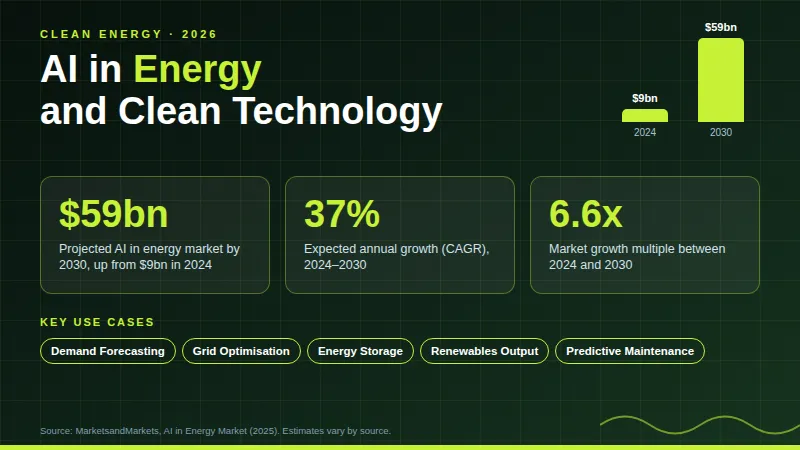
Germany's energy transition is creating opportunities for AI solutions that improve energy production, distribution and consumption.
Main applications:
- Forecasting electricity demand and renewable energy generation.
- Monitoring solar and wind installations.
- Predicting equipment failures in energy infrastructure.
- Improving battery performance and energy consumption.
Business opportunities: Smart grid software, renewable energy forecasting, battery analytics and energy management platforms.
These solutions can help businesses improve efficiency and manage energy resources more effectively.
7. AI in Agriculture and Food Production
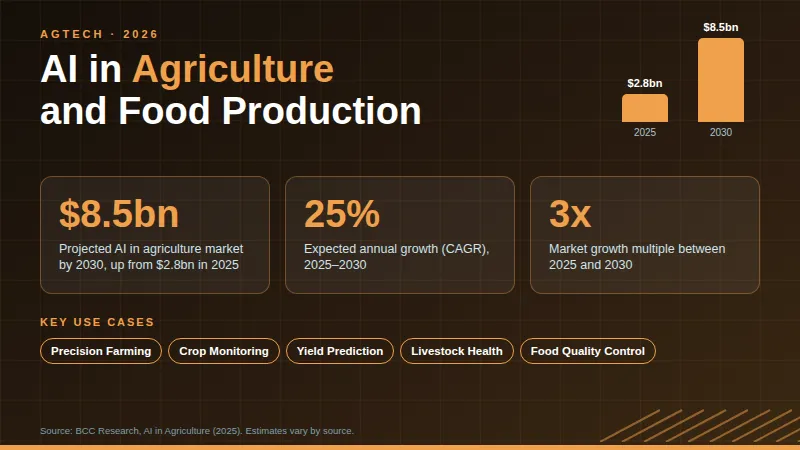
AI is helping agriculture and food businesses improve production, monitor resources and reduce waste.
Main applications:
- Monitoring crop health through images and sensors.
- Identifying potential pests and crop diseases.
- Improving irrigation and fertiliser use.
- Inspecting food quality during production.
Business opportunities: Precision farming, agricultural robotics, crop monitoring systems and AI-powered farm management software.
These technologies can support more efficient farming and food production.
8. AI in Cybersecurity and Data Protection
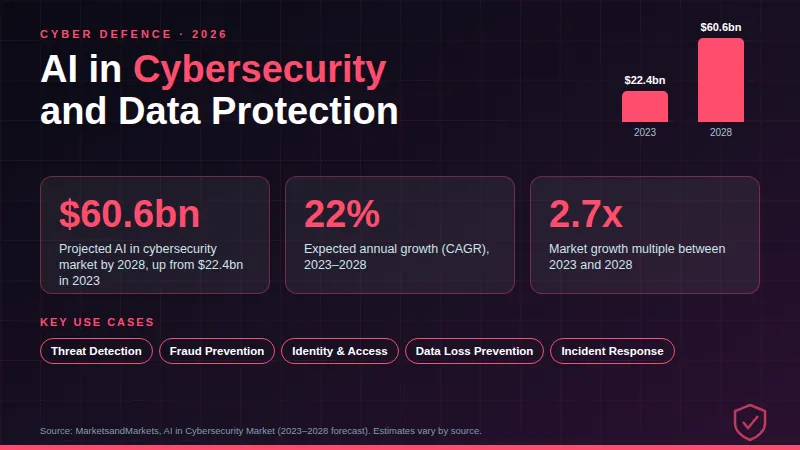
As businesses use more digital systems, cybersecurity has become an important area for AI development.
Main applications:
- Detecting unusual network activity.
- Identifying potential cyberattacks.
- Monitoring suspicious emails and transactions.
- Automating security alerts and incident analysis.
Business opportunities: AI threat detection, identity protection, privacy tools and secure enterprise AI platforms.
Startups that help businesses protect sensitive data and respond to threats may find opportunities across multiple industries.
9. AI in Retail and E-commerce
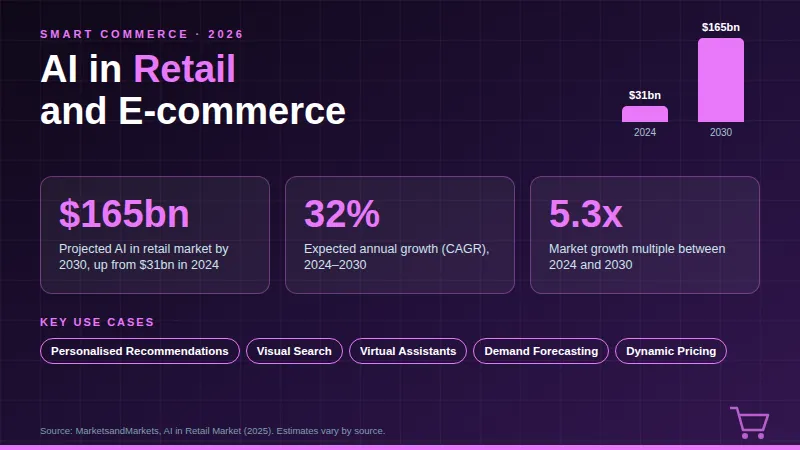
Retailers and online stores are using AI to understand customers, improve shopping experiences and manage products more efficiently.
Main applications:
- Personalised product recommendations.
- Demand forecasting and inventory planning.
- AI chatbots for customer support.
- Automated product descriptions and marketing content.
Business opportunities: Personalised shopping platforms, retail analytics, customer service automation and AI marketing tools.
Retail businesses can use these technologies to improve customer engagement and make better operational decisions.
10. AI in Software and Enterprise Services
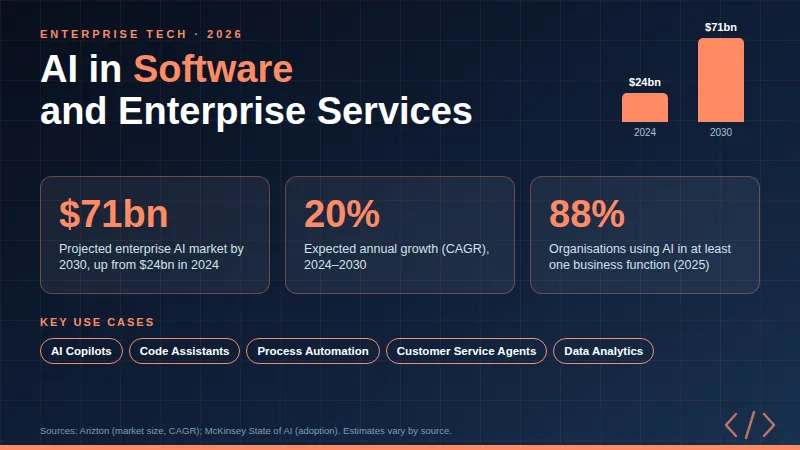
AI software is becoming useful across almost every industry. Businesses are adopting AI tools to automate repetitive work, analyse information and improve internal processes.
Main applications:
- Automating business workflows.
- Building AI assistants for employees.
- Analysing business data and generating reports.
- Using AI agents to complete connected tasks.
Business opportunities: Enterprise AI software, AI agents, developer tools, business intelligence and workflow automation platforms.
Startups that develop reliable tools for specific business needs can target customers across Germany's industrial and service sectors.
How to Choose the Right AI Business Sector in Germany
Entrepreneurs planning to start an AI business should consider the following factors:
- Market demand: Identify a problem that businesses are willing to pay to solve.
- Industry expertise: Choose a sector where you understand customer needs and daily operations.
- Data availability: Check whether you can access suitable data to train, test or operate your AI system.
- Competition: Research existing solutions and identify how your product can stand out.
- Regulatory requirements: Understand applicable privacy, security and AI regulations.
- Business model: Decide whether you will sell software subscriptions, enterprise solutions, consulting or specialised AI products.
Berlin and Munich are important AI startup hubs. Other German regions also offer opportunities, particularly where established manufacturing and engineering businesses can become customers or development partners.
Key AI Business Trends in Germany in 2026
| Trend | What it means for businesses |
| Industrial AI | More automation and improved factory operations |
| Generative AI | Faster content creation, research and business support |
| AI agents | Automation of connected tasks and workflows |
| Predictive analytics | Better forecasting and decision-making |
| Cybersecurity AI | Faster threat detection and security monitoring |
| Sustainable AI applications | Improved energy management and resource efficiency |
These trends create opportunities for startups that can deliver measurable improvements in productivity, cost and service quality.
Frequently Asked Questions
1. Which are the top AI business sectors in Germany?
The major sectors include manufacturing, automotive, healthcare, finance, logistics, energy, agriculture, cybersecurity, retail and enterprise software.
2. Is Germany a good market for AI startups?
Germany offers established industrial customers, research institutions and a growing technology ecosystem. However, success depends on customer demand, competition, funding and the ability to develop practical solutions.
3. Which AI sectors offer business opportunities in Germany?
Industrial automation, healthcare technology, automotive software, cybersecurity, energy management and enterprise AI are important areas to explore.
4. What challenges do AI startups face in Germany?
Common challenges include accessing quality data, hiring skilled professionals, securing funding, integrating AI into existing systems and meeting regulatory requirements.
5. How can a business start using AI in Germany?
A business can begin by identifying a specific problem, testing an AI solution on a small scale, measuring the results and expanding the project when it delivers value.
Conclusion
Germany offers a wide range of AI business opportunities across industrial and service-based industries. Manufacturing, automotive, healthcare, finance, logistics and energy are particularly relevant because AI can help businesses improve efficiency and solve practical problems.
For startups and investors, the key is to focus on a clear customer need rather than technology alone. Companies that combine industry knowledge, reliable AI solutions and responsible data practices can find opportunities in Germany's evolving AI market.
SEO Title: Top 10 AI Business Sectors in Germany (2026)
Meta Description: Explore the top 10 AI business sectors in Germany in 2026, including manufacturing, automotive, healthcare, finance, logistics and energy.
Primary Keyword: AI business sectors in Germany
Secondary Keywords: AI industries in Germany, artificial intelligence in Germany, AI startups in Germany, AI business opportunities in Germany, German AI market
Suggested URL: ai-business-sectors-germany
Recommended Stories for You

Team SR Jun 30, 2025
Oliver Bennett Oct 5, 2026

Team SR Sep 10, 2024

Kailee Rainse Jan 2, 2025
Kailee Rainse Sep 25, 2026

Team SR Jul 7, 2024
Trending Stories

Top Student Startup in Europe
What Is a Dark Kitchen? Meaning, Business Model, Benefits and Challenges

Best Venture Capital Firms London 2024

The Top Disruptar brand, Revolutionizing the European

Startups Hit €200 Million+ in 2024 Funding Report

Business Credit Cards For Startups

Top Incubators And Accelerator Of UK
Startup Ecosystem Of Netherlands