

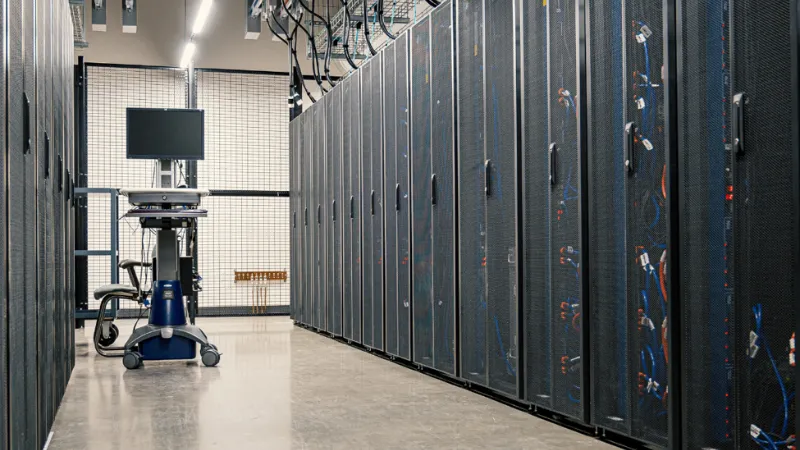
Artificial intelligence is no longer something that belongs only in science fiction or research laboratories. It has become part of everyday business. Companies are using AI to analyse information, improve customer service, automate repetitive work and make faster decisions.
 Follow us
 Follow us
What makes this shift different from many earlier technology trends is the speed at which AI is developing. Businesses that once needed large teams and long processes can now complete certain tasks in minutes. At the same time, AI is creating new challenges around data security, skills, infrastructure and responsible technology use.
The future of business will not simply be about adopting AI. It will be about understanding where AI can create real value and how people can work alongside it.
AI Is Changing How Businesses Work
One of the biggest effects of AI can be seen in everyday business operations.
RECOMMENDED FOR YOU


Many organisations spend a significant amount of time on repetitive tasks. Employees may need to review documents, organise information, respond to common customer questions or prepare reports. AI tools can now handle many of these activities with limited human intervention.
This does not necessarily mean that people will become unnecessary. Instead, their roles can change.
When software takes care of repetitive work, employees can spend more time on tasks that require judgement, creativity and communication. A customer service team can focus on complex problems instead of answering the same basic questions all day. A marketing team can spend more time developing ideas instead of manually analysing large amounts of data.
The real opportunity is not simply automation. It is using technology to give people more time to do meaningful work.
AI Is Transforming Decision-Making
Businesses generate huge amounts of information every day. Sales records, customer interactions, website activity and operational data can all contain useful insights.
The problem is that humans cannot always process this information quickly enough.
AI can analyse large datasets and identify patterns that may not be immediately visible. This can help businesses understand customer behaviour and identify operational problems. It can also support forecasting and planning.
However, AI-generated information should not automatically be treated as fact.
Business leaders still need to understand the information behind a recommendation. Human judgement remains important when decisions involve financial risk, customers or employees.
AI can support a decision. It should not remove responsibility from the person making that decision.
Customer Experience Is Becoming More Personal
Customer expectations have changed significantly in recent years. People want quick answers and convenient digital experiences.
AI is helping businesses respond to this demand.
AI-powered chat systems can answer common questions at any time of the day. Recommendation systems can suggest products or services based on customer behaviour. Businesses can also use AI to understand common customer concerns and improve their services.
The next stage will be more personalised experiences.
Instead of offering the same digital experience to everyone, businesses can use AI to understand individual needs. This could make websites, applications and customer support more relevant.
But there is an important balance to maintain.
Customers also care about privacy. Businesses need to be transparent about how customer information is collected and used. A better customer experience should not come at the cost of trust.
AI Is Reshaping the IT Industry
The IT industry is one of the areas experiencing rapid change because of AI.
AI requires computing power. As organisations adopt more advanced AI applications they may need additional servers, storage systems and networking infrastructure.
This creates an interesting challenge for businesses.
Technology infrastructure has a lifecycle. Servers and other IT equipment eventually become outdated or are replaced with newer systems. The growth of AI could increase the demand for high-performance infrastructure while also changing how organisations manage their existing equipment.
Retired IT equipment should not simply be treated as unwanted hardware.
Some equipment may still have useful components or a potential second life. Depending on its condition and specifications it may be suitable for reuse or refurbishment. Other equipment may need to be responsibly recycled.
This is where proper IT Asset Disposition becomes increasingly important.
The Growing Importance of IT Asset Disposition
As businesses upgrade their technology infrastructure they need a clear process for managing equipment that is no longer required.
IT Asset Disposition or ITAD covers the secure and responsible handling of retired IT assets.
A proper ITAD process can include asset collection, inventory management, data destruction, refurbishment, resale, recycling and reporting.
Data security is especially important.
An old server may look like nothing more than a piece of outdated hardware. However, its storage devices could still contain sensitive business information. Simply removing a server from a network does not mean the data has disappeared.
Secure data destruction helps reduce this risk before equipment is reused or recycled.
As AI increases the amount of digital infrastructure used by businesses, responsible asset retirement will become an even more important part of technology management.
AI Is Creating New Jobs While Changing Existing Roles
One of the biggest questions surrounding AI is its effect on employment.
There is no simple answer.
Some repetitive tasks are likely to become increasingly automated. At the same time, new roles are emerging around AI development, data management, cybersecurity, AI governance and system integration.
Existing jobs are also changing.
An employee who learns how to use AI effectively may be able to complete certain tasks much faster than before. This means digital skills will become increasingly valuable.
Businesses will need to invest in training rather than simply buying new technology.
The future workplace is likely to involve a combination of human expertise and machine assistance. People will continue to bring judgement, empathy, creativity and real-world experience. AI can provide speed and help process information at scale.
Cybersecurity Will Become Even More Important
AI has created opportunities for cybersecurity teams. It can help identify unusual activity and analyse large amounts of security information.
But the same technology can also be misused.
Cybercriminals can use AI to make certain attacks more sophisticated. Businesses therefore need to treat cybersecurity as a continuous process.
Protecting AI systems will involve more than installing traditional security software. Organisations will need to think about the data used to train systems. They will need to control access and monitor how AI tools are being used.
Employee awareness will remain an important part of security as well.
Technology can reduce risk but it cannot eliminate it completely.
AI and Sustainability
AI also has a connection with environmental sustainability.
Large computing systems require energy. Data centres need power and cooling. As AI adoption grows, businesses will need to think carefully about the environmental impact of expanding their digital infrastructure.
This makes efficient technology management increasingly important.
Businesses can look at ways to extend the useful life of suitable equipment. Hardware that is no longer required by one organisation may still have value elsewhere. Refurbishment and reuse can help reduce unnecessary demand for new equipment.
When equipment reaches the end of its useful life, responsible recycling becomes important.
Recovering materials from retired electronics can reduce the amount of technology waste that ends up in landfills. It can also allow valuable materials to re-enter the manufacturing cycle.
AI may be one of the defining technologies of the digital era. That does not mean the physical technology behind it should be overlooked.
Small Businesses Can Benefit From AI Too
AI is not only for large technology companies.
Small and medium-sized businesses can use AI for many practical purposes. They can automate administrative work. They can improve customer support and analyse business information. They can also use AI tools to create content and support internal workflows.
The important thing is to start with a real business problem.
A company does not need to introduce AI simply because competitors are doing it. It should first identify where employees are spending unnecessary time or where better information could improve decision-making.
A focused AI implementation can often be more useful than trying to introduce AI across every department at once.
Human Skills Still Matter
It is easy to focus on what AI can do and forget what people bring to the workplace.
AI can process information quickly. It can recognise patterns and generate content. But business decisions often involve context that cannot be understood from data alone.
Leadership requires responsibility. Customer relationships require trust. Creative work often depends on understanding people and culture.
These human qualities will remain important.
The businesses that benefit most from AI may not be those that try to replace every human task. They may be the ones that understand which tasks should be automated and which should remain human-led.
The Future Will Be About Adaptation
The development of AI is unlikely to slow down.
New tools will continue to appear. Existing technologies will improve. Businesses will discover new ways to use AI across different industries.
This means organisations need to become comfortable with continuous learning.
Companies should review their technology strategies regularly. They should train employees and establish clear policies for responsible AI use. They should also consider data protection and cybersecurity from the beginning rather than treating them as afterthoughts.
Technology decisions should also include the full lifecycle of IT assets.
Buying new infrastructure is only one part of the process. Businesses also need to consider what happens when that equipment reaches retirement.
Conclusion
AI is changing the future of business and technology in ways that are already visible today. It is improving automation and changing customer experiences. It is supporting data-driven decisions and creating new possibilities across industries.
At the same time, AI brings new responsibilities.
Businesses need to think about cybersecurity, data privacy, employee skills and environmental impact. They also need to manage the physical technology that supports their digital transformation.
As more organisations invest in AI infrastructure, responsible IT asset management will become increasingly important. Retired servers and other IT equipment should be handled with the same level of care as new technology.
The future of AI will not be defined only by how intelligent machines become. It will also depend on how responsibly businesses use them.
The companies that approach AI with a combination of innovation, human judgement and responsible technology management will be better prepared for the changing digital landscape.
Recommended Stories for You

Sophie Carter Oct 11, 2026
Team SR May 26, 2026

Sophie Carter Sep 29, 2026

Team SR May 6, 2026

Team SR Dec 2, 2025

Sophie Carter Oct 1, 2026
Trending Stories
AI Generated Video Needs A Startup Acceptance Gate

Tips For a Smooth and (Cyber)Safe Team Workation

What Advisers Should Expect from a Modern Mortgage Network

Seven Tools (and Ops) Every UK Startup Should Set Up Before Day One

How Trading Platforms Are Using AI and What’s Actually Working
Credit Math For An AI Map Generator On Seed Budget

5 technical choices that make the difference between growth and stagnation

Speech to Text AI: What’s Actually Driving Enterprise Adoption in 2026