

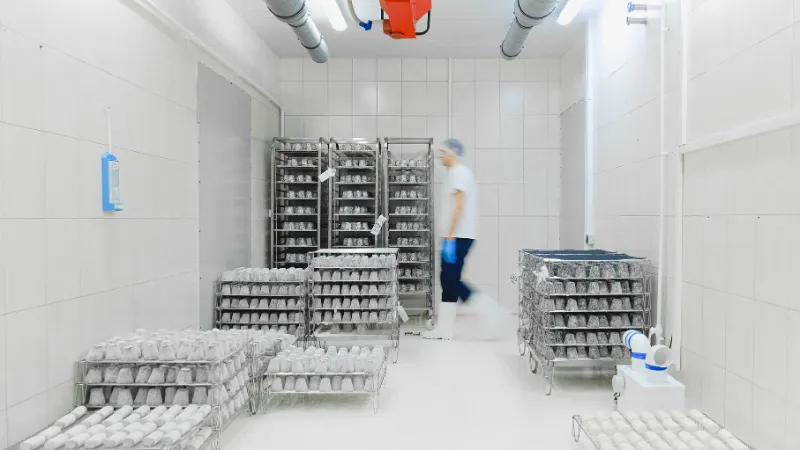
Modern growth stories often focus on software, funding rounds, and rapid expansion. Yet many of the most ambitious companies still depend on something far more physical: reliable environments that protect products, research, and operations. For businesses working with pharmaceuticals, biotech materials, food products, or sensitive laboratory processes, temperature control is not a background detail. It is a core part of quality, compliance, and trust.
 Follow us
 Follow us
That reality has pushed cold storage from a technical afterthought into a strategic investment. A well-designed cold room supports precision, reduces waste, and helps teams work with confidence under strict standards. As more companies scale across research, manufacturing, and distribution, the demand for dependable temperature-controlled infrastructure continues to rise.
A practical foundation for high-growth sectors
Startups and established firms alike face pressure to move quickly without compromising quality. In life science and healthcare settings, that balance is especially important. Products and materials often require exact storage conditions, and even small temperature deviations should be treated as a serious operational risk.
This is where solutions such as GMP Coldroom become highly relevant. The concept speaks directly to businesses that need controlled environments built around good manufacturing practice requirements. Rather than treating cold storage as a simple refrigerated box, companies should see it as part of a wider quality system that supports consistency, documentation, and safe workflows.
RECOMMENDED FOR YOU


A Question People Actually Search: Why Does Recovery From Surgery Take So Long?
Team SR
Sep 19, 2026

For growing businesses, this matters because infrastructure decisions made early often shape long-term efficiency. A cold room that is easy to monitor, clean, and integrate into daily operations should save time while supporting future expansion. That makes it more than a facilities purchase. It becomes an operational asset.
Why compliance and efficiency now go hand in hand
Regulated sectors no longer separate compliance from performance. The strongest businesses build systems that do both. A compliant cold room should protect temperature-sensitive materials, but it should also support productivity, reduce manual checks, and simplify audits.
When teams operate in high-pressure environments, every process benefits from clarity. Staff should know where materials belong, how storage conditions are maintained, and what steps to follow if an issue arises. Good design supports that structure. Clear zoning, stable temperatures, reliable alarms, and easy access all improve day-to-day work.
Energy use also deserves attention. Companies are under growing pressure to operate responsibly while controlling costs. A modern cold room should therefore deliver precise performance without unnecessary waste. This is not only a sustainability issue. It is also a business issue, especially for firms that expect to scale and need predictable operating expenses.
The startup mindset meets physical infrastructure
Many newer companies are built around agility. They test, refine, and move fast. That mindset often works well in digital environments, but physical operations demand a more disciplined approach. Cold storage cannot rely on improvisation. If temperature-sensitive products are involved, systems should be robust from the start.
That does not mean businesses should overbuild. It means they should invest in infrastructure that matches their current needs while allowing room for growth. A company developing new therapies, handling clinical materials, or expanding into new markets needs storage that supports both immediate use and future complexity.
In that sense, cold rooms reflect a broader lesson for founders and operators: growth is strongest when it rests on dependable foundations. Branding and innovation matter, but they must be supported by environments that protect the product itself.
What decision-makers should look for
Choosing a cold room should begin with operational reality, not marketing language. Decision-makers should assess how the space will be used, who will use it, and what standards must be met. Temperature range, room size, monitoring systems, access flow, cleaning requirements, and maintenance support all deserve close review.
It is also wise to think beyond installation. A cold room should fit into broader business processes, including inventory management, quality assurance, and risk planning. If a company grows quickly, the storage environment should not become a bottleneck. It should continue to support expansion with minimal disruption.
Strong suppliers and well-planned systems help reduce uncertainty. That is especially valuable in sectors where a single failure can affect product integrity, customer confidence, and regulatory standing.
Building resilience through better environments
As more businesses work with sensitive materials and stricter standards, controlled storage will keep gaining importance. The companies that treat it seriously are likely to be better prepared for growth, audits, and operational challenges alike.
Reliable cold rooms are not glamorous, but they are essential. They protect value at a very practical level. In fast-moving sectors, that kind of reliability often becomes a competitive advantage. Businesses that invest in the right environment today should be in a far stronger position to scale with confidence tomorrow.
Recommended Stories for You

Team SR Oct 16, 2025
Team SR Feb 21, 2026

Team SR Aug 14, 2026

Team SR Nov 25, 2025

Team SR Oct 14, 2025

Team SR Feb 12, 2026
Trending Stories

A Startup Founder’s Guide to Choosing the Right Digital Growth Channels

Technical Applications for Modernizing Oil and Gas

What Free Really Means When You Register an LLC: State Fees, Service Fees, and First-Year Tools

How to Choose a Nonprofit Board Seat That Fits Your Life, Not Just Your Calendar

Winning New Customers: How FinTech Startups Can Stand Out In A Competitive Market

From Spreadsheet to WhatsApp: Smarter Follow-Up for Growing Teams

From First Apartment to Graduation: What Students Need From a Boston Property Manager

The Business Behind The Job: What Customers Never See In A Construction Company