

The High-Speed Code Behind Crypto Arbitrage Bots: A Technical Reality Check
Jul 30, 2026 | By Team SR
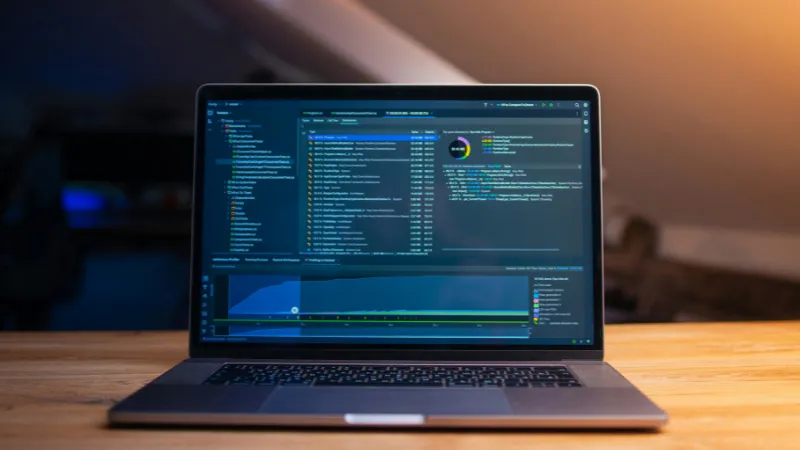
Price gaps between exchanges are like small coins dropped on a crowded sidewalk. Most people walk past them without noticing, but a well-coded bot sees every single one. You are basically building a digital scavenger that never sleeps and never gets tired of math. Success depends entirely on how fast your code can move before someone else grabs the prize.
 Follow us
 Follow us
The Backend Bottleneck: Why Every Millisecond Is a Tax
If your bot takes a full second to decide on a trade, you have already lost. High-frequency trading in the crypto world is a brutal game of speed where the architecture of your software is the only thing that saves you. Many beginners start with Python because it is easy to read, but they quickly realize that the "Global Interpreter Lock" can slow down execution. For real performance, engineers often turn to languages like Go or Rust because they handle multiple tasks at the same time much better.
The infrastructure you choose is just as important as the code itself. Running a bot on a cheap home computer is a recipe for disaster because your internet connection will have too much "lag" compared to the exchange servers. Professional setups involve placing your servers in the same data centers as the exchanges to shave off those tiny fractions of a second. It sounds like overkill, but in arbitrage, being second place usually means you just paid a transaction fee for a trade that was already gone.
- Using compiled languages reduces the time it takes for the computer to understand your instructions.
- Concurrency allows the bot to check ten exchanges at once instead of one after another.
- Low-level memory management prevents the software from "stuttering" during a massive market move.
- Proximity to exchange servers is a physical requirement for anyone serious about the competition.
Data Feeds: More Than Just Refreshing a Page
How does your bot know that Bitcoin is cheaper on Exchange A than on Exchange B? It listens to "WebSockets," which are like constant streams of information flowing from the exchange directly to your code. If you rely on old-school "REST API" calls, you are asking the exchange for data, waiting for them to answer, and then processing it. By the time that answer arrives, the price has likely changed.
RECOMMENDED FOR YOU



A smart bot handles these streams with care to avoid getting banned for making too many requests. Exchanges have strict "rate limits" that will kick you out if you act too much like a machine. You have to write logic that balances the need for fresh data with the need to stay under the radar of the exchange’s security systems. It is a delicate dance between being hungry for data and being polite to the server.
Expanding Horizons with DeFi Yield Farming
Once you master simple price gaps on centralized exchanges, the world of decentralized finance opens up. Here, the rules change because there is no central authority. You are interacting with liquidity pools and automated market makers. To navigate this, working with a DeFi yield farming development company can give you the technical edge needed to understand complex smart contract interactions.
Building for the decentralized web means you also have to worry about "gas fees," which are the costs of putting a transaction on the blockchain. If the fee is five dollars and your profit is only four, your bot is essentially a very efficient way to lose money. You need to calculate these costs in real-time before the bot even sends the trade. This adds another layer of math to an already complex system.
Conclusion: The Unending Race
Building an arbitrage engine is a project that is never truly finished. The moment you find a perfect strategy, five other developers will find it too, and the profit margin will shrink. You have to keep refining the code, finding new exchanges, and optimizing the hardware. It is a tough way to make a living, but for those who love the intersection of finance and deep tech, there is nothing quite like it.
Recommended Stories for You

Team SR Sep 18, 2026

Team SR Jul 6, 2026

Team SR Dec 18, 2025

Kailee Rainse Sep 3, 2025

Team SR May 4, 2026

Team SR Jul 9, 2026
Trending Stories

How to Interpret A/B Tests for High-Variance Gaming Products

What a Classic Car Taught Me About Craftsmanship, Patience, and Taking Pride in Your Work

Elegance in the Details: How Oval Diamond Engagement Rings Embody the Harmony of form and Brilliance from MoonOcean

How to Build a Successful Career as a Film Director

Security Questions Every Startup Should Ask Before Scaling

The Low-Threshold Pathway: How Commercial Property Conversions Secure Long-Term Residence Permits

A European Founder Without a Map: How to Build a Company Across Markets, Languages, and Rules

The Role of Digital Marketing in Growing a Modern Manufacturing Business