

How AI Is Changing Engineering: From Coding Assistant to Research Partner
Oct 6, 2026 | By Olivia James
 Follow us
 Follow us
Engineering has always involved solving difficult problems, learning new technologies, testing ideas, and figuring out why something does not work. What is changing is how engineers get through that work.
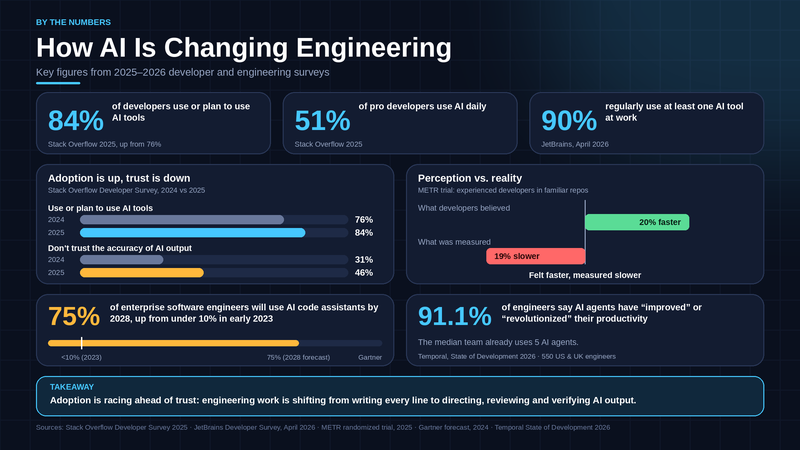
The engineering process is increasingly using artificial intelligence in a useful way. Instead of employing AI merely to generate code, engineers are using tools such as ChatGPT, Claude, Gemini, and specialised coding assistants to grasp research papers, explore foreign technologies, debug software, evaluate documentation, and move between different areas of engineering more quickly.
The experience of IBM researcher Kaoutar El Maghraoui is a valuable illustration. Her work includes machine learning systems, compiler infrastructure, AI hardware, software, and IBM's Spyre accelerator. She uses many tools for various tasks rather than depending on a single AI system for everything.
The result is not that AI does the engineering for her. Instead, it helps her learn faster, explore more possibilities, and spend more time on the parts of engineering that require human judgment.
AI Is Becoming a Research Partner
One of the biggest changes is happening before an engineer even starts writing code.
Engineers often need to understand unfamiliar subjects. That might mean reading technical papers, studying a new framework, learning a programming language, or understanding how a particular hardware system works.
Traditionally, this could involve hours of reading documentation and searching through papers.
AI makes that process more interactive.
An engineer can ask an AI assistant to explain a difficult concept, compare two approaches, walk through an unfamiliar piece of code, or answer follow-up questions. Instead of simply reading information, the engineer can have a conversation about it.
El Maghraoui described this as turning reading from a passive activity into an active one. She said material that might previously have taken an afternoon to work through could sometimes become a much shorter conversation in which she actively probes the ideas.
That does not mean the engineer can stop reading or checking sources. It means AI can help reduce the amount of time needed to get oriented.
Engineers Can Learn Outside Their Specialization
Modern engineering problems rarely fit neatly into one field.
An AI engineer may need to understand hardware architecture. A hardware researcher may need to understand compilers. A software engineer may need to understand machine learning systems or low-level performance optimization.
El Maghraoui’s work illustrates this clearly.
Her research involves AI accelerators and dataflow architectures, but she also needed to understand compiler infrastructure and how systems such as PyTorch interact with different hardware platforms.
Compiler engineering was an area she had not formally specialized in. Her learning process was aided by AI assistants, which helped her understand new ideas and relate them to real-world issues.
This is one of the more interesting effects of AI on engineering: the boundary between specialties can become easier to cross.
An engineer does not suddenly become an expert in another discipline, but AI can provide a useful starting point and help them ask better questions.
Read Also- How Much Water Does AI Use? The Real Impact of AI Data Centers
Coding Is Becoming More Collaborative
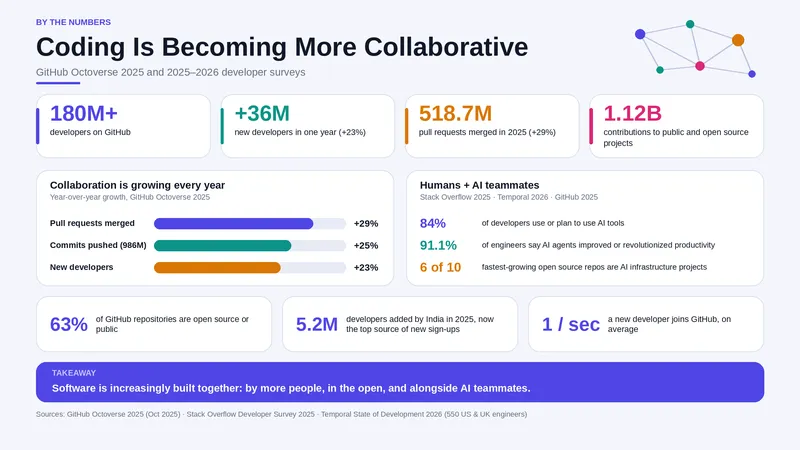
AI coding assistants are also changing how engineers approach software development.
Instead of starting with an empty file and writing every line manually, engineers can describe what they are trying to accomplish, ask for examples, generate initial implementations, or use AI to understand existing code.
The role of AI becomes particularly useful when working with large and unfamiliar codebases.
IBM’s Bob, for example, is designed to work within IBM’s development environment. According to El Maghraoui, having an assistant that understands the surrounding development environment can be valuable because large enterprise codebases contain a great deal of context.
This is an important distinction.
Generating a few lines of code is relatively easy. Understanding where that code belongs, how it interacts with an existing system, and what assumptions the surrounding code makes is much harder.
AI tools are increasingly being used to help with that broader context.
Debugging Can Start Faster
Debugging is another area where AI can save engineers significant time.
A software problem may produce a confusing stack trace, a failed test, an unexpected error, or thousands of lines of logs. The difficult part is often not writing the eventual fix. It is figuring out where to begin.
AI can help with this initial investigation.
An engineer can provide a failing test, stack trace, or relevant section of code and ask the AI to identify possible causes. The system can organize the information, suggest areas to investigate, and propose possible explanations.
El Maghraoui described this as reducing the amount of time she spends simply staring at logs while trying to determine what is happening.
The important word here is initial.
AI can speed up the investigation, but the engineer still needs to determine whether the suggested explanation is actually correct.
Engineers Are Using Multiple AI Tools
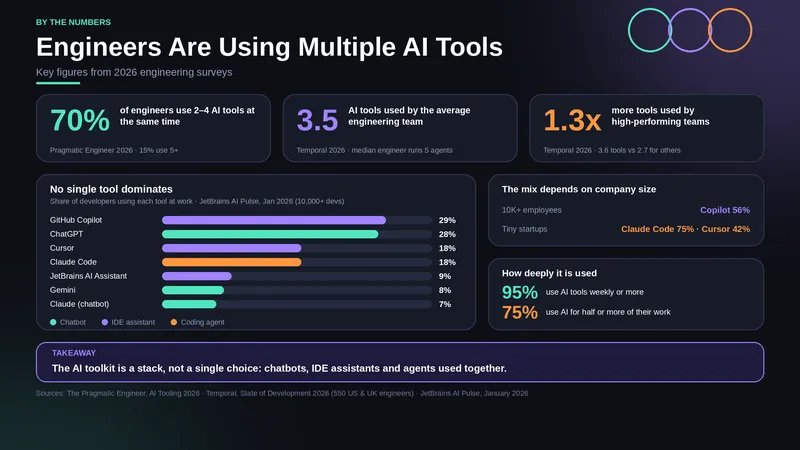
Another interesting change is that engineers do not necessarily have to choose one AI system and use it for everything.
Different tools can be useful for different tasks.
El Maghraoui uses Claude for coding and deep technical reasoning, ChatGPT for quickly surveying unfamiliar technical areas, and Gemini when very large amounts of context or documents are involved.
IBM’s Bob serves a different purpose because it operates within a development environment and can work with enterprise-specific context.
This suggests that engineering workflows may become more like a team of specialized digital assistants rather than a single AI tool doing everything.
The engineer remains the person coordinating the work.
AI Can Help Engineers Cover More Ground
Engineering work often involves trade-offs.
There may be several possible architectures, optimization strategies, debugging approaches, or implementation paths. Exploring all of them manually can take a lot of time.
AI can make it easier to explore those possibilities.
An engineer can ask an AI system to compare approaches, explain their advantages and disadvantages, identify potential problems, or suggest alternative ways of solving a problem.
That does not automatically produce the right answer. But it can make the exploration process faster.
For researchers working in rapidly changing fields, this matters even more. New papers, benchmarks, frameworks, and optimization techniques appear constantly.
AI can help engineers filter through that growing volume of information and decide what deserves closer attention.
AI Does Not Remove the Need for Engineering Expertise
This may be the most important point.
AI can sound extremely convincing even when it is wrong.
El Maghraoui specifically pointed out that AI systems can produce confident answers that fail under deeper technical examination. This becomes especially problematic in specialized areas where the model may not have enough context.
For example, an AI system may understand general concepts around an accelerator architecture but still get important details about a proprietary system wrong.
That is why engineering knowledge remains essential.
An experienced engineer can look at an AI-generated explanation and ask:
- Does this actually make sense?
- Does the proposed solution fit the system?
- What assumptions is the AI making?
- Can the result be reproduced?
- What happens under unusual conditions?
- Does the documentation support the claim?
Without that judgment, faster AI-generated answers can simply lead to faster mistakes.
AI Changes the Engineer’s Role
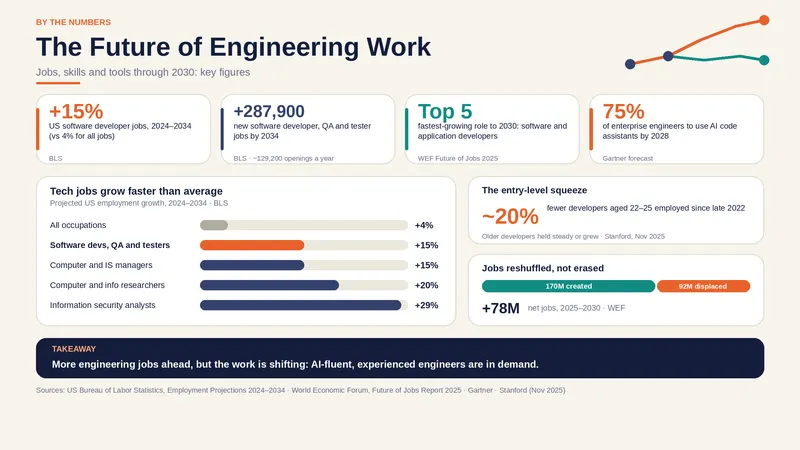
As AI takes over more repetitive parts of engineering work, the engineer’s role can shift.
Instead of spending most of their time searching for information, writing boilerplate code, or manually sorting through logs, engineers can spend more time defining problems, evaluating solutions, testing ideas, and making technical decisions.
In other words, AI can move engineering work up the problem-solving chain.
The engineer becomes less focused on producing every individual piece of output and more focused on directing, checking, and improving the overall result.
That does not make engineering easier in every sense. In some cases, it can make judgment even more important.
Human Judgment Still Matters
There is a temptation to think of AI as an expert that simply needs instructions.
Engineering does not work that way.
Real systems contain unusual constraints, incomplete information, legacy decisions, proprietary technology, and unexpected behavior. An AI model may not know all of those details.
This is why El Maghraoui treats AI outputs as first drafts and hypotheses rather than final conclusions.
That approach is useful beyond her specific work.
AI can suggest an answer. The engineer has to prove that the answer works.
AI can suggest code. The engineer has to test it.
AI can explain a research paper. The engineer still needs to understand the original work.
AI can identify a possible bug. The engineer has to confirm the actual cause.
The Future of Engineering Work
RECOMMENDED FOR YOU


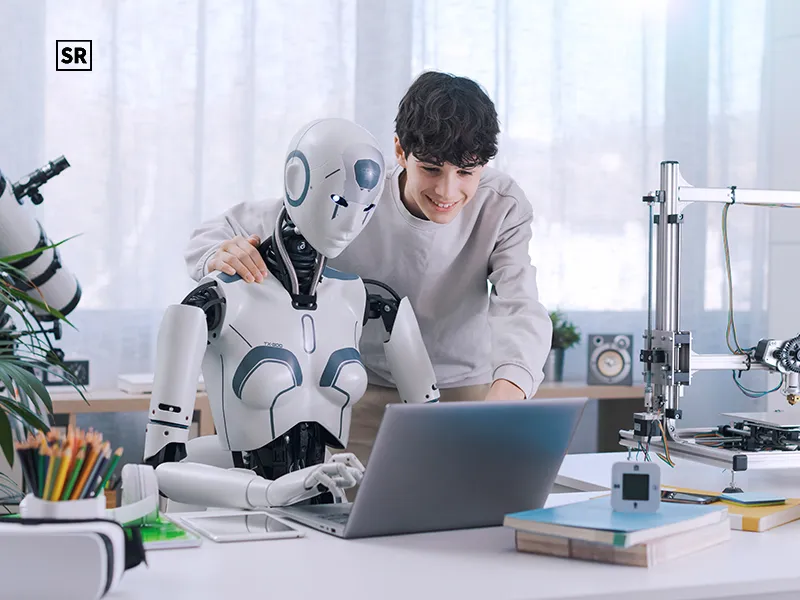
AI is unlikely to make engineering expertise irrelevant. Instead, it is changing what engineers can accomplish with that expertise.
An engineer who can use AI effectively may be able to learn unfamiliar subjects faster, investigate problems more efficiently, work through larger amounts of technical information, and experiment with more ideas.
At the same time, strong fundamentals become even more valuable.
When AI can produce an answer in seconds, knowing whether that answer is actually right becomes a critical skill.
The engineers who benefit most may not be those who simply use AI the most. They may be the ones who know how to combine AI’s speed with human experience, technical understanding, curiosity, and judgment.
Conclusion
AI is changing engineering work from the ground up.
It is becoming a research assistant, coding partner, debugging companion, and learning tool. Engineers can use it to understand difficult concepts, explore unfamiliar technologies, work through large codebases, and investigate problems more quickly.
But AI is not replacing the engineer in this process.
The most valuable part of engineering still involves deciding what matters, questioning assumptions, testing ideas, and knowing when an answer does not make sense.
The real change is that engineers now have another powerful tool to help them do those things.
AI can accelerate the journey, but human expertise still determines where the journey goes.
FAQs
How is AI changing engineering work?
How do engineers use AI in their daily work?
How does AI help with software debugging?
What are the biggest benefits of AI for engineers?
What is the future of AI in engineering?
Recommended Stories for You

Kailee Rainse Dec 24, 2024

Oliver Bennett Jun 3, 2024

Oliver Bennett Dec 4, 2025

Team SR Aug 25, 2024

Oliver Bennett Jul 19, 2024

Team SR Jul 1, 2024
Trending Stories

Leading Traveltech Startup in Europe

Startup Leveraging AR/ VR Technology

Government Grants For Women Owned Businesses 2024

Best Insurance For Startups 2024

Best Startups In Europe 2024

Best Platforms for Startup Promotion

Top Student Startup in Europe

Best Venture Capital Firms London 2024