

Why Data Centers Are Booming: AI, Cloud Computing and the Race for Power
Oct 5, 2026 | By Oliver Bennett
 Follow us
 Follow us
Data centers have been around for years, but they have suddenly become one of the biggest stories in the technology and business world.
The reason is simple: almost everything digital needs computing power somewhere in the background. From streaming movies and storing photos to online banking, cloud software, e-commerce, and artificial intelligence, all of these services depend on data centers.
What has changed recently is the speed of demand.
The growth of generative AI has pushed companies to build larger and more powerful facilities filled with advanced servers and specialized chips. At the same time, businesses are moving more of their operations to the cloud, creating another layer of demand for computing and storage.
According to the International Energy Agency (IEA), global data center electricity consumption is expected to more than double by 2030, reaching roughly 950 terawatt-hours.
So, why are data centers booming? Let’s break it down.
1. AI Is Driving Huge Demand
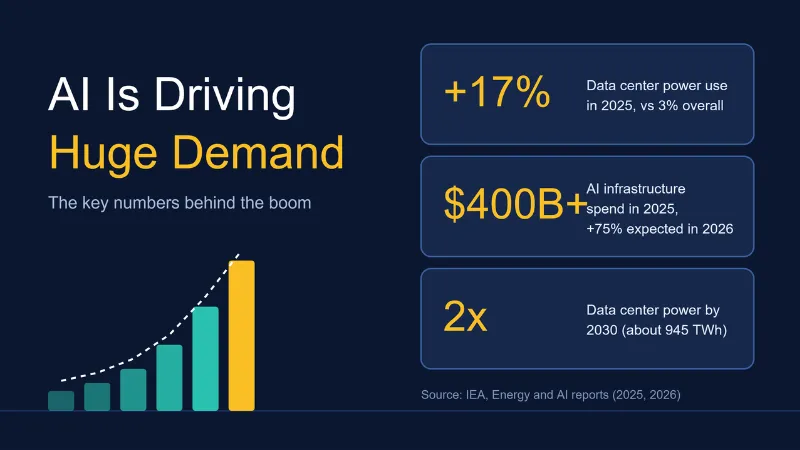
Artificial intelligence is probably the biggest reason behind the current data center boom.
Training and running modern AI models requires enormous amounts of computing power. AI companies need thousands of specialized processors to train models, while everyday users require computing resources every time they generate text, images, videos, or other AI content.
This means AI isn’t just creating demand for better software. It is creating demand for physical infrastructure.
The IEA says electricity demand from AI-focused data centers is expected to grow much faster than demand from traditional data center workloads.
That is why technology companies are spending billions on new facilities, servers, networking equipment, and power infrastructure.
2. Cloud Computing Is Still Growing
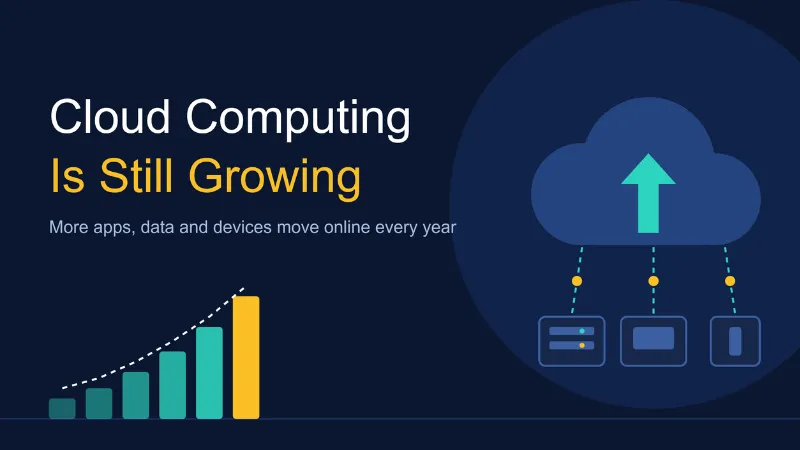
AI gets most of the attention, but cloud computing remains a major part of the story.
Businesses increasingly use cloud platforms instead of maintaining all their own servers. Companies can rent computing power, storage, databases, and software infrastructure whenever they need it.
Think about services such as:
- Cloud storage
- Online business software
- Video streaming
- E-commerce platforms
- Digital banking
- Enterprise applications
- Online gaming
- Backup and disaster recovery
All of these services require physical infrastructure somewhere.
As more businesses move their operations online, data center operators need to keep expanding their capacity.
3. More Data Is Being Created Every Day
The amount of digital information being produced continues to grow.
People upload photos and videos, businesses collect customer information, organizations store documents, and connected devices constantly generate new data.
That information has to be stored, processed, and protected.
This creates steady demand for servers and storage systems. Even when AI is not involved, the basic growth of the digital economy gives data centers a strong reason to expand.
4. Companies Want Faster AI and Cloud Services
RECOMMENDED FOR YOU



Location matters more than many people realize.
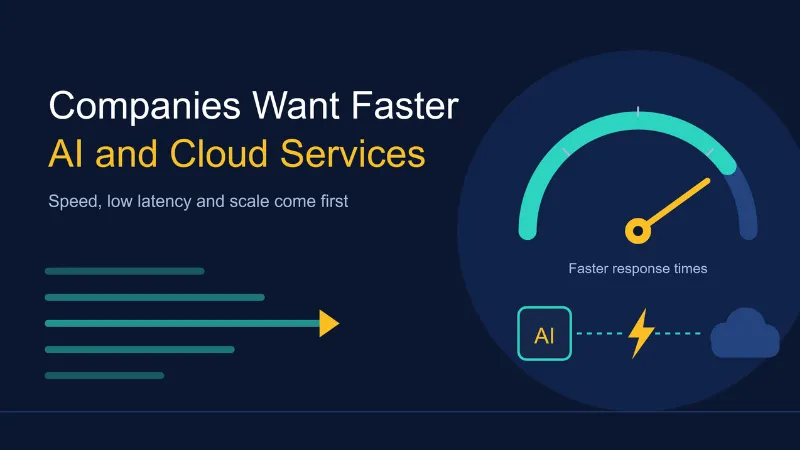
A data center that is closer to users can often help reduce latency, making digital services respond faster. This is particularly important for applications such as financial services, gaming, video calls, autonomous systems, and real-time AI applications.
That’s one reason companies are building facilities in different regions rather than putting all their computing infrastructure in one place.
The industry is also seeing more interest in edge computing, where certain workloads are processed closer to where the data is created or consumed.
5. Big Tech Companies Are Spending Heavily
The IEA reported that capital expenditure by five major technology companies exceeded $400 billion in 2025, with further growth expected in 2026.
This spending doesn’t go only toward software development. A significant portion supports the physical infrastructure needed to run increasingly powerful AI and cloud services.
That includes:
- Data center buildings
- AI servers
- GPUs and other accelerators
- Networking equipment
- Cooling systems
- Backup power
- Electricity infrastructure
This enormous investment is helping fuel the wider data center industry.
6. Data Centers Are Becoming More Powerful
Modern data centers aren’t simply rows of ordinary computers.
AI-focused facilities can require significantly more electricity than traditional data centers because they use high-performance processors and large clusters of servers.
Gartner estimates that worldwide data center electricity consumption could reach 565 TWh in 2026, up 26% from 2025. It also expects AI-optimized servers to account for about 31% of data center power consumption this year.
As AI workloads become more demanding, facilities need more power and increasingly sophisticated cooling systems.
This is changing what a modern data center looks like.
7. Electricity Has Become a Major Part of the Data Center Business
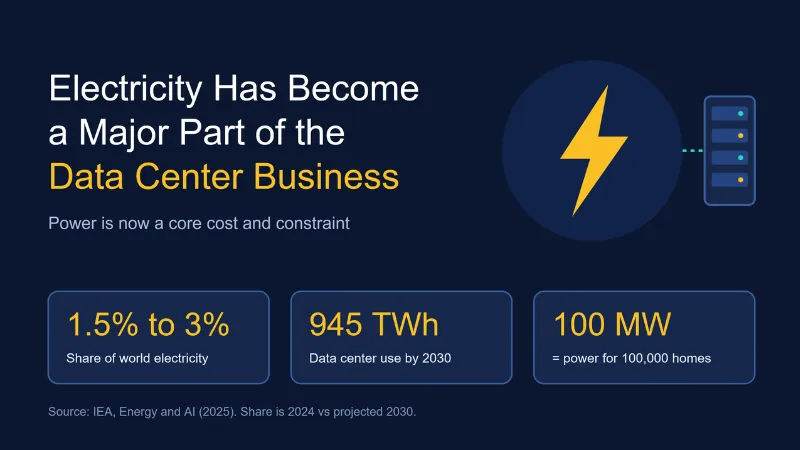
There is an interesting twist to the data center boom: the biggest challenge is no longer just finding servers or buildings. It’s finding enough electricity.
A large AI data center can consume enormous amounts of power. The IEA notes that hyperscale AI data centers can require more than 100 MW, while some of the largest facilities under construction are planned at much higher levels.
As a result, data center companies are increasingly thinking about power generation, grid connections, batteries, renewable energy, natural gas, and even nuclear power.
In other words, the data center industry is becoming closely connected to the energy industry.
8. Governments Are Investing in Digital Infrastructure
Additionally, governments acknowledge that data centers are becoming crucial components of the country's digital infrastructure.
Countries want to attract technology investment, support AI development, improve cloud capacity, and build stronger digital economies.
India is a good example. According to India’s Ministry of Electronics & Information Technology, the country’s installed data center capacity increased from about 375 MW in 2020 to around 1,575 MW in 2026. The government also says AI and high-performance computing are driving increased demand.
This creates opportunities for data center developers, energy companies, construction firms, network providers, and technology suppliers.
9. Data Centers Are Becoming an Investment Opportunity
The rapid growth of the industry has also attracted investors.
JLL estimates that nearly 100 GW of new data center capacity could be added globally between 2026 and 2030, effectively doubling global capacity. It also estimates that around $3 trillion of investment could be required for 100 GW of new supply. (JLL)
That investment isn’t limited to data center operators.
The boom can benefit businesses involved in:
- Construction
- Power generation
- Cooling technology
- Electrical equipment
- Networking
- Semiconductors
- Real estate
- Backup power
- Renewable energy
This is why the data center boom is often described as a much larger infrastructure trend rather than simply a technology story.
10. The Boom Comes With Challenges
The growth of data centers isn’t completely straightforward.
One of the biggest problems is power availability. Some regions simply don’t have enough electricity or grid capacity to support the number of facilities being proposed.
There are also concerns about water use, construction costs, land availability, environmental impact, and lengthy grid-connection processes.
The IEA has warned that supply-chain constraints involving transformers, gas turbines, advanced chips, and other components could slow the expansion of data centers. (IEA)
So while demand is strong, building a data center isn’t as simple as finding land and putting up a building.
What Does the Future Look Like for Data Centers?
The data center boom is unlikely to disappear anytime soon.
AI is still developing, cloud adoption continues, businesses are becoming more dependent on digital services, and the amount of data being created keeps increasing.
The IEA expects global data center electricity consumption to more than double by 2030.
At the same time, the industry will probably become more focused on efficiency.
Companies will look for better cooling systems, more efficient processors, renewable power, battery storage, improved data center designs, and new ways to get electricity where it is needed.
The next phase of the data center industry may therefore be less about simply building more buildings and more about figuring out how to power them efficiently.
Conclusion
Data centers are booming because the world is becoming increasingly digital, but AI has pushed that growth into a completely different gear.
Every AI chatbot, cloud application, digital payment, streaming service, and online platform needs computing infrastructure behind the scenes.
That explains why companies are pouring billions into new data centers and why electricity, cooling, land, and infrastructure have suddenly become major technology issues.
The data center boom is ultimately bigger than the tech industry. It is becoming a story about AI, energy, real estate, construction, telecommunications, and the future of the digital economy all at once.
FAQs
Why are data centers booming in 2026?
What is driving the growth of data centers?
How does AI affect data center demand?
What is the biggest challenge facing data centers?
Will data center demand continue to grow?
How are data centers connected to the energy industry?
Are data centers environmentally friendly?
Recommended Stories for You

Oliver Bennett Jan 6, 2025
Team SR Jan 6, 2025

Oliver Bennett Oct 17, 2024
Team SR Aug 3, 2024

Team SR Aug 25, 2024
Trending Stories

Leading Traveltech Startup in Europe
Startup Leveraging AR/ VR Technology

Government Grants For Women Owned Businesses 2024
Best Insurance For Startups 2024

Best Startups In Europe 2024
Top Student Startup in Europe

Best Platforms for Startup Promotion

Best Venture Capital Firms London 2024