

How UK Entrepreneurs Drive Economic Growth and Create Jobs
Oct 19, 2026 | By Oliver Bennett

 Follow us
 Follow us
Entrepreneurs play an important role in the UK economy. They start new businesses, create jobs, introduce new products and services, and bring investment into the country. From small local shops to growing technology startups, businesses help create opportunities and support economic growth.
The UK has businesses in many industries, including artificial intelligence (AI), fintech, healthcare, manufacturing, retail, renewable energy and professional services. These companies help meet customer needs, solve everyday problems and bring new ideas to the market.
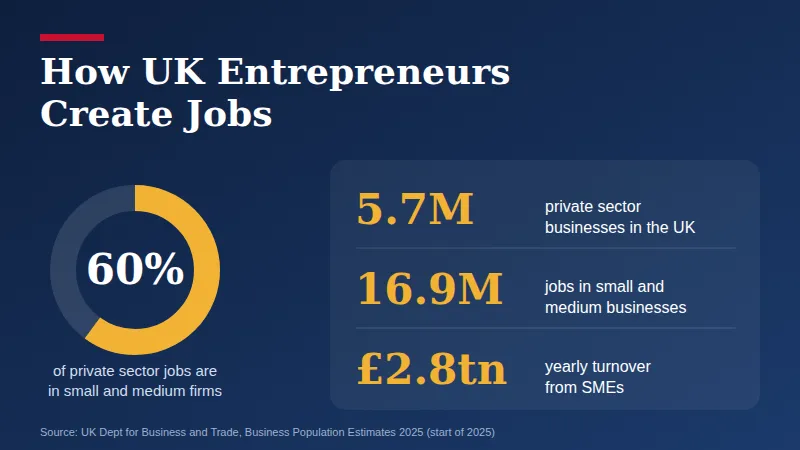
According to the UK Government's Business Population Estimates 2025, there were around 5.7 million private-sector businesses in the UK at the start of 2025. Small and medium-sized enterprises (SMEs) made up around 99.85% of these businesses, employed approximately 16.9 million people and generated an estimated £2.8 trillion in turnover.
These figures show how important small businesses and entrepreneurs are to the UK economy. While not every new business succeeds, those that grow and remain successful can create jobs, support communities and contribute to long-term economic growth.
1. Creating Jobs and Employment Opportunities
One of the main ways entrepreneurs support the UK economy is by creating jobs. When someone starts a business, they may begin by working alone or with a small team. As the business grows and attracts more customers, they may need to hire people for sales, marketing, finance, customer service and other roles.
These jobs give people a regular income and help them pay for everyday expenses. When employees spend their earnings on food, housing, transport and other products, they also support other businesses.
Growing businesses can create jobs beyond their own teams. For example, a company may need help from delivery services, accountants, designers, manufacturers and marketing agencies. This creates more work for other businesses.
Small and medium-sized businesses are especially important for employment. UK Government estimates for 2025 show that SMEs employed around 60% of the private-sector workforce. This highlights why helping small businesses grow can benefit workers across the country.
2. Supporting Small Businesses and Local Communities
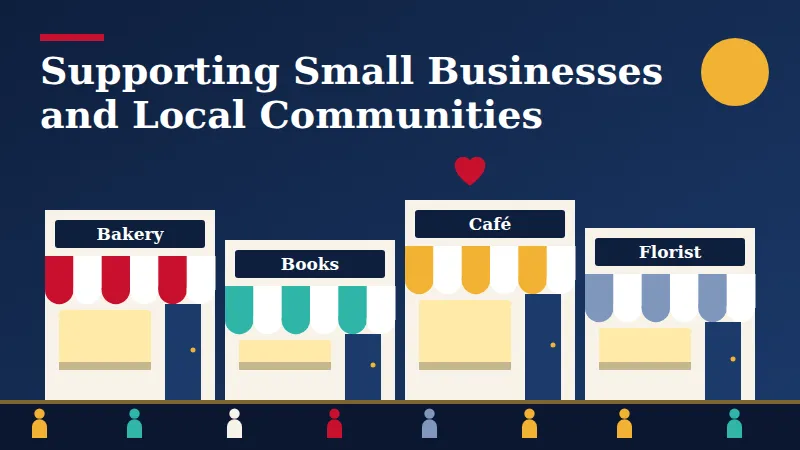
Entrepreneurs help local communities by opening shops, restaurants, construction companies, consultancies and other businesses that people use every day.
When these businesses grow, they can hire local workers, buy supplies from nearby companies and bring more activity to their communities. For example, a new restaurant may employ cooks and serving staff while buying food from local suppliers and using nearby cleaning services.
Entrepreneurs also look for services that people need but cannot easily find. They may open a business in an area with limited options or introduce services that make everyday life easier.
These businesses can create opportunities in small towns and rural areas as well as large cities. Their success depends on attracting customers, managing costs and earning enough money to continue operating.
3. Bringing New Ideas and Improving Productivity

RECOMMENDED FOR YOU


Entrepreneurs often find new ways to solve problems. They introduce products, services and technologies that can make work easier, save time or improve people's lives.
In the UK, many startups are working in areas such as AI, fintech, healthcare technology, cybersecurity and clean energy.
For example, a fintech startup may develop software that helps small businesses manage payments. A healthcare technology company might create digital tools that help healthcare providers organise information and reduce paperwork.
Innovation is not limited to technology companies. A shop that introduces a better online ordering system or a manufacturer that uses modern machinery can also improve the way it works.
These changes can help businesses produce more goods or deliver better services without using significantly more resources. This is known as improving productivity.
When new ideas work well, other companies may follow them or develop their own solutions. This helps businesses improve and compete in the market.
4. Attracting Investment and Growing Businesses
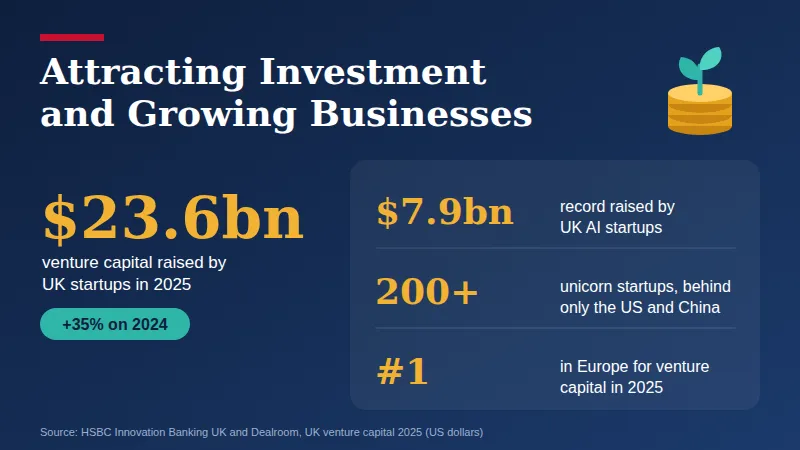
Many entrepreneurs need money to start or expand their businesses. They may use personal savings, bank loans, angel investment, venture capital or other funding options.
This money can help them develop products, hire employees, buy equipment and reach more customers.
For example, a technology startup that raises seed funding may use the money to hire software developers, improve its product and attract its first customers. If the business performs well, it may raise more funding to expand into new markets.
Investment can benefit the wider economy when businesses use it to grow, create jobs and work with other companies. Growing businesses may also need more suppliers and professional services, creating opportunities for others.
However, raising money does not guarantee success. Entrepreneurs need to manage their finances carefully, understand their customers and build a business that can earn enough revenue to survive.
5. Increasing Competition and Giving Customers More Choice

Entrepreneurs bring new businesses into the market, giving customers more options. They often compete with established companies by offering different products, better services or more convenient ways to buy.
This competition encourages businesses to improve their products, listen to customers and find better ways to work.
For example, a startup that develops easy-to-use accounting software for small businesses may encourage existing providers to improve their own tools or offer better customer support.
Customers can benefit from having more choices that suit their needs and budgets. Competition can also encourage companies to become more efficient and develop new ideas.
Although competition does not always lead to lower prices, it can help create a market where businesses work harder to meet customer expectations.
Read Also- Best Sole Trader Accounting Software in 2026
6. Developing Skills and Training Workers

Entrepreneurs also help people develop useful skills by hiring employees and providing opportunities to learn on the job.
As businesses grow, they may offer entry-level jobs, apprenticeships, internships and specialist positions. These opportunities help workers gain experience in areas such as communication, technology, teamwork and problem-solving.
Business owners also need to improve their own skills. Running a company involves managing money, finding customers, hiring staff and making important decisions.
As a business expands, its founder may bring in experienced managers and provide more training for employees. This can help the company work more efficiently and prepare its team for future challenges.
A skilled workforce benefits the wider economy because businesses can use new technology, improve their services and respond more effectively to changes in the market.
7. Supporting Economic Growth Across the UK

Entrepreneurship creates opportunities across England, Scotland, Wales and Northern Ireland. Although London is an important centre for finance and technology, other parts of the UK also have strong business opportunities.
Different regions have strengths in areas such as manufacturing, engineering, energy, creative industries and digital services.
For example, a manufacturing startup in the Midlands may work with local engineering companies, while a software business in Scotland may sell its services to customers around the world.
Businesses outside major cities can create local jobs, attract investment and support other companies in their areas. Universities and local business organisations can also help entrepreneurs develop ideas and connect with potential customers.
Access to funding, reliable infrastructure and skilled workers remains important. Supporting businesses across different regions can help spread economic opportunities more widely.
8. Helping UK Businesses Reach International Markets

Entrepreneurs can grow their businesses by selling products and services to customers in other countries. This allows them to reach larger markets, increase sales and build relationships with international partners.
For example, a UK software company can sell subscriptions to customers in Europe, North America and Asia. A manufacturer may export products, while a consultancy can provide services to overseas clients.
Selling internationally can help businesses increase revenue and create more jobs in the UK. It can also encourage companies to invest in better products, technology and staff.
However, expanding into other countries takes planning. Businesses must understand local rules, manage currency changes, organise deliveries and compete with companies already operating in those markets.
With the right preparation, international expansion can help UK businesses grow and reach more customers.
Challenges Faced by UK Entrepreneurs
Starting and running a business can be difficult. Entrepreneurs often face rising costs, limited access to funding, recruitment problems and strong competition.
New businesses may also struggle to manage cash flow, especially when they have to pay expenses before receiving money from customers. Changes in customer demand can create further uncertainty.
To overcome these challenges, entrepreneurs need a clear business plan, careful financial management and a good understanding of their target market. Access to funding, training and practical business advice can also help.
Supporting entrepreneurs through these challenges can give promising businesses a better chance of surviving, growing and creating jobs.
Conclusion
UK entrepreneurs support economic growth by creating jobs, helping local communities, introducing new ideas and attracting investment. They also help businesses improve productivity, develop workers' skills and reach customers in international markets.
Small and medium-sized businesses play a major role in this process. Government estimates for 2025 show that they made up nearly all UK private-sector businesses and employed around 60% of the private-sector workforce.
However, starting a business is only the first step. Entrepreneurs need to manage costs, understand customers and build sustainable companies to create lasting benefits.
By improving access to funding, supporting skills development and encouraging innovation, the UK can help more entrepreneurs succeed. Stronger businesses can create more employment opportunities and contribute to a more productive and competitive economy.
Recommended Stories for You

Oliver Bennett Jun 3, 2024

Oliver Bennett Sep 21, 2026

Team SR Jan 20, 2025

Oliver Bennett Nov 1, 2023

Oliver Bennett Dec 13, 2025

Oliver Bennett Nov 3, 2023
Trending Stories

Best Insurance For Startups 2024

Best Platforms for Startup Promotion

Best Startups In Europe 2024

Top Student Startup in Europe

Best Venture Capital Firms London 2024

The Top Disruptar brand, Revolutionizing the European

Business Credit Cards For Startups

Startups Hit €200 Million+ in 2024 Funding Report