

What Is Affiliate Marketing? A Complete Guide to How It Works and How to Earn Money
Nov 2, 2026 | By Oliver Bennett
 Follow us
 Follow us
Affiliate marketing is a popular way to make money online. It allows people, bloggers, website owners, and content creators to earn money by promoting products or services from other companies. The best part is that affiliate marketers do not need to create their own products, keep stock, or manage deliveries.
But what is affiliate marketing, how does it work, and how can beginners start?
Affiliate marketing is a way of earning a commission by promoting another company's products or services. When someone buys a product or completes a required action through your special affiliate link, you earn money.
Companies use affiliate marketing to find new customers, while marketers earn money by recommending products to their audiences. It is an important part of digital marketing because businesses pay affiliates for the results they bring.
How Does Affiliate Marketing Work?
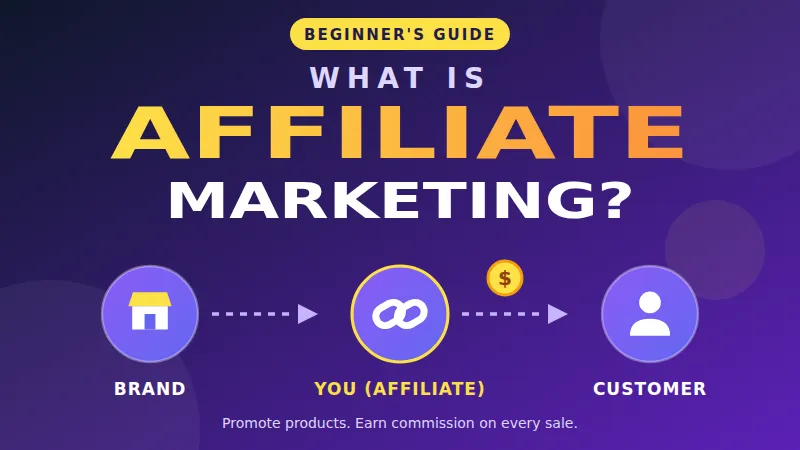
Affiliate marketing works through a partnership between three main parties: the company selling the product, the affiliate promoting it, and the customer buying it.
First, an affiliate marketer joins a company's affiliate programme and gets a unique tracking link. They share this link through their website, blog, YouTube channel, social media account, or email newsletter.
When someone clicks the link and makes a purchase or completes another required action, the system records it. The affiliate then receives a commission based on the programme's rules.
Here is how the process works:
- Join an affiliate programme: Find a company or affiliate network that offers products related to your audience.
- Get an affiliate link: The company gives you a special link to track visitors and sales.
- Promote products or services: Share your links through blog posts, product reviews, videos, or social media.
- Get customers: Someone clicks your link and makes a purchase or completes the required action.
- Earn money: The company tracks the sale and pays you a commission.
For example, imagine you have a website about technology and write an article reviewing laptops. You add an affiliate link to a laptop sold by an online store.
If someone reads your article, clicks the link, and buys that laptop, you earn a commission from the sale. The customer pays the normal product price, while you earn money for bringing the customer to the store.
What Are the Different Types of Affiliate Marketing?
RECOMMENDED FOR YOU



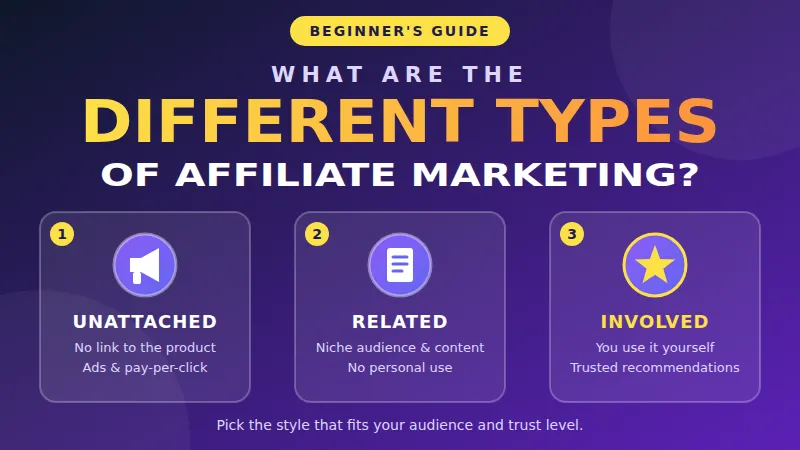
Affiliate marketing has different types based on how marketers promote products and connect with their audiences.
1. Unattached Affiliate Marketing
Unattached affiliate marketing means promoting products without having a strong connection to them or the people who buy them.
For example, a marketer may run online advertisements for a product without using it or having knowledge of that product category.
This method mainly focuses on getting clicks and sales through paid advertisements.
2. Related Affiliate Marketing
Related affiliate marketing means promoting products that match your website, social media content, or area of interest.
For example, a fitness blogger may promote gym equipment, sports clothes, or fitness apps. The blogger may not have used every product but has an audience interested in fitness.
This method works because the products are related to what the audience already likes.
3. Involved Affiliate Marketing
Involved affiliate marketing means promoting products that you have personally used or tested.
For example, a technology blogger may use a laptop for several weeks and then write an honest review. They can explain its features, benefits, and problems before sharing an affiliate link.
This approach can help build trust because the recommendations come from personal experience.
How Do Affiliate Marketers Make Money?
Affiliate marketers earn money through commissions when people buy products or complete certain actions using their links. The amount they earn depends on the company's payment rules.
Here are some common affiliate marketing payment methods:
- Pay Per Sale (PPS): You earn money when someone buys a product through your affiliate link.
- Pay Per Click (PPC): You receive payment for getting qualifying clicks on a link, even if the visitor does not buy anything.
- Pay Per Lead (PPL): You earn money when someone completes an action, such as filling out a form or signing up for a service.
- Pay Per Install (PPI): You receive money when someone downloads or installs an app through your link.
- Recurring Commission: You continue earning money when customers referred by you keep paying for a subscription.
For example, suppose a company offers a 10% commission on a product worth $100. If someone buys the product through your link, you earn $10.
If you generate 50 successful sales, you can earn $500 in total commissions, provided all purchases meet the programme's conditions.
However, your actual earnings depend on website traffic, product prices, commission rates, and the number of people who make purchases. Affiliate marketing does not guarantee a fixed income.
Popular Affiliate Marketing Platforms
Many companies and online platforms help affiliate marketers find businesses and products to promote.
Here are five popular affiliate marketing platforms:
1. Amazon Associates
Amazon Associates is one of the most popular affiliate programmes. It allows website owners, bloggers, and eligible content creators to earn commissions by promoting products sold on Amazon.
Affiliates can create special product links and share them through approved websites and platforms. Commission rates depend on the product category and programme rules.
2. CJ Affiliate
CJ Affiliate is a platform that connects marketers with companies from different industries. It offers tools to track clicks, sales, and affiliate performance.
It is a useful option for publishers who want to work with well-known brands.
3. ShareASale
ShareASale connects affiliate marketers with businesses selling different types of products and services. It provides access to affiliate programmes, tracking tools, and commission opportunities.
4. Awin
Awin is a global affiliate marketing platform that connects businesses with publishers. It works with companies in industries such as shopping, travel, finance, and technology.
5. Impact
Impact is a platform that helps businesses manage affiliate and marketing partnerships. It allows affiliates to find brand programmes and track their results.
Before joining any platform, check its rules, commission rates, payment methods, and availability in your country.
How to Start Affiliate Marketing as a Beginner

Starting affiliate marketing does not require a lot of money. However, you need to choose the right products, create useful content, and understand what your audience wants.
Here are six simple steps to get started.
Step 1: Choose a Profitable Niche
First, choose a topic that you understand or enjoy. A niche helps you focus on a particular group of people and promote products that match their interests.
Some popular affiliate marketing niches include:
- Technology and electronics
- Health and fitness
- Personal finance
- Travel and tourism
- Beauty and skincare
- Education and online courses
- Software and digital tools
Choose a niche that people are interested in and has suitable affiliate programmes. Do not select a topic only because it offers high commissions.
Step 2: Find the Right Affiliate Programmes
After choosing your niche, look for companies that offer affiliate programmes.
Compare their commission rates, payment methods, cookie duration, and programme rules. Choose products that are useful and relevant to your audience.
Step 3: Create a Website or Choose a Platform
You need a place where you can share information and affiliate links.
Starting a website or blog is a good option because you can publish product reviews, comparison articles, buying guides, and tutorials.
You can also promote products through YouTube, Instagram, and other social media platforms. Make sure you follow their rules when sharing affiliate links.
Step 4: Create Useful Content
Good content is important for affiliate marketing. Instead of only sharing product links, create content that helps people choose the right products.
You can create:
- Product reviews
- Product comparison articles
- Buying guides
- How-to guides
- Lists of the best products
- Frequently asked questions
Try to answer common questions and give honest product recommendations.
Step 5: Bring Visitors to Your Content
Getting visitors to your website or social media pages can increase your chances of making sales.
You can attract visitors through search engine optimisation (SEO), social media, email newsletters, and videos.
For example, if your website focuses on laptops, you can write articles about the best business laptops, laptop comparisons, and tips for choosing the right device.
Step 6: Check Your Results and Improve
Use analytics tools and affiliate dashboards to check how your content is performing.
Track the number of clicks, sales, commissions, and website visitors. Find out which articles and products are bringing the best results.
Use this information to improve your content and marketing strategy.
Read Also- Small Business Financial Advisor: How to Choose the Right Expert for Your Business
Benefits of Affiliate Marketing
Affiliate marketing offers several benefits to people who want to earn money online.
Low Starting Costs: You do not need to make products, buy stock, or rent a warehouse. Many affiliate programmes are free to join.
Flexible Working Hours: You can work from home or anywhere else and manage your own schedule.
Different Ways to Earn: You can promote products from different companies and earn commissions through multiple affiliate programmes.
No Need to Manage Products: The company usually handles product creation, stock, delivery, and customer support.
Chance to Earn Passive Income: Your articles, videos, and product reviews can continue bringing visitors and earning commissions over time. However, you may need to update your content regularly.
Challenges of Affiliate Marketing
Affiliate marketing has many benefits, but it also comes with some challenges.
- High Competition: Many websites and content creators promote similar products, making it harder to attract customers.
- Changing Commission Rates: Companies can reduce commission rates or close their affiliate programmes.
- Getting Website Traffic Takes Time: Building an audience through SEO and social media requires regular effort.
- No Guaranteed Income: Simply sharing affiliate links does not mean you will make money.
- Dependence on Other Platforms: Changes to Google, social media platforms, or affiliate programme rules can affect your earnings.
Understanding these challenges can help beginners plan better and build a stronger affiliate marketing business.
Is Affiliate Marketing Worth It in 2026?
Yes, affiliate marketing can be a good way to earn money online in 2026. It is especially useful for people who enjoy creating content, reviewing products, and helping others make buying decisions.
Many businesses use affiliate marketing to reach new customers. At the same time, people regularly search online for product reviews and recommendations before making a purchase.
However, competition is increasing. Simply adding affiliate links to articles is not enough to earn regular income.
Successful affiliate marketers focus on creating original content, understanding their products, and building trust with their audiences. They also use SEO, social media, email marketing, and other methods to reach more people.
For beginners, the best approach is to start with one niche, choose suitable affiliate programmes, and publish helpful content regularly.
Final Thoughts
Affiliate marketing is a simple way to earn money online by promoting products and services from other companies. You do not need to create your own products, making it a useful option for beginners, bloggers, and content creators.
However, earning money through affiliate marketing takes time and effort. You need to choose the right niche, join suitable programmes, create helpful content, and build trust with your audience.
If you want to start an online business, affiliate marketing can help you learn digital marketing skills and build an additional source of income over time.
FAQs
1. What is affiliate marketing in simple words?
Affiliate marketing is a way to earn money by promoting another company's products or services. When someone buys a product or completes a required action through your special link, you receive a commission.
2. Can beginners start affiliate marketing without money?
Yes. Many affiliate programmes are free to join. Beginners can start by creating content on social media or free publishing platforms. However, building a professional website, running advertisements, or using paid tools may cost money.
3. How much can you earn from affiliate marketing?
Your earnings depend on website traffic, audience interest, product prices, commission rates, and sales. Some people earn a small amount, while experienced marketers may earn much more. There is no fixed or guaranteed income.
4. Do you need a website for affiliate marketing?
No. A website is not compulsory. You can promote products through YouTube, Instagram, blogs, and other platforms that allow affiliate links. However, having your own website gives you more control over your content.
5. Which affiliate marketing programme is best for beginners?
Amazon Associates, ShareASale, Awin, CJ Affiliate, and Impact are popular choices. The right platform depends on your niche, location, audience, and the products you want to promote.
6. Is affiliate marketing legal?
Yes. Affiliate marketing is a legal way to earn money online. However, marketers must follow advertising, privacy, consumer protection, and tax rules that apply to them. They should also clearly tell their audience when they may earn a commission from a link.
Recommended Stories for You

Team SR Jan 13, 2025

Team SR Oct 8, 2024
Kailee Rainse Sep 25, 2026

Team SR Jun 29, 2024
Oliver Bennett May 6, 2024

Team SR Nov 29, 2025
Trending Stories

Startups Hit €200 Million+ in 2024 Funding Report
Business Credit Cards For Startups

Top Incubators And Accelerator Of UK
Startup Ecosystem Of Netherlands

Unique Business Ideas In Marseille For 2024
List of European Ecommerce Unicorn

How To Start A Business Uk?

Grants From The Government To Start A Business