

Go Eve Secures £750K to Upgrade DockChain EV Charging Technology
Oct 21, 2026 | By Oliver Bennett
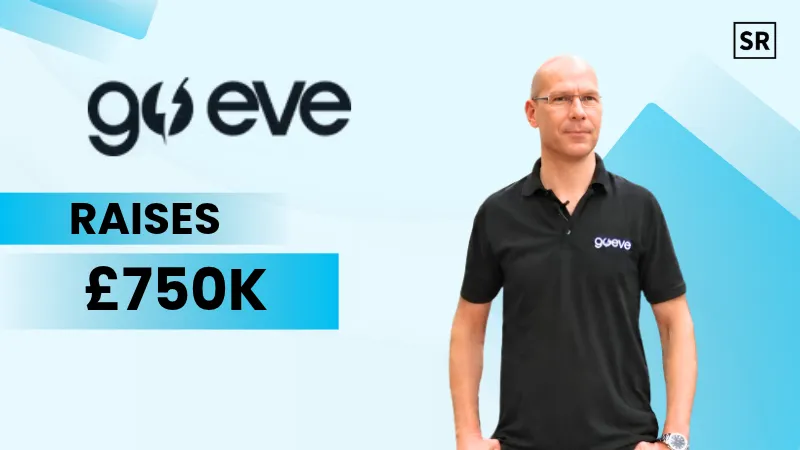
Go Eve, a spin-out from University College Dublin (UCD) and Imperial College London, has secured £750,000 (around €890,000) from Innovate UK and private investors. The funding will support an 18-month project to develop the next version of its patented DockChain technology, which allows one DC fast charger to serve multiple parking bays.
SUMMARY
- Go Eve has secured £750,000 (around €890,000) from Innovate UK and private investors.
- The funding will support an 18-month project to improve its DockChain technology, which allows one DC fast charger to serve multiple parking bays.
- The project will also explore vehicle-to-grid (V2G) technology, which could help fleet operators earn revenue by supplying electricity back to the grid.
 Follow us
 Follow us
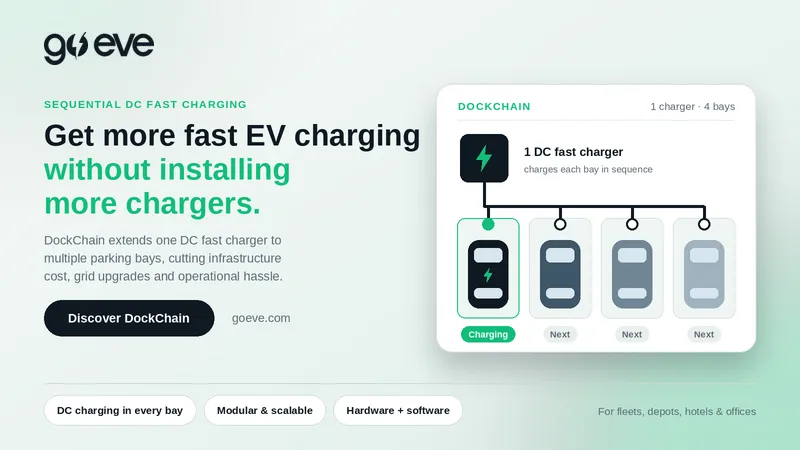
DockChain helps charging operators support more electric vehicles without installing a separate fast charger in every parking space. Vehicles can stay plugged in while the system charges them one at a time. This can reduce the number of chargers needed, lower infrastructure costs and make installation easier.
The new project will focus on developing updated hardware, firmware and software to make charging sessions more reliable. The improvements will allow DockChain to start, stop and restart charging without requiring drivers to unplug and reconnect their vehicles. Existing DockChain units will also be upgradeable to support the new technology.
The development is based on challenges found at real fleet charging sites. Some electric vehicles do not start charging on the first attempt, while others may not restart properly after charging stops. Go Eve aims to solve these issues, making automated charging more reliable and helping operators manage charging schedules and vehicle priorities more easily.
RECOMMENDED FOR YOU

Arago Raises $26M to Launch Energy-Efficient AI Chip Powered By Light
Kailee Rainse
Jul 8, 2025

Vizzu funding news – Data Storytelling Startup Vizzu Secures $1.5 Million in Funding
Oliver Bennett
Jun 27, 2024
“As fuel prices reach record highs and EV penetration across UK commercial fleets is projected to reach 30–50% by 2030, fleet managers are reappraising the economics of electrification. The ability to make better use of existing chargers, parking bays and available grid capacity will be increasingly important in managing this transition,” said, John Goodbody, co-founder and Marketing Director, Go Eve.
He added, “We’ve already shown that fleets can serve more bays without multiplying the number of fast chargers, that’s where the immediate cost and rollout benefit comes from DockChain. Working with fleets has also taught us that vehicles don’t always behave exactly as expected at the charging connector. Some EVs need another attempt to start; others can be reluctant to restart charging after power flow is paused for grid, or priority reasons. This project tackles those practical issues so we can make DockChain more reliable and more flexible.”
The project will also explore how DockChain could support bidirectional charging and vehicle-to-grid (V2G) services in the future. This could help fleet operators earn extra revenue by sending stored electricity from vehicle batteries back to the power grid when their vehicles are not in use.
The project is supported by Innovate UK through its Growth Catalyst Investor Partnerships programme. Go Eve’s engineering team in Wolverhampton, UK, will lead the development and testing. The company aims to deliver a new, production-ready version of DockChain to its manufacturing partners in 2027.
Go Eve is inviting fleet operators to take part in trial projects. It is particularly interested in sites where multiple vehicles share limited charging capacity, have different departure times or require different charging priorities. The company is also looking for sites where vehicles remain parked long enough to offer potential V2G revenue opportunities. Trials will be planned around each site’s needs, with the new features tested as they become available.
Recommended Stories for You


Oliver Bennett May 26, 2026

Kailee Rainse Jul 17, 2025

Oliver Bennett Apr 23, 2026

Kailee Rainse Dec 3, 2025

Beyond Aero funding news – Toulouse-based Beyond Aero Secures $44Million in Series A Round Funding
Kailee Rainse Oct 29, 2024
Trending Stories

[Funding alert] Estonian-based Woola Raises €2.5M in Funding
Balderton funding news – London-based Balderton Secures $1.3 Billion in New Funding

[Fudning alert] Dutch-based Social Platform Amigos Raises €1M Funding

Eden AI funding news – France-based Eden AI has Secured €3Million in a Seed Funding

Cloud Gateway funding news – London-based Cloud Gateway Raises £1.5 Million Funding

Spanish AI-native platform Orbio raises over €6 million to expand its HRTech solution

Parquest funding news – France-based Parquest closed its Parquest III fund at €414Million

Atelerix funding news – England-based Atelerix Secures £750k in Funding