

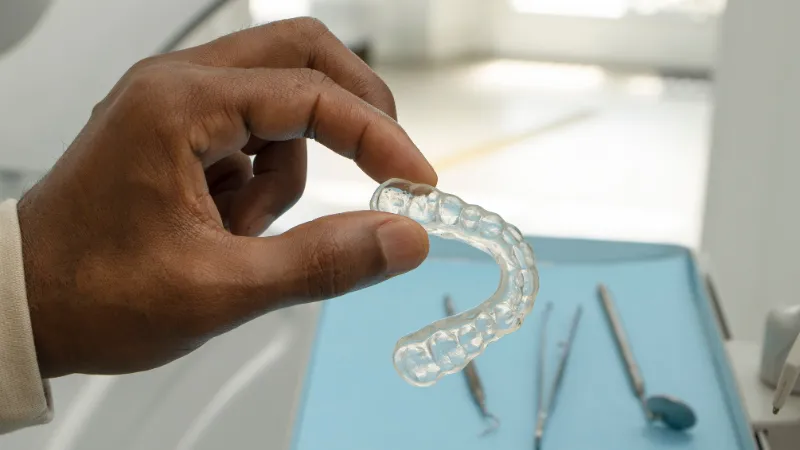
An orthodontic relapse is something that no dentist wants any patient to suffer from! Most of the time, it happens because the patient failed to wear the retainers, but it is not always negligence on the patient’s part. Thermoplastic removable retainers are gaining popularity because of their ease of use and high aesthetic quotient. But many times, it fails to perform its intended function because of its poor quality. Retainers are meant to retain the orthodontically aligned teeth in their correct position, and that naturally requires them to last long while staying effective. But what will happen if the retainers are cracking repeatedly, catching stains way too quickly, and patients are uncomfortable wearing them? The patients will become irregular and slowly stop wearing them altogether. Many may not even report it to you. Some may come back with a relapse and blame the orthodontic treatment, whereas the real cause was the retainer material. All you had to do was select the right one. Let’s look at what makes a retainer material worth choosing for long-term wearability.
 Follow us
 Follow us
Ideal Properties of a Retainer Material:
When evaluating any retainer sheets material, there are a few qualities you want to keep in mind. These are not strict rules set in stone, but they do give you a fairly reliable framework for comparison.
Durability is probably the first thing to consider. A retainer material that cracks or warps within a few weeks is not going to serve your patients well. Materials like high-grade thermoplastics tend to hold up reasonably well under daily wear, though the actual longevity can vary depending on how the patient uses and cares for the appliance.
Biocompatibility matters quite a bit, too. The retainer sits in the patient’s mouth for hours continuously, along with overnight use. If the material is not well-tolerated by the oral tissues, patients will experience irritation or sensitivity, which becomes another reason for them to take it out. Most contemporary retainer materials are tested for oral biocompatibility, but it is worth verifying this, especially when sourcing newer suppliers.
RECOMMENDED FOR YOU

From Link to Spotlight: Transforming Blog Posts into Scroll-Stopping Videos
Team SR
Oct 13, 2025

Stain and odour resistance is something patients care about more than they usually say. A retainer that discolours quickly or begins to smell unpleasant after a few weeks is going to be an embarrassing and uncomfortable experience for them. Some clear thermoplastic materials are more prone to staining than others, particularly when patients consume tea, coffee, or turmeric-heavy foods regularly.
Clarity and thickness do affect compliance. Patients, particularly adults, are much more likely to wear a retainer that is not visibly obvious and does not feel too thick. If the material clouds over quickly or feels bulky, it acts as a disadvantage, and people tend to avoid wearing the retainers.
Dimensional stability is another factor that does not always get discussed enough. The material should retain its shape over time and under temperature changes.
Distorted retainers do not fit accurately, which reduces their effectiveness.
How to Choose the Right Retainer Material?
Now, choosing the right retainer material can be tricky if you do not know what to look for. There are quite a few variables involved, and what works well for one patient may not be the best fit for another.
Consider the patient’s lifestyle first. Patients who grind their teeth or are generally rough with appliances will need a more robust material. For these patients, a thicker gauge thermoplastic or even a fixed retainer might be the more practical option.
Assess compliance history. If a patient already has a track record of being irregular with appliances, choosing a material that is more comfortable and easier to wear can make a real difference. Thin, flexible materials often feel less intrusive and tend to see better compliance in this group.
Think about the complexity of the case. After more involved orthodontic corrections, the retainer needs to hold teeth firmly in position. In such situations, the retainer material and its thickness should be chosen with that level of retention in mind rather than defaulting to whatever is routinely stocked.
Factor in maintenance ease. Patients who are likely to soak their retainers in hot water or use harsh cleaning agents benefit from materials that can handle some degree of misuse. Not all thermoplastics respond equally to these conditions.
Source from reliable suppliers. The same type of material can perform very differently depending on manufacturing quality. Choosing materials from established, verified suppliers reduces variability in your outcomes significantly.
Conclusion
Retainer material selection is one of those decisions that can quietly make or break your post-orthodontic outcomes. It may not feel like the most critical choice in the room, but the evidence in your recall appointments will tell a different story over time. When you take a little extra care in choosing the right retainer material for each patient’s specific situation, you reduce relapse risk, improve compliance, and protect the work you put into the orthodontic treatment in the first place.
Recommended Stories for You

Sophie Carter Oct 5, 2026

Team SR Nov 25, 2025

Team SR Mar 6, 2026


Team SR Aug 21, 2026

Team SR Feb 14, 2026
Trending Stories

Why UK Startups Need Better Access to Legal Documents as They Scale

Is Gamification as a Service the Next Major Battleground for Startups?

Top 10 Backlink Agencies Businesses Trust for Real Authority

How Local Taxi Services Help Keep Highland Tourism Moving

Are Working Students the Quietest Demographic Relying on the Essay Writing Service EssayService.com?

Building a Startup While Still in University: A Practical Guide

What to Know Before Adding Battery Storage to Your Home

How to choose between growing your team and improving your process