

Average Bed and Breakfast Income UK: How Much Can a B&B Earn in 2026?
Nov 20, 2026 | By Oliver Bennett
 Follow us
 Follow us
Starting a bed and breakfast (B&B) in the UK can be a good business opportunity, especially for people who own a property in a tourist area or a popular city. Many travellers look for comfortable places to stay during holidays, weekend trips and short breaks. This creates opportunities for property owners to earn money by offering accommodation.
But how much money can you actually make from running a B&B in the UK?
The average bed and breakfast income depends on several things, such as the number of rooms, nightly prices, bookings, location and running costs. A small B&B with three or four rooms will usually earn less than a larger property with eight or ten rooms.
There is no fixed average income for all B&B businesses in the UK. However, available industry figures and simple calculations can help owners understand how much they could earn.
In this guide, we explain how much a B&B can earn in the UK, its possible profit, running costs and the main factors that affect its income in 2026.
Average Bed and Breakfast Income in the UK
A small B&B in the UK with four guest rooms could generate around £70,000 to £100,000 in yearly room revenue. The actual amount depends on how much the owner charges per night and how many rooms are booked throughout the year.
This is an estimated range, not an official UK-wide average. B&Bs in popular tourist areas may earn more, while properties in places with fewer visitors may earn less.
A submission by the Scottish Bed & Breakfast Association to the Scottish Parliament provides an example of B&B earnings. It estimated that an average B&B could generate around £98,400 in annual gross sales.
The estimate was based on:
- Average guest rooms: 4.31
- Average price per room per night: £114.37
- Average occupancy rate: 54.67%
These figures used the association's business estimates and Scottish accommodation data from 2022. They are not a current average for the whole UK and do not represent the owner's actual profit.
It is important to understand that business revenue and personal income are different. B&B owners must pay for food, cleaning, laundry, electricity, water, repairs, insurance and booking fees. The money left after paying these costs contributes to the business profit.
How Much Can a Small B&B Earn Per Year?
The yearly income of a B&B mainly depends on three things: the number of rooms, the price charged per night and the number of bookings.
Here are some examples of how much different-sized B&Bs could earn:
| B&B size | Average nightly rate | Occupancy | Estimated annual revenue |
| 3 rooms | £75 | 50% | £41,063 |
| 4 rooms | £100 | 55% | £80,300 |
| 5 rooms | £110 | 60% | £120,450 |
| 6 rooms | £125 | 65% | £177,938 |
These are estimated figures based on the same occupancy rate throughout the year. They only include room revenue and do not include money from meals or other services. They are also before business expenses.
For example, a B&B with four rooms that charges £100 per night and has an average occupancy rate of 55% could make around £80,300 in annual room revenue.
This gives new business owners an idea of how much they could earn before starting a B&B.
How Is Bed and Breakfast Income Calculated?
Calculating B&B income is quite simple. You need to know how many guest rooms you have, how much you charge per night and how often your rooms are booked.
You can use this formula:
Annual room revenue = Number of rooms × Average nightly rate × Occupancy rate × 365
Let's take an example of a B&B with four guest rooms.
- Number of rooms: 4
- Average room price: £100 per night
- Average occupancy: 55%
- Total days in a year: 365
The calculation will be:
4 × £100 × 55% × 365 = £80,300.
This means the B&B could generate around £80,300 in yearly room revenue before expenses.
Owners can also make extra money by offering evening meals, packed lunches, breakfast upgrades and local activities for guests.
However, providing these extra services can also increase business costs.
What Is the Average B&B Room Rate in the UK?
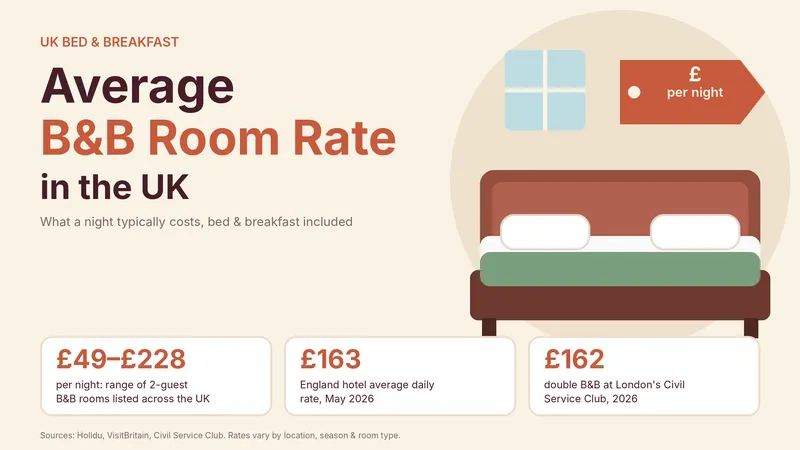
The price of a B&B room can change depending on its location, facilities, quality and time of year.
For example, a simple B&B in a small town may charge less than a luxury guesthouse in London, the Lake District or the Cotswolds.
VisitEngland's hotel research reported the following average daily room rates for different regions in July 2025:
| Region | Average daily room rate |
| Greater London | £263 |
| Southeast England | £125 |
| Southwest England | £120 |
| East of England | £119 |
| Northwest England | £110 |
| West Midlands | £104 |
| Northeast England | £104 |
| East Midlands | £103 |
| Yorkshire and Humber | £101 |
RECOMMENDED FOR YOU

Sara Davies Net Worth 2026: How the Dragons’ Den Star Built Her £37 Million Business Empire
Oliver Bennett
Nov 3, 2026

Note: These figures are based on hotel room prices, not B&B-specific rates.
The figures show that accommodation prices can vary widely across the UK. B&B owners can compare nearby hotels and guesthouses to decide how much to charge.
Properties with private bathrooms, good breakfast options, parking, comfortable rooms and positive guest reviews may be able to charge higher prices.
How Much Profit Does a B&B Owner Make in the UK?
The profit of a B&B depends on how much money remains after paying all business expenses.
For example, if a B&B generates £80,000 in yearly revenue, it does not mean the owner takes home £80,000. A large part of this money will go towards running the business.
Some common B&B expenses include:
- Food and Breakfast: Money spent on buying food, drinks and other breakfast items for guests.
- Cleaning and Laundry: Costs for cleaning products, washing clothes, towels and bed sheets.
- Utilities: Electricity, gas, water, heating and internet bills.
- Staff Costs: Salaries paid to cleaners, kitchen workers and other employees.
- Property Maintenance: Money spent on repairs, painting, furniture and general property upkeep.
- Insurance: Payments for building, contents, business and public liability insurance.
- Marketing: Website costs, online advertising and other promotional activities.
- Booking Fees: Charges and commissions paid to websites that help owners get bookings.
- Mortgage and Finance: Property loan payments, interest and other borrowing costs.
The final profit depends on how much the owner spends and whether the property is owned outright or has a mortgage.
A small B&B managed by its owner may have lower staff costs than a larger guesthouse. However, owners should also consider the time they spend managing bookings, preparing breakfast, cleaning rooms and looking after guests.
Read Also- 10 Innovative Healthcare and Biotech Companies Across Europe to Watch
What Factors Affect Bed and Breakfast Income in the UK?
Several things can affect how much money a B&B makes. Understanding these factors can help owners attract more guests and improve their earnings.
1. Location
Location is one of the biggest factors affecting B&B income.
Properties in popular tourist destinations, coastal towns, historic cities and countryside areas often attract more visitors.
For example, B&Bs in London, Bath, Edinburgh, York, the Lake District and the Cotswolds may benefit from strong demand from tourists.
On the other hand, properties in less popular areas may need lower room prices and better marketing to attract customers.
2. Number of Guest Rooms
The number of rooms available directly affects how much a B&B can earn.
For example, a property with six guest rooms has more earning opportunities than one with only two or three rooms, provided there is enough demand.
However, larger properties also need more cleaning, maintenance, electricity, water and staff.
3. Occupancy Rate
Occupancy rate means the percentage of available rooms that are booked by paying guests.
A higher occupancy rate usually means more income for the business.
For example, a B&B with four rooms charging £100 per night could earn different amounts depending on how many rooms are booked throughout the year.
| Occupancy rate | Annual room revenue |
| 40% | £58,400 |
| 50% | £73,000 |
| 60% | £87,600 |
| 70% | £102,200 |
| 80% | £116,800 |
These figures are based on four rooms charging £100 per night throughout the year.
VisitEngland's hotel research for July 2025 reported an average room occupancy rate of 86% across England. However, this figure covers hotels and should not be treated as the expected occupancy rate for a small independent B&B.
4. Seasonal Demand
B&B bookings often change depending on the time of year.
Summer holidays, Christmas, bank holidays and local events can bring more visitors. Some areas may also experience fewer bookings during winter and on weekdays.
Owners should plan their prices according to these changes.
For example, they can charge higher rates during busy holiday periods and offer discounts during quieter months to attract more guests.
5. Guest Reviews and Online Visibility
Online reviews can make a big difference to the number of bookings a B&B receives.
Many travellers check websites such as Booking.com, Airbnb and Google before choosing where to stay.
Good reviews, attractive photographs, clear room details and quick replies to customer questions can help a B&B attract more bookings.
How Can B&B Owners Increase Their Income?
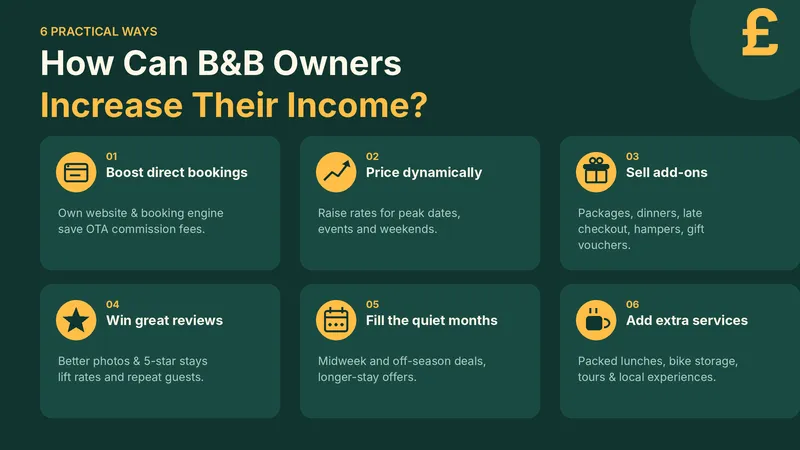
B&B owners can increase their income by attracting more guests, setting suitable room prices and offering additional services.
Here are some simple ways to improve B&B earnings:
- Change Room Prices: Charge higher rates during busy weekends, holidays and local events. Offer better deals when bookings are low.
- Improve Guest Experience: Keep rooms clean, provide good breakfast options and make sure guests feel comfortable.
- Use Booking Websites: List the property on popular travel and accommodation websites to reach more customers.
- Create a Direct Booking Website: Let guests book directly through the business website and reduce dependence on third-party booking platforms.
- Offer Extra Services: Provide packed lunches, evening meals, airport transfers or local experiences where suitable.
- Encourage Repeat Customers: Offer special prices to returning guests and encourage satisfied customers to recommend the property.
- Improve Online Marketing: Use social media, Google Business Profile and local tourism websites to reach more travellers.
Even small improvements in room prices and bookings can increase the yearly revenue of a B&B.
Is Running a Bed and Breakfast Profitable in the UK?
Running a B&B can be profitable in the UK, but the amount an owner earns depends on the location, property costs, bookings and daily running expenses.
A small B&B managed by its owner may save money on staff salaries. A larger guesthouse can earn more by offering additional rooms and services, but it may also have higher expenses.
Before starting the business, property owners should consider the money needed to buy or renovate a property, furnish guest rooms, install safety equipment, arrange insurance and meet legal requirements.
It is also important to understand the difference between business profit and personal income. Mortgage costs, taxes, repairs and the owner's working hours can all affect the final return.
Anyone planning to open a B&B should prepare a business plan. It should include expected room prices, bookings, running costs and changes in demand during different seasons.
What Are the Legal Requirements for Running a B&B in the UK?
Anyone planning to start a B&B should understand the rules and legal requirements before welcoming guests.
Depending on the property and its location, owners may need to take care of the following:
- Business Registration: Register the business with HMRC and choose a suitable business structure.
- Planning Permission: Check whether planning permission or a change of property use is required.
- Fire Safety: Follow fire safety rules and install suitable fire detection equipment.
- Food Hygiene: Register the food business with the local authority at least 28 days before starting food operations.
- Insurance: Arrange suitable business, building and public liability insurance.
- Health and Safety: Make sure guest rooms, bathrooms and shared areas are safe.
- Tax Obligations: Report business income and pay the taxes that apply.
The rules may be different in England, Scotland, Wales and Northern Ireland. B&B owners should check the requirements with their local council and the relevant government authorities before opening.
What Is the Future of the UK Bed and Breakfast Industry?
The UK accommodation industry continues to benefit from people taking domestic holidays, international visitors and travellers looking for short breaks.
Independent B&Bs can attract guests who prefer personal service, local experiences and a more welcoming place to stay compared with larger hotels.
However, they also face competition from hotels, holiday cottages, serviced apartments and short-term rental platforms.
B&B owners who provide good service, keep their prices competitive and maintain a strong online presence may have better opportunities to grow their businesses.
In the long term, the success of a B&B will depend on how well it meets customer expectations and responds to changes in travel demand.
FAQs
1. How much does an average B&B earn in the UK?
There is no official average income for all B&Bs in the UK. As an example, a four-room B&B charging £100 per night with 55% occupancy could generate around £80,300 in annual room revenue before expenses.
2. How much profit does a small B&B make?
The profit depends on bookings, property costs, staff salaries and other running expenses. Owners need to deduct these costs from their revenue to work out the actual business profit.
3. How many rooms does a typical B&B have?
Many small B&Bs have between three and six guest rooms, although some properties have fewer or more. The Scottish Bed & Breakfast Association reported an average of 4.31 guest bedrooms in its submission to the Scottish Parliament.
4. How much should a B&B charge per night in the UK?
The price depends on the location, room quality, facilities and time of year. Owners should compare prices at nearby B&Bs and hotels before setting their own rates.
5. Is owning a B&B better than running a hotel?
A B&B usually operates on a smaller scale and may need fewer employees. Hotels generally have more rooms and facilities but also require more investment and higher running costs.
6. Can you make a full-time income from a B&B?
Yes, a well-managed B&B can provide a full-time income. However, earnings depend on the number of rooms, bookings, room prices and business expenses.
Recommended Stories for You

Kailee Rainse Nov 5, 2024

Oliver Bennett Sep 21, 2026

Team SR Jun 27, 2025

Oliver Bennett Jan 27, 2025

Team SR Jun 24, 2025

Team SR Dec 6, 2025
Trending Stories

Leading AI Startup in Europe

Grants From The Government To Start A Business

Unique Business Ideas in Luxembourg

Best Startup Industries In 2024 – 2025

Unique Business Ideas In Amsterdam For 2024

Best AI Content Detector Tools

Best Small Scale Business Ideas in France 2024

Series A Funding NEWS Europe – July 2024