

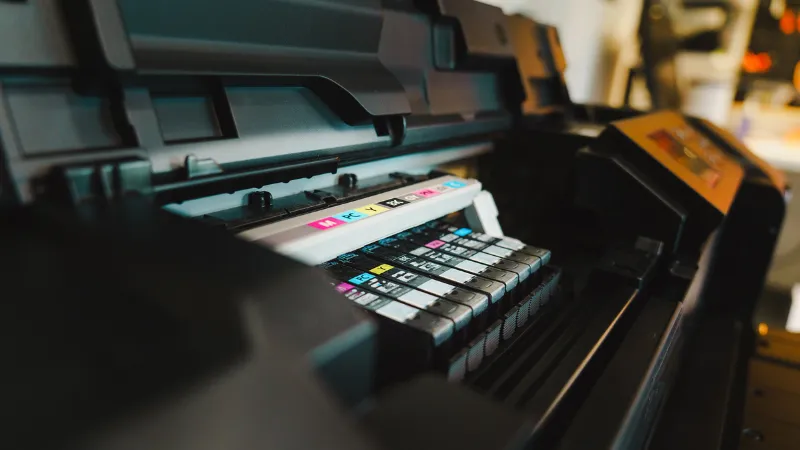
Tom Willday grew up around the smell of ink and the hum of offset presses. His grandfather founded Willday Printers in the early 1970s, and for three generations the family business printed everything from local newsletters to national brochure runs. But Tom kept noticing the same thing at the end of every job: the offcuts, the overprints, the boxes of paper destined for a skip. That frustration became SeedPrint, a specialist eco-friendly seed paper printer that swaps the bin for the flowerbed, turning printed materials into something that grows rather than something that's thrown away.
 Follow us
 Follow us
Building a new business on the bones of an old one isn't straightforward. Tom had to convince a legacy client base that plantable paper wasn't a gimmick, source seed varieties that could survive the printing process, and rebuild supply chains almost from scratch. What follows are the lessons he's taken from that transition, in his own words.
Lesson 1: Respect the legacy, but don't be bound by it
"My dad thought I was mad at first," Tom says. "Fifty years of precision printing, and I wanted to embed seeds in the stock. But the values were always about quality and craft, not the machinery itself. I just applied those values to a different material." Willday Printers had built its reputation on reliability. Tom's argument to his father was that SeedPrint could inherit that reputation while solving a problem the old business never addressed: what happens to paper after it's used.
Lesson 2: Waste is a design flaw, not an inevitability
Commercial printing has long generated offcuts and unsold stock, much of which ends up in landfill or is only partially recycled. According to the Forest Stewardship Council, sourcing decisions made at the paper stage have a direct bearing on what happens at the end of a product's life. Tom's view is blunt: "If a product's only end point is the bin, that's a design failure. We built SeedPrint around the idea that the end of a print job should be the start of something else." That's the "bloom or bin" distinction he returns to constantly: paper is either engineered to become waste, or engineered to become a plant.
RECOMMENDED FOR YOU

How Hormones, Sleep, and Stress Impact Weight Loss More Than Diet Alone
Oliver Bennett
Jun 12, 2026


Lesson 3: Scaling an eco-material means scaling patience
Seed paper isn't as forgiving as standard stock. Seeds have to survive the pulping and pressing process, stay viable in storage, and germinate reliably once planted. Tom spent over a year testing seed varieties, moisture levels and paper thickness before SeedPrint took its first commercial order. "We lost a lot of batches early on," he admits. "Wildflower seeds are hardy, but not every printing process is kind to them. You have to slow down the R&D so you can speed up the delivery later." That patience now shows up in turnaround times competitors struggle to match, because the groundwork was done properly the first time.
Lesson 4: Sustainability claims need paperwork, not just intention
The UK print industry has faced growing scrutiny over greenwashing, and buyers increasingly expect evidence behind environmental claims. The British Printing Industry Federation has pushed members towards clearer sustainability reporting, and government waste data published through gov.uk continues to track how much printed material still ends up unrecycled each year. Tom insists SeedPrint's biodegradable inks and FSC-certified stock are independently verifiable. "Anyone can put 'eco-friendly' on a label. We wanted our supply chain to hold up if someone actually checked it."
Lesson 5: The family business taught him what not to compromise on
Despite the pivot, Tom says the most valuable thing he took from Willday Printers wasn't equipment or client contacts, it was standards. "My grandfather used to say a job wasn't finished until the client didn't have to think about it again. That's stuck with me. Seed paper has to work as printed material first. It has to look good, feel right, hold ink properly. The sustainability is meaningless if the product itself doesn't perform."
Under Tom's direction, SeedPrint has grown from a side project inside a family firm to a standalone operation supplying event planners, retailers and corporate clients across the UK. The legacy hasn't been discarded. It's been replanted.
Recommended Stories for You


Team SR Oct 21, 2025

Team SR Nov 25, 2025

Team SR Oct 14, 2025

Sophie Carter Oct 7, 2026
Trending Stories

From First Apartment to Graduation: What Students Need From a Boston Property Manager

A Startup Founder’s Guide to Choosing the Right Digital Growth Channels

Technical Applications for Modernizing Oil and Gas

What Free Really Means When You Register an LLC: State Fees, Service Fees, and First-Year Tools

How to Choose a Nonprofit Board Seat That Fits Your Life, Not Just Your Calendar

The Business Behind The Job: What Customers Never See In A Construction Company

Winning New Customers: How FinTech Startups Can Stand Out In A Competitive Market
From Spreadsheet to WhatsApp: Smarter Follow-Up for Growing Teams