

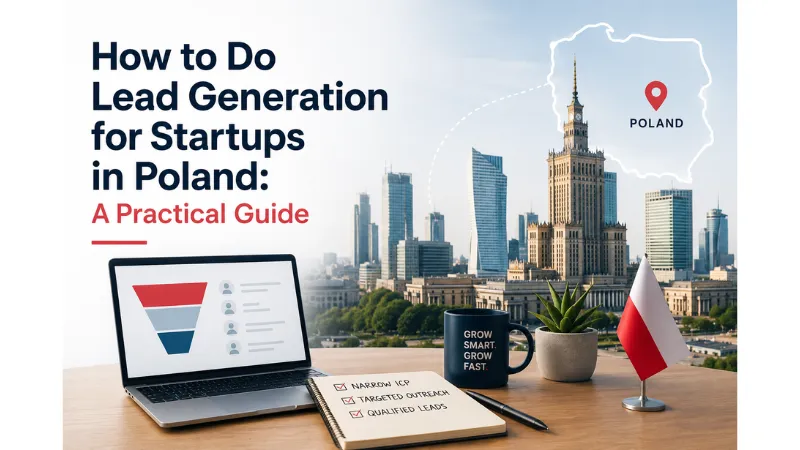
Poland is one of the most attractive markets in Europe for an ambitious startup: nearly 38 million people, the largest economy in Central and Eastern Europe, and a fast-growing B2B sector with real appetite for new software, fintech, and tech solutions. But lead generation in Poland doesn't work the way it does in the UK or US, and startups — with lean teams and tight budgets — can't afford to learn that the expensive way. This guide is a practical, no-fluff playbook for generating qualified leads in Poland when you don't have a big team or a big budget.
 Follow us
 Follow us
Whether you run it yourself or work with a specialist lead generation agency in Poland, the principles below are the same. Get them right and you'll build a pipeline that actually converts; get them wrong and you'll burn weeks of runway on outreach that never gets answered.
Start With a Painfully Narrow ICP
The single biggest mistake startups make is going too broad. When you're small, a wide net catches nothing. You need a painfully specific ideal customer profile (ICP) — the exact type of company worth your limited time — and a clear buyer persona, the role inside that company you actually need to reach.
If you're not sure yet, do this: list your best existing customers in a spreadsheet with their industry, headcount, revenue, and — crucially — the margin they generate. Look for patterns. Your most profitable customers, not just your biggest, point to the segment you should target. From there, define two or three tight segments rather than one vague one. For example: SaaS companies with 11–50 employees in proptech, targeting founders, versus mid-market manufacturers entering Poland, targeting heads of sales. Each segment gets its own message.
RECOMMENDED FOR YOU



Why Polish-Language Outreach Matters More Than You Think
Here's the trap UK and international founders fall into: “everyone in Poland speaks English, so we'll just sell in English.” In meetings, sure. But cold outreach in Polish consistently outperforms English — often dramatically. A message in fluent, native Polish signals that you understand the market and are serious about it; an English cold email gets pattern-matched as generic and ignored.
For the first touch — the call, the email, the LinkedIn message — native Polish is close to non-negotiable if you want strong response rates. This is the one area where startups most often underinvest and most regret it. If you can't do it in-house, it's the first thing worth getting help with.
Pick Your Channels — and Sequence Them
You don't need every channel. You need the right two or three, used in the right order. A sequence that works well for B2B in Poland:
Cold calling first. Direct conversations surface real interest fast and tell you quickly whether your messaging lands.
Cold email after 5–10 days — once you've booked early meetings and confirmed the segment is large enough (a rough rule: 100+ target companies in Poland makes a dedicated email campaign worthwhile).
LinkedIn outreach running alongside, with personalized messages that reinforce the other channels.
Mixing channels gives each prospect several natural touchpoints and reaches people where they actually respond.
Personalize by Segment, Not by Guesswork
True one-to-one personalization doesn't scale when you're a three-person team. The realistic, effective middle ground is segment-level personalization: because your segments are narrow, you can craft messaging, pain points, and a value proposition that genuinely fit each one — without rewriting every email from scratch. When you switch segments, you switch all three. Generic messaging is what kills startup outreach; tight segments are what make personalization affordable.
Work in Small Iterations and Measure What Matters
Don't build a giant list and blast it. Work in batches of 20–30 companies, reach out, learn, then refine. This iterative rhythm is pure lean-startup logic applied to sales: test a message against a segment, keep what works, drop what doesn't.
Track the metrics that actually tell you something — response rate, meetings booked, cost per lead (CPL), and how many become sales-qualified leads (SQLs) — not vanity volume. A pipeline stuffed with unqualified contacts is worse than a small one full of real opportunities, because it hides whether your model works.
Validate Before You Scale
This is the heart of it. Before you hire a salesperson, open an office, or pour budget into Poland, run a small validation campaign first. A focused pilot — a few weeks of targeted outreach to one or two segments — tells you whether your value proposition resonates, what response rates to expect, and which segment is most promising. Only then should you scale.
For a startup, this de-risks the whole market-entry decision. You're spending a little to learn a lot, instead of betting runway on an assumption.
Build In-House or Outsource? When You're Small
Both work; the right answer depends on your stage. Hiring an in-house SDR gives you owned capability but takes months to recruit, onboard, and validate — and a bad first hire is an expensive mistake when you're small. Outsourcing to a specialist gives you speed, native-Polish capability, and flexibility without a full-time salary, which is why many startups use it for the validation phase and bring hiring in-house later, once the model is proven. The pragmatic move for most early-stage teams is to validate fast with help, then build on a foundation that already works.
Common Mistakes Startups Make
Going too broad with the ICP and reaching no one.
Selling in English for cold outreach and wondering why nobody replies.
Expecting instant results — B2B cycles take time and consistency.
Chasing volume instead of qualified leads.
Scaling before validating and burning runway on an unproven assumption.
A Simple 90-Day Starting Plan
Weeks 1–2: Define two tight segments and ICPs; build native-Polish messaging for each.
Weeks 3–6: Run a validation pilot — cold calls to 20–30 companies per segment, refining as you go.
Weeks 7–10: Layer in cold email and LinkedIn for the segment showing the best response; measure CPL and SQLs.
Weeks 11–13: Review the data, double down on the winning segment, and decide how to scale.
The Bottom Line
Lead generation for startups in Poland comes down to discipline, not budget: a narrow ICP, native-Polish outreach, the right sequenced channels, segment-level personalization, and small iterations measured against real metrics — all validated before you scale. Do that, and a lean team can build a genuine pipeline in one of Europe's most promising B2B markets. Skip the fundamentals, and no amount of spend will save the campaign.
Recommended Stories for You
Team SR Aug 24, 2026

Team SR Dec 18, 2025

Team SR Mar 17, 2026
Team SR Aug 12, 2026


Team SR May 4, 2026
Trending Stories

What Free Really Means When You Register an LLC: State Fees, Service Fees, and First-Year Tools

From First Apartment to Graduation: What Students Need From a Boston Property Manager

A Startup Founder’s Guide to Choosing the Right Digital Growth Channels

Technical Applications for Modernizing Oil and Gas

How to Choose a Nonprofit Board Seat That Fits Your Life, Not Just Your Calendar

The Business Behind The Job: What Customers Never See In A Construction Company
Winning New Customers: How FinTech Startups Can Stand Out In A Competitive Market
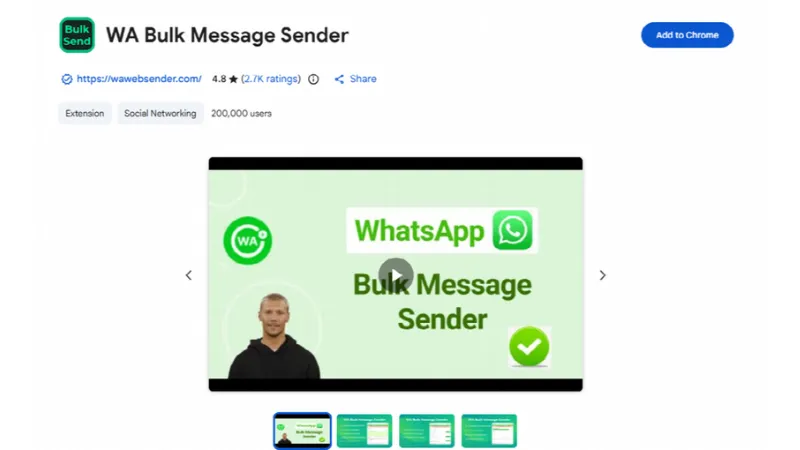
From Spreadsheet to WhatsApp: Smarter Follow-Up for Growing Teams