

From Spreadsheet to WhatsApp: Smarter Follow-Up for Growing Teams
Sep 29, 2026 | By Sophie Carter
Growth has a habit of exposing processes that once looked perfectly adequate.
 Follow us
 Follow us
Twenty leads can live comfortably in a spreadsheet. Two hundred leads create a different problem. Customer details spread across tabs, conversations happen in different places, and follow-ups increasingly depend on who remembers what.
WhatsApp may still work perfectly well as the communication channel. The difficulty usually sits around it: deciding who needs attention, knowing what happened last, and making sure the next step does not disappear beneath newer work.
Simple tools work until coordination becomes the problem
Early-stage teams often rely on lightweight systems because they are fast and flexible.
RECOMMENDED FOR YOU



Leads may come from website forms, referrals, events, marketplaces or paid campaigns before ending up in Excel, Google Sheets or a simple CRM.
That setup can remain effective for a long time.
Problems begin when several people need to use the same information.
Someone needs to know whether a lead has already been contacted. Someone else needs to check whether pricing was sent. Sales reps need to see which prospects are waiting for a reply and which require another touchpoint.
None of those tasks is difficult individually.
Keeping them consistent across a growing pipeline is.
“Next action” can be more useful than another data field
Many spreadsheets are good at recording what has already happened.
Typical columns include:
Name | Phone | Company | Lead source | Status | Last contact
Those fields provide history, but they do not always tell the team what to do next.
Adding a Next action column changes that.
Possible entries might include:
- Send introduction
- Follow up on pricing
- Confirm appointment
- Wait for reply
- Reconnect next week
- Close opportunity
The idea is simple: every active lead should have a visible next step.
That reduces reliance on memory and makes handovers much easier when responsibility moves between people.
Remove repetitive work before building complicated automation
Operational friction often leads teams straight towards automation.
Sometimes the first improvement should be much smaller.
Consider a salesperson working through 60 contacts in a spreadsheet.
The routine might involve copying a number, opening WhatsApp Web, finding the correct message, personalising it, sending it, returning to the spreadsheet and updating the record.
Repeated throughout the day, those small actions consume time without adding much value.
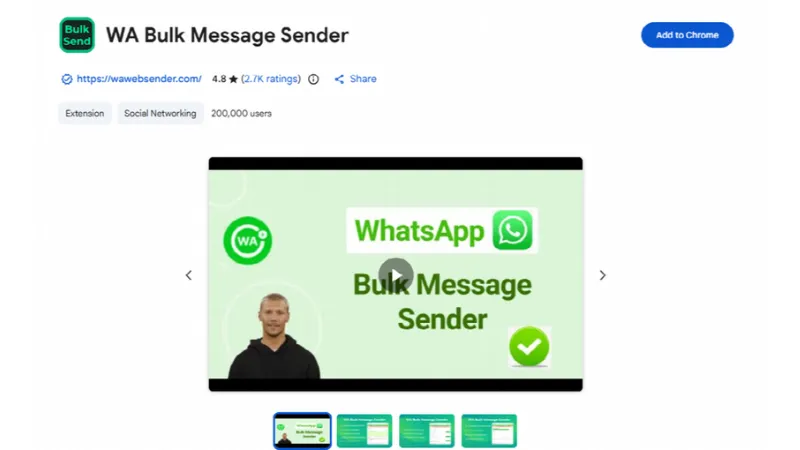
Tools such asFree WhatsApp Sender can reduce some of that friction by letting teams work with contact lists through WhatsApp Web instead of processing every number separately.
The point is not simply to increase sending volume.
Reducing mechanical tasks gives sales teams more time to review context, handle replies and focus on conversations where human judgement matters.
More leads make segmentation more valuable
Small teams can often remember where individual prospects came from and what they asked about.
That becomes harder as the pipeline expands.
The same database may eventually contain:
- fresh inbound enquiries;
- demo requests;
- prospects waiting for pricing;
- previous customers;
- opportunities that have gone quiet;
- contacts from several different campaigns.
Treating them as one audience quickly produces generic outreach.
Basic segmentation solves much of that problem.
New enquiries may need context and an introduction. Prospects who already received pricing may only need a concise follow-up. Existing customers may need product or service information rather than another sales pitch.
More contacts should lead to clearer grouping, not broader messaging.
Good personalisation starts with useful data
Personalisation does not require a completely different message for every prospect.
Most teams already collect enough information to make outreach feel more relevant.
Compare:
Hi, just following up to see if you’re interested.
with:
Hi Daniel, following up on the pricing request you sent earlier this week.
The second version immediately explains why the message exists.
Name, company, service interest, lead source and previous interaction can all provide context without adding much complexity.
Poor data makes even advanced automation feel generic. Well-structured data can make a simple message feel timely and specific.
Separate preparation from execution
Campaigns become harder to control when planning continues after sending has already started.
Contacts are still being edited. Copy changes midway through the outreach. Attachments are added at the last minute. Exclusions are noticed too late.
Separating preparation from execution removes much of that uncertainty.
Before outreach begins, the team should already know:
- which contacts are included;
- how they are segmented;
- which message belongs to each group;
- what needs to be personalised;
- which files are required;
- who should be excluded;
- what should happen after a reply.
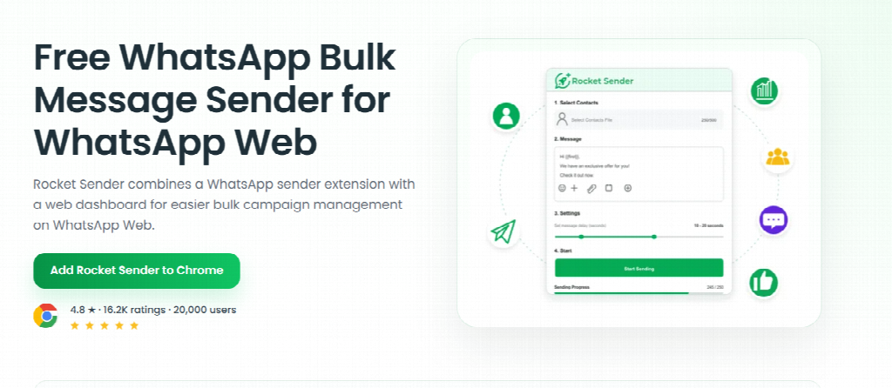
Tools such asWhatsApp Sender can support this approach by allowing teams to prepare contacts, messages, attachments and sending settings in a web dashboard before continuing through WhatsApp Web.
For a growing team, the benefit is organisational rather than purely technical.
Decisions are made before execution, leaving fewer things to improvise once outreach is underway.
Follow-up is often where good leads disappear
Generating a lead is only the beginning.
Plenty of prospects do not make a decision after the first conversation.
Someone asks for pricing and then compares alternatives. Someone else requests more information but gets distracted by other priorities. Some prospects simply need a well-timed reminder.
Without clear ownership, those conversations are easily buried beneath newer enquiries.
Simple pipeline stages can make a major difference:
New → Contacted → Replied → Follow-up due → Qualified → Closed
The exact labels matter less than visibility.
Anyone looking at the record should be able to understand three things quickly:
What happened?
Who owns it?
What happens next?
Shared visibility matters before sophisticated software does
One salesperson can keep a surprising amount of customer context in their head.
Several people cannot reliably share information that exists only in memory.
Clear ownership and visible next steps remove many of the questions that slow teams down:
“Did anyone contact this lead?”
“Has the quotation been sent?”
“Who is following up tomorrow?”
Shared visibility is not bureaucracy.
It is simply a way to keep the process understandable without depending on one person to remember everything.
This becomes especially useful when someone is away, responsibilities change or new employees join the team.
Measure movement through the pipeline, not just messages sent
Sending metrics are easy to collect.
Fifty messages went out. Ninety contacts were reached. Two hundred numbers were processed.
Those figures do not show whether the outreach created progress.
More useful questions include:
- How many prospects replied?
- Which lead sources produced stronger conversations?
- Which groups required repeated follow-up?
- Which messages created qualified opportunities?
- Where did conversations stop moving forward?
Ten meaningful replies may be worth more than hundreds of messages that produce no next step.
Tracking outcomes helps teams improve targeting, timing and messaging instead of simply repeating the same activity at a larger scale.
Know when the spreadsheet is starting to work against the team
Spreadsheets can support a growing company for longer than many businesses expect.
Eventually, however, adding more columns stops solving the underlying issue.
Common warning signs include:
- several people constantly editing the same records;
- duplicate outreach becoming frequent;
- customer history becoming difficult to reconstruct;
- follow-ups being missed despite status fields;
- information being copied repeatedly between systems;
- reporting taking too much manual effort.
Once these problems become routine, a CRM or deeper messaging integration may become worthwhile.
Timing matters.
Moving too early creates unnecessary complexity. Waiting too long creates operational debt.
Let the system become more sophisticated only when the work demands it
Customer communication rarely needs to jump directly from a spreadsheet to a large automation stack.
Progress can happen gradually:
Spreadsheet → organised contacts → segmented outreach → visible follow-up → shared ownership → CRM and deeper integrations
Each step should solve a real problem.
That approach keeps technology proportional to the needs of the business and avoids building infrastructure for complexity that does not yet exist.
WhatsApp can remain the familiar place where conversations happen. Spreadsheets can continue to support early-stage organisation. More advanced systems can be introduced when coordination genuinely becomes difficult.
The objective remains simple: fewer duplicated tasks, fewer missed follow-ups, clearer ownership and a better view of what every opportunity needs next.
Recommended Stories for You

Sophie Carter Oct 11, 2026

Team SR Mar 30, 2026

Team SR Nov 26, 2025



Team SR Jan 15, 2026
Trending Stories

A Startup Founder’s Guide to Choosing the Right Digital Growth Channels

Technical Applications for Modernizing Oil and Gas

What Free Really Means When You Register an LLC: State Fees, Service Fees, and First-Year Tools

Winning New Customers: How FinTech Startups Can Stand Out In A Competitive Market

How to Choose a Nonprofit Board Seat That Fits Your Life, Not Just Your Calendar

From First Apartment to Graduation: What Students Need From a Boston Property Manager

The Business Behind The Job: What Customers Never See In A Construction Company

Why Hands-On Project Oversight Still Matters in Home Remodeling