

From Refugee To AI Infrastructure Pioneer: The Orq.ai Journey
Apr 20, 2026 | By Oliver Bennett
The Founding Spark
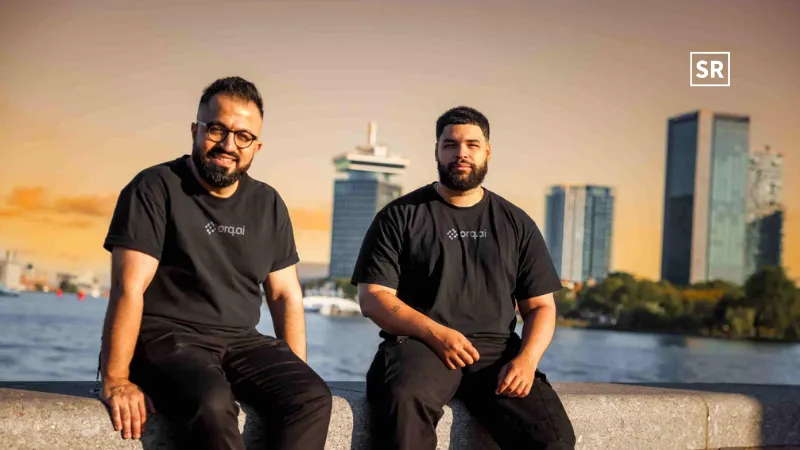
Orq.ai was founded in 2022 by Sohrab Hosseini and Anthony Diaz with a clear but often overlooked insight while the world was busy building impressive generative AI demos very few companies knew how to run AI reliably in production environments. With a background in startups and enterprise systems including experience at McKinsey & Company Sohrab repeatedly observed the same pattern across organizations adopting AI:
 Follow us
 Follow us
- Difficulty maintaining reliability at scale
- Lack of proper governance and compliance frameworks
- Increasing complexity from multiple AI tools and vendors
As regulatory frameworks like the EU AI Act began shaping how AI must be deployed responsibly, it became clear that companies didn’t just need better models they needed robust infrastructure to manage them. That realization led to the creation of Orq.ai: a Generative AI collaboration platform that enables teams to build, deploy, and manage AI agents and Large Language Models (LLMs) with full observability ensuring AI systems are not just powerful, but also scalable, controlled, and production-ready.
The Founders & Their Roles
- Sohrab Hosseini (Co-Founder & CEO)
A serial entrepreneur shaped by both early wins and setbacks Sohrab built and exited companies in his early 20s before facing bankruptcy at 23 during the Global Financial Crisis. He later rebuilt his career through operator roles (COO/CTO), completed an MBA and joined McKinsey & Company, where he worked on large-scale enterprise technology platforms.
At Orq.ai, he brings enterprise systems thinking, strategic leadership, and experience in scaling complex, cross-functional tech environments.
RECOMMENDED FOR YOU
London-Based Cytospire Therapeutics Raises £61M In Series A Funding
Oliver Bennett
May 6, 2026
UK Healthtech Startup Nul Secures $1M To Expand Alcohol Reduction Platform
Kailee Rainse
Feb 17, 2026
- Anthony Diaz (Co-Founder)
Anthony Diaz is a hands-on technical builder and innovation-focused engineer. Before co-founding Orq.ai, he worked closely with Sohrab, leading innovation and technical development efforts. Known for his ability to rapidly prototype and experiment, he brings strong product intuition, deep technical execution and a builder-first mindset to the company.
Read Also - From Bike Deliveries to Zero-Emission Logistics: The HIVED Journey
Growth, Funding, Traction & Recognition
Orq.ai has rapidly gained traction by addressing a critical gap in enterprise AI moving from demos to reliable, production-ready systems. Since its founding in 2022, the company has raised a total of €7.3 million, including a €5 million seed round aimed at closing the “AI production gap.” This funding is being used to enhance its platform, scale its team and support enterprises in building, deploying, and managing AI agents more effectively.
Orq.ai is already being used by over 100 companies across Europe and the U.S., showing strong early adoption of its platform. The company has also earned industry recognition, including being featured by Gartner in multiple Emerging Market Quadrants in 2025. Positioned within the fast-growing space of LLMOps, AI observability and governance, Orq.ai’s growth is driven by a clear focus on making AI systems scalable, reliable and enterprise-ready.
Challenges & Hard Truths
Building Orq.ai has been far from easy and Sohrab Hosseini is very direct about the realities of startup life. One of the biggest challenges has been fundraising. For a single round he spoke to nearly 190 investors, facing repeated rejections like “too early” or “come back with more traction.” This highlights a broader issue in Europe, where investors are often more conservative compared to the U.S., making it harder for early-stage startups to raise capital.
He also pushes back against the common “startup dream” narrative. According to him, building a company isn’t fast or glamorous it's years of uncertainty, pressure, and delayed success, with a very small chance of making it big. Many founders underestimate this and quit early.
Another challenge is the European startup ecosystem itself. While cities like Amsterdam offer a great quality of life, Sohrab points out limitations such as lower risk appetite, smaller funding pools and fragmented networks. However, this is slowly changing. With growing focus on regulations like the EU AI Act and the push for AI sovereignty, being a Europe-based AI company is now becoming a strategic advantage.
Why Their Story Resonates
The story of Orq.ai stands out because it focuses on a problem most people ignore making AI actually work in real businesses not just building cool demos. Sohrab Hosseini’s journey from being a refugee to facing bankruptcy and rebuilding his career shows strong resilience and long term determination. His background in enterprise technology gives him a clear advantage in solving these problems. Overall this story shows that future AI startups like the best humanize ai success will likely come from building strong infrastructure not just creating models.
The Road Ahead & Vision
Sohrab Hosseini and Anthony Diaz have a clear vision for Orq.ai. They want to make it the go-to platform for managing AI agents inside companies. Their goal is to lead in areas like AI governance and compliance, especially in Europe, where rules are becoming stricter. As more businesses start using multiple AI agents, Orq.ai plans to help them stay organized and in control. In simple terms, they aim to build the system that manages a company’s “digital workforce” making sure everything runs smoothly, safely and efficiently.
Final Takeaway
The journey of Orq.ai shows that success isn’t about hype it’s about solving real problems that actually matter. Sohrab Hosseini went from a refugee background to facing startup failure then rebuilding his career at McKinsey & Company before starting again. His story highlights one simple lesson big opportunities are not always obvious or exciting at first. By focusing on these you can build something truly valuable and long lasting.
Recommended Stories for You
Kailee Rainse Nov 13, 2025
Keiron Raises €20.7 Mn Series A to Transform Electronics Manufacturing with LiFT Technology
Oliver Bennett Jul 31, 2026
Oliver Bennett Aug 6, 2026

[Funding alert] Amsterdam-based Eddytec Secures Funding to Identify Flaws in Carbon Fibre Composites
Oliver Bennett Nov 11, 2023

Kailee Rainse Mar 28, 2026
Imperial College London Founders Raise €2.8 M For The Compression Company Satellite data Platform
Kailee Rainse Feb 13, 2026
Trending Stories
Elaniti funding news – UK-based Agritech Startup Elaniti Secures Undisclosed Amount Funding
WholeSum Secures £730K To Develop Qualitative Data Analysis Platform
Agurotech funding news – Amsterdam-based Agurotech Secures €2.25 Million in Funding
Le Fourgon funding news – Le Fourgon Secures €8.2 Million Extension to its Series A Round Funding
Sweden-Based Vesiro Raises €1.6M Funding
[Funding alert] Rotterdam-based Umob Secures €6 million in Funding

Phlux Technology funding news – Sheffield-based Phlux Technology Secures €10.7 Million in Series A funding
Ghent-Based Ringtime Raises €1.8M Seed Round Led By Volta Ventures To Boost Blue-Collar Hiring