

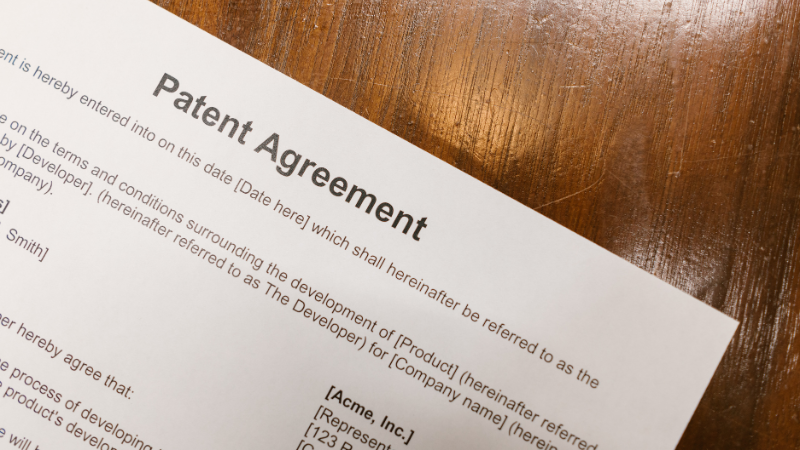
Why patents feel confusing at first
Most people meet the word "patent" long before they understand what it actually does. A friend mentions filing one. A news story covers a big infringement verdict. The word sounds legal and technical at the same time, and that combination scares people off before they learn the basics.
 Follow us
 Follow us
The truth is simpler than it looks. A patent is a deal between an inventor and the government. The inventor describes an invention in detail and publishes it for anyone to read. In exchange, the government gives the inventor the right to stop others from making, using, or selling that invention for a set period of time, usually 20 years from filing. That is the whole trade: disclosure now, exclusivity later.
What a patent actually protects
A patent does not protect an idea in the abstract. It protects a specific, described way of doing something. If you invent a new kind of hinge, your patent covers that hinge design, not the general concept of hinges. This is why two companies can hold patents in the same space without either one blocking the other. Their inventions solve the same problem in different ways.
This distinction trips up a lot of first-time inventors. They assume a patent gives them ownership of a category, like "wireless charging" or "food delivery apps." It does not. It gives them ownership of the particular method or device they wrote down and proved was new.
RECOMMENDED FOR YOU


Invoice Discounting vs Factoring: What’s the Difference? A UK Guide for 2026
Team SR
Jul 28, 2026

The three things every patent needs
Patent offices around the world look for the same three qualities, even if the exact legal language differs by country.
- New. The invention cannot already exist, even in a slightly different form, somewhere in the public record.
- Non-obvious. It cannot be a small, predictable tweak that any skilled person in the field would have thought of.
- Useful. It has to do something. A patent office will not grant rights to a device that does not work.
Most rejections come down to the first two. Someone finds a similar patent, an old product, or a research paper that already describes the core idea. This is why a real search of existing patents and publications, often called a prior art search, comes before anyone spends real money on an application.
How the process actually moves
A patent application starts with a written description detailed enough that another person skilled in the field could build the invention from it, plus a set of claims. The claims are short numbered sentences that define, word for word, what is actually protected. Everything else in the application is context. The claims are the property line.
After filing, an examiner at the patent office reads the application and compares it against existing patents and publications. It is normal, not a bad sign, to get a rejection on the first try. Applicants respond by narrowing their claims or arguing why the examiner's comparison misses something. This back and forth can take one round or several. In the United States, the average application takes well over a year from filing to a decision, and some take much longer.
Where disputes come from later
Years after a patent issues, it can end up in a courtroom if someone believes another company's product does what the claims describe. Jason Sheasby, a partner at Irell & Manella LLP, works on exactly this kind of dispute, representing companies in patent infringement trials involving technology like computer memory and data compression. Cases like these turn on the same claim language that got written during the original application. A single word chosen years earlier, in a patent nobody was fighting over yet, can decide who wins.
What a beginner should actually do first
If you think you have something patentable, resist the urge to file immediately. Write down what you invented, how it works, and how it differs from anything already on the market. Search existing patents in your area, even informally, to see what is already out there. Then talk to a patent attorney or agent before you disclose the invention publicly, since public disclosure can affect your rights depending on where you plan to file.
None of this requires a technical or legal background to start. It requires patience, a clear written description, and a willingness to learn that a patent protects a specific solution, not a general idea.
Recommended Stories for You

Team SR Aug 24, 2026

Team SR Jul 10, 2026

Team SR Dec 17, 2025


Trending Stories

Why UK Startups Need Better Access to Legal Documents as They Scale

Is Gamification as a Service the Next Major Battleground for Startups?

Top 10 Backlink Agencies Businesses Trust for Real Authority

How Local Taxi Services Help Keep Highland Tourism Moving
Are Working Students the Quietest Demographic Relying on the Essay Writing Service EssayService.com?

Building a Startup While Still in University: A Practical Guide

What to Know Before Adding Battery Storage to Your Home

How to choose between growing your team and improving your process