

What Changes About Running A Small Restaurant Or Bar Depending On The Size Of Your Town
Sep 12, 2026 | By Team SR
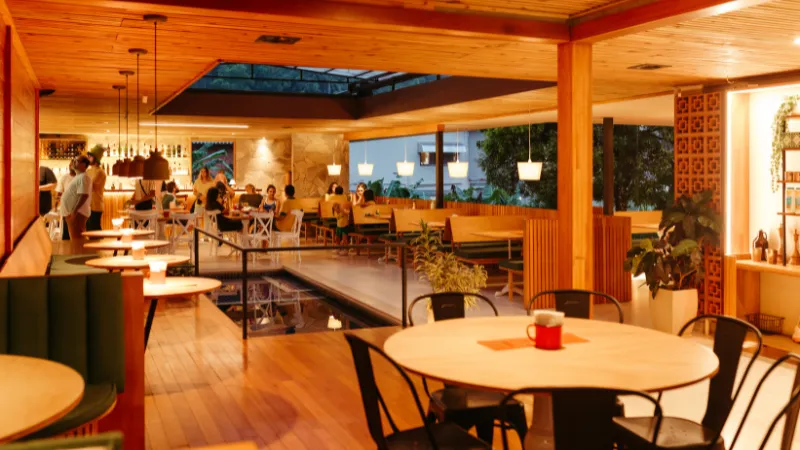
Why Scale Changes The Rules
A restaurant in a city with a hundred thousand people and a tavern in a town of a few thousand are not the same business wearing different signs. The math, the marketing, and the margin for error are all different. Owners who move from one setting to the other, or who open their first place in a small town without knowing this, often make decisions built for a market they are not actually in.
 Follow us
 Follow us
Here is what actually shifts, and what to do about each piece.
Your Customer Base Is Finite, And You Already Know Most Of Them
In a small town, you cannot rely on a constant stream of new faces to cover for a bad night. Most of your regulars are people who live within a short drive, and many of them know each other. That cuts both ways. Word about a good experience travels fast and costs nothing. Word about a bad one travels just as fast.
The practical result: consistency matters more than novelty. A small-town spot that changes its menu every month to stay exciting will confuse the regulars who came in for the thing they always order. A rotating special is fine. Replacing the core menu is not.
RECOMMENDED FOR YOU

Are You Walking Correctly? Small Changes That Make a Big Impact on Foot Health
Team SR
Dec 18, 2025

Building Ongoing Customer Relationships in a Start-up with AI Business Tech
Team SR
Aug 17, 2026

Staffing Works Differently When The Labor Pool Is Small
In a city, if a cook quits, there are five more applications by Friday. In a small town, the person who quits might be the only trained cook within a twenty-minute drive. That changes how you hire and how you treat the people already on staff.
Cross-training becomes less optional. Owners in small towns often teach front-of-house staff to help in the kitchen during a rush, and vice versa, because there is no backup bench to call. It also means scheduling around the reality that your staff and your customers overlap. The server on Tuesday night might be related to three of the tables she is serving.
Suppliers And Delivery Schedules Are Less Flexible
Distributors that serve cities often run daily routes. In rural areas, a delivery truck might come twice a week, and a missed order means going without an ingredient until the next scheduled stop, not a same-day fix. Menus built around ingredients with unpredictable delivery timing create problems that a city restaurant would never notice.
The workaround most small-town operators land on is simpler than it sounds: build the menu around what actually arrives reliably, not around what would be ideal. A shorter, dependable menu beats an ambitious one that runs out of half its items by Thursday.
Local Events Dictate Your Slow And Busy Seasons More Than The Calendar Does
City restaurants track city-wide patterns: convention schedules, tourist seasons, weather. Small-town spots track something narrower: the high school football schedule, the fire company carnival, deer season, the church picnic. These are the actual swings in foot traffic, and they are often bigger swings than anything a city restaurant sees.
Arthur Deibler, who owns Prima Pizzeria and Lucky Horse Tavern in Valley View, Pennsylvania, has talked about how closely a small business has to track its own town's rhythm rather than a generic retail calendar. That is the pattern here: the slow week isn't a mystery, it is usually explainable by something happening two blocks away.
Marketing Spend Goes Further In Unglamorous Places
A city restaurant might spend heavily on delivery app placement or social ads to stand out against hundreds of competitors within walking distance. A small-town spot usually has fewer direct competitors, which means the return on a sponsorship of the youth baseball team or a table at the fire hall fundraiser can beat digital ad spend by a wide margin.
This isn't sentimental advice. It's about where attention already exists. In a town of a few thousand people, everyone already knows there are three places to eat. The question is which one they think of first, and that gets decided by who shows up at the events that matter locally, not by who has the best ad copy.
What Stays The Same Either Way
Food quality, clean bathrooms, and a server who remembers your order matter everywhere. Nobody, in a city or a small town, forgives a restaurant for being dirty or slow because of its size or location. Scale changes the logistics. It does not change the basics.
A Short Checklist Before You Commit To Either Setting
- Count the realistic radius of your customer base and be honest about its size.
- Ask two local distributors about actual delivery frequency, not their advertised schedule.
- Map the town's yearly events calendar before building a marketing budget.
- Plan staffing assuming your best employee might have no immediate replacement.
- Build the menu around reliable supply, then add ambition later once patterns are known.
None of this is complicated. It just requires treating a small town as its own kind of market, with its own logic, instead of a smaller version of a city one.
Recommended Stories for You

Team SR Dec 16, 2025

Team SR Apr 24, 2026

Sophie Carter Oct 6, 2026

Team SR May 20, 2026


Team SR Oct 17, 2025
Trending Stories

Benefits of Virtual Office Space Every Startup Should Know

Affiliate Marketing Success: The Hidden Impact of a Strong Brand

Funding Decisions That Can Make or Break Early Business Growth

Choosing Network Infrastructure for Market Research

Why Startups Need Process Discipline to Win, and How Planfix Builds It from Day One
Why Hands-On Project Oversight Still Matters in Home Remodeling
The Compliance Wall Every UK Construction Startup Hits

How to buy Tether TRC20 (USDT) for PayPal dollars (USD) with maximum benefit?