

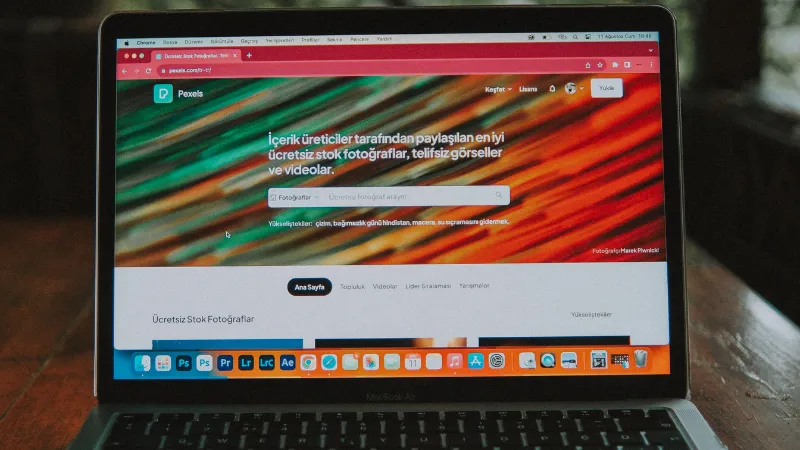
Spend a day with almost any startup team and one thing becomes obvious pretty quickly: nobody has just one browser tab open. There might be a CRM in one window, Google Docs in another, analytics on a second screen, and a half-finished article waiting to be read later. Email is still open, Slack keeps pinging in the background, and someone is probably checking customer feedback between meetings. It's easy to see why plenty of founders and employees install an ad blocker to cut down on unnecessary distractions while they're working.
 Follow us
 Follow us
Lost time doesn't usually disappear because of one major problem. It's more often a collection of tiny interruptions that barely register at the time. A pop-up appears while you're reading an industry report. You switch tabs to answer a message, then spend a minute trying to remember what you were originally looking for. Five minutes later, you've opened three more tabs and completely forgotten the first task.
Harvard Business Review reports that the average digital worker switches between apps and websites around 1,200 times every day. Those constant shifts add up to roughly four hours each week spent simply getting oriented again. For a lean business where everyone wears multiple hats, four hours can easily be the difference between finishing a project on schedule and pushing it into next week.
The browser has quietly become startup headquarters
Not that long ago, most business software was installed directly onto office computers. That's no longer the case. Today, the browser is where much of the work happens.
RECOMMENDED FOR YOU



A typical morning might involve checking Analytics, reviewing sales figures, replying to customer emails, updating a project board, scheduling social media posts, editing documents, and jumping onto a video call. None of those tasks feels unusual anymore because cloud-based software has made them part of everyday work.
That's been a huge advantage for small businesses. Teams can work from different cities, collaborate in real time, and access the same information without worrying about expensive hardware or complicated setups.
There's a trade-off, though. Every notification, autoplay video, unnecessary pop-up, and flashing advertisement is competing for attention in exactly the same place where important work gets done. Some tabs never even get closed. Everyone seems to have one they've been meaning to come back to since Monday.
The biggest distractions aren't always the most obvious
People often think distractions mean scrolling social media or checking personal messages. Sometimes that's true. More often, it's the constant switching that slows everything down.
On a normal afternoon, you're comparing a competitor's pricing, checking Stripe payments, answering a customer question, opening Figma to review a design, then jumping into your CRM before a meeting starts. Somewhere in the middle, a promotional pop-up appears, browser notifications start stacking up, and an autoplay video begins playing from another tab.
Getting back into a focused state usually takes longer than closing the pop-up itself. Writers lose their train of thought. Developers stop halfway through solving a problem. Designers have to remember why they opened a file in the first place. Even routine admin tasks seem to take longer when attention keeps being pulled in different directions.
It's not just about staying focused
There's another reason founders pay attention to browser habits, and it has less to do with productivity. And that's security.
Cybercriminals don't always need sophisticated techniques to catch someone off guard. Fake download buttons, misleading advertisements, scam browser notifications, and convincing phishing pages are still used because they continue to work. Sometimes malicious advertising, often referred to as malvertising, has even appeared on legitimate websites before being identified and removed.
Fortunately, the basics still make a real difference. Keeping browsers updated. Using multi-factor authentication. Checking links before clicking them. Making sure employees recognize phishing attempts instead of assuming they'll spot every scam automatically. None of those habits is complicated, but together they reduce risk.
Small changes usually work best
Closing tabs you no longer need. Turning off notifications that aren't useful. Organizing bookmarks so important tools are easier to find. Removing browser extensions that haven't been used in months. Blocking out an hour where nobody expects an immediate reply.
They're small adjustments. They're also the sort of changes people are actually willing to stick with because they don't completely change the way the team works.
Better workdays are built one habit at a time
Making your browser a little less cluttered won't transform a company overnight, and nobody should expect it to. Even so, fewer interruptions, smarter browsing habits, and a workspace that's easier to navigate can make an ordinary Tuesday feel noticeably smoother.
Those improvements aren't especially dramatic, which is probably why they don't get much attention. Yet over the course of months, the extra minutes saved here and there begin to add up. For a startup working with limited time, limited resources, and ambitious goals, that's an advantage worth having.
Recommended Stories for You
Team SR May 9, 2026

Team SR Oct 28, 2025


Team SR Apr 14, 2026

Team SR Jan 15, 2026
Trending Stories
Credit Math For An AI Map Generator On Seed Budget

5 technical choices that make the difference between growth and stagnation

Is Gamification as a Service the Next Major Battleground for Startups?

Top 10 Backlink Agencies Businesses Trust for Real Authority
Are Working Students the Quietest Demographic Relying on the Essay Writing Service EssayService.com?

Why UK Startups Need Better Access to Legal Documents as They Scale

How Local Taxi Services Help Keep Highland Tourism Moving

What to Know Before Adding Battery Storage to Your Home