

triPica Secures €12.4Mn Investment from TiLT Capital Partners to Expand Its Energy and Telecom Software Platform
Nov 10, 2026 | By Oliver Bennett
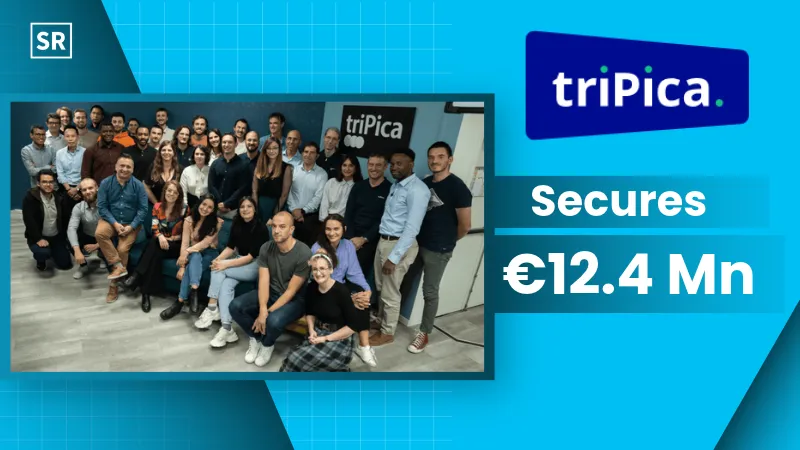
Paris-based software company triPica has received €12.4 million in investment from TiLT Capital Partners.
SUMMARY
- triPica has received €12.4 million in investment.
- The investment comes from TiLT Capital Partners, part of the Siparex Group.
- Established in 2016 by Mathieu Horn, Walid Bounar and Christophe Ruzé.
 Follow us
 Follow us
TiLT Capital Partners is an investment platform focused on supporting businesses working in the energy transition. It is part of the Siparex Group.
"Every new energy offer, a dynamic tariff, a self-consumption contract, an EV charging plan, eventually becomes a billing problem. Suppliers have no shortage of ideas. What slows them down is a customer and billing system built for a market that no longer exists. We built triPica so that an operator can launch that offer in weeks. With TiLT, we will take it to more operators across Europe and use AI where they lose the most time today, "said Mathieu Horn, co-founder and CEO of triPica.
Founded in 2016 by Mathieu Horn, Walid Bounar and Christophe Ruzé, triPica develops cloud-based software for energy companies and telecom operators.
RECOMMENDED FOR YOU

Maki funding news – Paris-based Maki Raises €26 Million in Series A Round Funding
Kailee Rainse
Jan 15, 2025

Germany-based moveXM Acquired Feeddex BV and 5-Star Specialist BV
Oliver Bennett
Mar 30, 2024
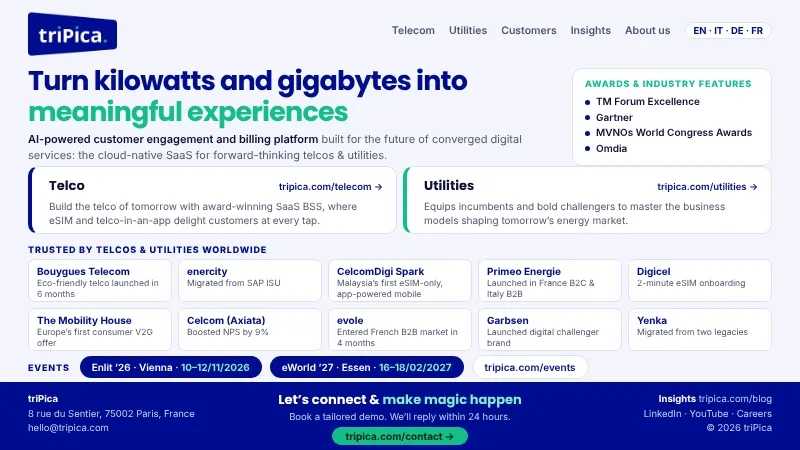
Its platform helps businesses manage customer relationships, subscriptions, billing, payments and customer service in one place.
As the energy sector moves towards cleaner energy, suppliers are offering more services. These include flexible energy prices, solar power for home use, electric vehicle charging and programmes that help customers adjust their energy use.
However, many energy suppliers still use old systems that were built for simpler services and pricing plans. These systems make it difficult and time-consuming to launch new products. Telecom companies face similar problems when introducing digital brands, service bundles and plans where customers pay based on how much they use.
Recommended Stories for You
Kailee Rainse Nov 30, 2024

Oliver Bennett Oct 8, 2024

Oliver Bennett Oct 16, 2023

Kailee Rainse Jul 22, 2025

Kailee Rainse Dec 5, 2025
Zurich’s Una Terra Closes €50M Circular Economy Growth Fund To Reduce Plastic Waste And CO2 Emissions
Kailee Rainse Sep 12, 2025
Trending Stories

VERIGRAFT funding news – Gothenburg-based VERIGRAFT Raises €1.2 Million in Funding

PanTera Funding News – PanTera secures €93 Million Oversubscribed Series A Funding

Telescope funding news – PropTech Startup Telescope Secures €3.7 Million in Seed Funding

Fleek funding news – London-based Fleek has Secured $20.4Million in Funding
Matrix Renewables funding news – Madrid-based Matrix Renewables Secures €50Million Green loan

PhysicsX Raises $300M At $2.4B Valuation To Scale AI For Industrial Engineering

Tective Robotics funding news – Delft-based Tective Robotics Secures Fresh funding

Treble Peak funding news – London-based Treble Peak Raises £5Million in Funding