

The Biggest and Newest Firms at the World Cup: Can Startups Break Through the Corporate Barrier?
Jun 15, 2026 | By Oliver Bennett
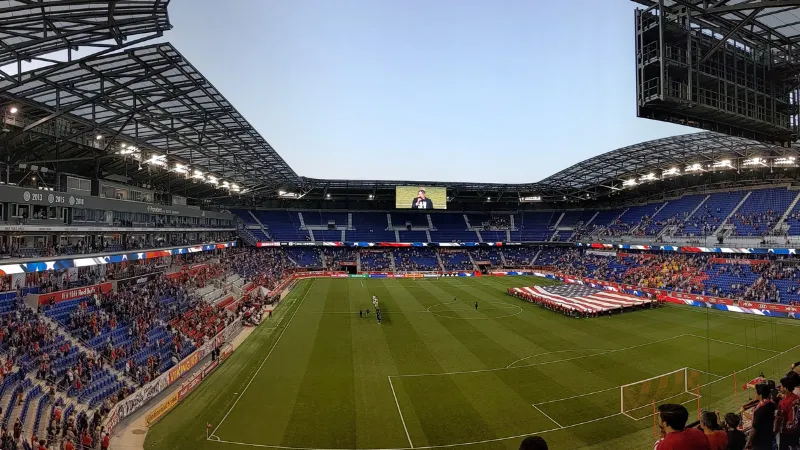
Walk into any of the 16 host cities this summer and the commercial wallpaper is already familiar before a ball has been kicked. Coca-Cola. Adidas. Visa. McDonald's. The brands that have plastered every World Cup since before most current players were born are back, and they've brought bigger budgets with them. FIFA confirmed earlier this year that all 16 global sponsorship positions were filled before the tournament even started - the first time in World Cup history that's happened. It's a closed shop at the top. Always has been.
 Follow us
 Follow us
But that's only the headline. Underneath the stadium billboards and the pitch-side hoardings, something more interesting is happening - a quieter contest between the corporations that buy visibility and the smaller firms that win on utility. The question worth asking, particularly in the sports entertainment space where the disruption has been loudest, is how far that contest has actually gone.
The Corporate Layer Is Thicker Than Ever
The scale of commercial infrastructure behind this tournament is genuinely hard to overstate. Tier 2 sponsors - brands like Budweiser, McDonald's, Bank of America, and Unilever - typically invest between $65 million and $95 million each for global rights tied specifically to 2026. That's the entry price for the second tier. Tier 1 partners like Adidas and Coca-Cola operate on multi-tournament cycles that dwarf those figures.
What does that buy? Exclusivity, mostly. A Tier 1 partner like Coca-Cola holds rights no competitor can access across all FIFA events. A Tier 2 sponsor like McDonald's is the only fast-food chain officially associated with the 2026 World Cup. The whole structure is designed to make the space impenetrable for anyone arriving late or underfunded. For startups pitching consumer-facing World Cup products, the maths is brutal before you even get to the product.
RECOMMENDED FOR YOU

From Full Moon to New Moon: How Apps Can Use Lunar Cycles to Engage Users
Sophie Carter
Oct 3, 2026


Where Smaller Firms Are Actually Getting In
The sponsorship tiers get the attention, but they're not the whole story. One of the more interesting shifts for 2026 is the rise of host city-level sponsorships. Each city can bring in its own partners, adding a layer of hyper-local marketing on top of the global structure. That's where smaller and more specialised firms have found a way through - not by competing with Coca-Cola for pitch-side boards, but by becoming genuinely useful to the ecosystem that surrounds the tournament.
The European startup landscape offers plenty of examples of this kind of B2B positioning working. Firms in logistics technology, sustainability infrastructure, and real-time data services have spent years building the kind of specialised capability that a tournament operating across three countries and 16 cities actually needs. You don't beat Bank of America for a sponsorship slot. You supply the analytics layer that helps venues manage 80,000 people at once.
DoorDash, meanwhile, secured a genuinely novel position - the first-ever Official On-Demand Delivery Supporter at any FIFA tournament, covering nine countries through its DoorDash, Deliveroo, and Wolt brands. That's not a startup, but the category it invented didn't exist at the last World Cup. Whoever builds the next version of that idea - hyper-local, tech-native, operationally specific - has a template to follow.
The Betting Market: Where Disruption Is Loudest and Hardest
No sector has attracted more startup ambition around this tournament than sports betting and fan engagement, and no sector has delivered a clearer lesson about what incumbency actually means. The pitch from the challenger side has been consistent for several years: gamified micro-betting, social wagering features, Web3 integrations, prediction markets built on financial derivatives rather than traditional gambling infrastructure. Some of it is genuinely interesting. Most of it is running into the same wall.
Platforms like Kalshi and Polymarket have dominated headlines and attracted new participants, but their expansion is beginning to ripple through sports betting policy in ways that are creating more legal uncertainty, not less. The question of federal versus state regulation remains unsettled. Multiple states including Ohio, Michigan, Arizona, and Massachusetts have issued warnings to operators that their licences could be at risk if they offer sports event trading. Nevada regulators issued cease-and-desist orders. The legal fights are heading toward the Supreme Court.
This is the reality that startup founders in the betting-adjacent space tend to underestimate: the regulatory moat is as significant as the capital moat. Getting a product built is the easy part. Getting it licensed, trusted, and compliant across multiple jurisdictions before a five-week window of peak demand closes is a different challenge entirely.
That's why an established betting site like Betway, with its pre-existing compliance frameworks, global sports sponsorships, and years of accumulated user trust, will dominate the market during this tournament. The infrastructure took years to build. The brand recognition took longer. Neither can be compressed into a funding round.
The Lesson Is in the Method, Not the Outcome
None of this means startups don't have a role at the World Cup. They clearly do. But the ones succeeding are the ones that read the room early enough to stop trying to out-sponsor the giants and started asking a different question: what does this ecosystem need that nobody is currently supplying well?
Lenovo's AI-powered infrastructure - delivering near real-time IPTV distribution, AI-driven navigation systems to reduce venue congestion, and 3D player avatars for VAR decisions - is the official version of that answer, executed at scale by a company with the resources to match FIFA's ambitions. The startup version is smaller, more specific, and often more interesting: the firm supplying carbon-tracking software for venue catering chains, the logistics company managing last-mile fan merchandise across three countries, the data provider feeding broadcast analytics to a regional rights holder.
These companies won't appear on the pitch-side hoardings. They'll appear in the footnotes of procurement contracts, which is a different kind of visibility but a more durable one. The corporate barrier at the top of the World Cup sponsorship structure is real and it isn't coming down. The gap underneath it, for firms willing to be indispensable rather than visible, is wider than it looks from the outside.
Recommended Stories for You

Team SR Apr 16, 2026
Team SR Aug 20, 2026
Team SR Sep 1, 2026

Team SR Aug 10, 2026
Sophie Carter Oct 6, 2026

Team SR Oct 22, 2025
Trending Stories

A Startup Founder’s Guide to Choosing the Right Digital Growth Channels

Technical Applications for Modernizing Oil and Gas

What Free Really Means When You Register an LLC: State Fees, Service Fees, and First-Year Tools

How to Choose a Nonprofit Board Seat That Fits Your Life, Not Just Your Calendar
Winning New Customers: How FinTech Startups Can Stand Out In A Competitive Market
From Spreadsheet to WhatsApp: Smarter Follow-Up for Growing Teams

From First Apartment to Graduation: What Students Need From a Boston Property Manager
The Business Behind The Job: What Customers Never See In A Construction Company