

Tendrils Raises €26Mn to Develop Next-Generation Processors for Faster Computing
Nov 12, 2026 | By Oliver Bennett
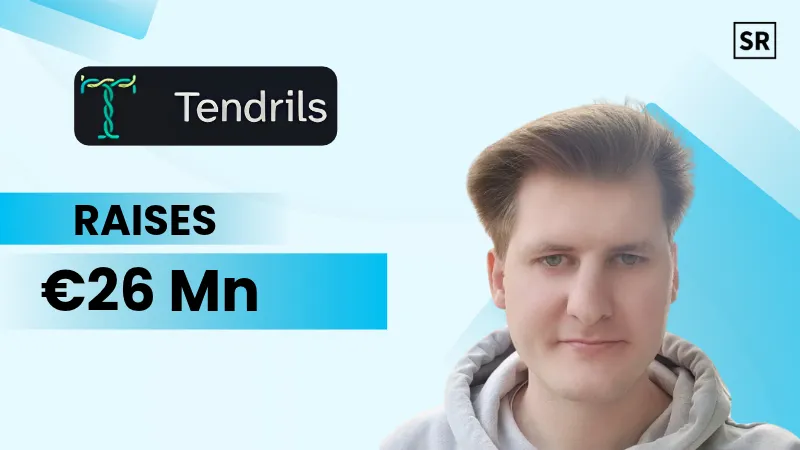
Cambridge-based semiconductor startup Tendrils has raised €26 million ($30 million) in a Seed funding round. The company is developing a new type of general-purpose processor designed to handle thousands of computing tasks at the same time.
SUMMARY
- Tendrils raised €26 million ($30 million) in a Seed funding round led by Benchmark.
- The startup is developing a new processor architecture designed to handle thousands of computing tasks simultaneously.
- Founded in 2025 in Cambridge, UK, by Nils Cremer, T6 and Hugo McNally.
 Follow us
 Follow us
The funding round was led by Benchmark, with participation from Visionaries Club, the UK Sovereign AI Fund, FR8, Antimatter, Cloudberry VC, Conviction, Embassy Ventures and SV Angels. Several angel investors also joined the round.
As part of the investment, Jack Altman, General Partner at Benchmark and co-founder of HR technology company Lattice, has joined Tendrils' board. His appointment brings additional experience and support as the startup develops its processor technology.
Tendrils was founded in 2025 in Cambridge, UK. The company is led by CEO and co-founder Nils Cremer, along with co-founders T6 and Hugo McNally.
RECOMMENDED FOR YOU

UK AI Search Startup Obsero Raises €1 Mn to Expand Its Engineering Team
Oliver Bennett
Oct 14, 2026
BrachyDOSE Gets €554K To Prevent Radiation Injuries In Cancer Treatment
Kailee Rainse
Jul 10, 2025

Mandel AI Raises $3.9M Seed Funding For Supply Chain Coordination
Kailee Rainse
Mar 26, 2026
Before starting Tendrils, Cremer researched interaction nets at ETH Zürich. His work focused on a computing model that now serves as the foundation for the company's new processor design.
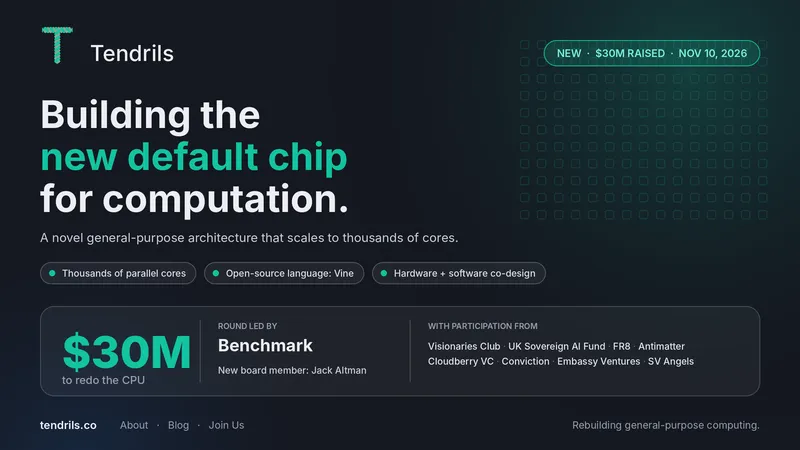
Tendrils aims to solve some of the limitations found in today's computer processors. The company believes that most modern CPUs still rely on designs originally created for older processors that handled one task at a time.
Although chipmakers have introduced new technologies to improve processor performance, Tendrils believes that continuing to support older computing designs makes processors more complex and limits their ability to handle larger workloads efficiently.
Recommended Stories for You

Oliver Bennett Jul 1, 2026

Oliver Bennett Jul 7, 2026

Kailee Rainse Nov 25, 2024
Oliver Bennett Sep 9, 2026

Oliver Bennett Jul 17, 2026

Kailee Rainse Feb 6, 2026
Trending Stories

PanTera Funding News – PanTera secures €93 Million Oversubscribed Series A Funding
Kodiaq Technologies Raises £850K To Advance Metal-Free Long-Duration Batteries

Cyb3r Operations Secures £4M To Close Third-Party Risk Gaps

VerbaFlo Raises $7M Seed Round To Scale AI Platform For Real Estate

Uniphy Secures £3M To Expand Smart Vehicle Controls

Gifting Platform Udora Raises $10 Million To Expand In Europe After Rebranding From Flowwow
Apheros Funding News – Zurich-based Apheros Raises €1.65 Million Pre Seed Funding
[Funding alert] Paris-based Bolero Secures €2 Million in Seed Funding