

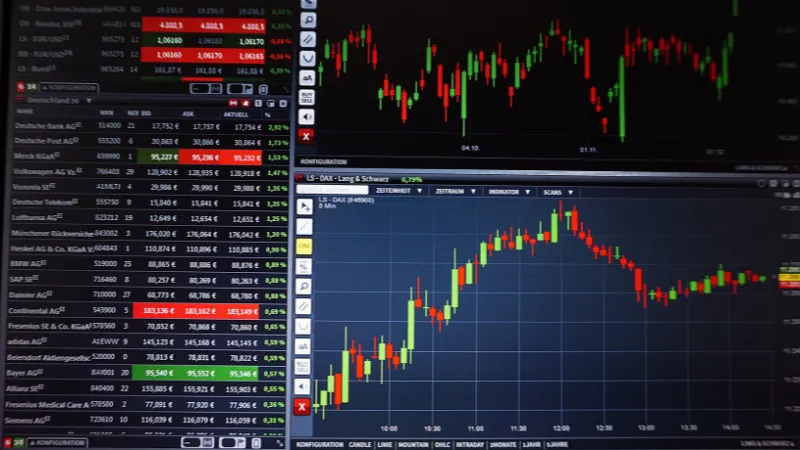
Choosing a stock trading course is harder than picking almost any other class, because anyone can call themselves a market expert online. A buyer has no easy way to confirm the teacher behind a course is truly qualified. So each of the four programs below receives the same evaluation on all four criteria, using only figures each company publishes. Trading involves risk. Real money can be lost, and no course changes that fact.
 Follow us
 Follow us
How each school was evaluated:
- Instructor Credibility and Real Trading Experience
- Community and Peer Support
- Risk Management Education
- Proprietary Tools and Technology
Key takeaways:
- Try the free lessons before you pay, because a teaching style you can follow matters more than a bold promise.
- A course honest about the risk of losing money is worth more than one selling easy wins.
- Practice on a demo account before risking real cash, since doing teaches more than watching.
- Match the course to your schedule, budget, and way of learning, not to the loudest ad.
1. Bullish Bears
Bullish Bears is a trading school that teaches through videos, live streams, and a chat community instead of hype. Members learn the basics first, then move up to harder lessons on strategy and risk, with a trade room and a Discord group for daily questions.
Instructor Credibility and Real Trading Experience
Three active traders founded Bullish Bears in 2016. Tim Davis focused on stocks, Daniel Adams took futures, and Lucien Bechard covered options, including credit spreads and iron condors. Kevin teaches futures now, joined by named staffers Signet, Jeremy, Marziti, and Angel. The team trades live each market day, so students watch real analysis instead of pre-recorded lessons.
RECOMMENDED FOR YOU



Community and Peer Support
About 1,500 traders have joined the paid Discord server, according to company figures. Chat rooms and voice channels are open to members in any country. Users post marked-up charts, ask direct questions, and staff reply inside the same channel. A second server, "The Bullish-Bear HQ," opens stock talk to anyone.
Risk Management Education
Bullish Bears teaches the 1% rule: no single position risks more than one percent of the money in an account. Each order also uses a stop-loss, which closes a trade automatically once the loss reaches the amount a trader is willing to accept. Students set the exit at a price where a stock tends to bounce back up, and the target at a level where it rarely climbs past. Lessons on how much to put on each trade, how to read charts, and how to control emotions come next.
Proprietary Tools and Technology
Free Discord bots watch the market and send alerts on large options bets, breakouts, quick trades, halted stocks, and crypto moves. Tradytics adds more signals and comes with the trade room. Members also get a ready-made Trade Ideas scanner, which checks thousands of companies and shows only the ones that fit the settings a trader picks. Each morning brings a watchlist with a chart image and the prices where a share tends to stall.
2. Goat Academy
Goat Academy is an online school where people learn how the stock market works and how to trade it, founded and run by Felix Prehn, an economist and former investment banker. The school teaches the risk-management rules professional investors follow, with courses built around a method the team calls the Wall Street Protocol, backed by 20+ years of trading experience.
Instructor Credibility and Real Trading Experience
Felix Prehn and Coaches at Goat Academy bring over 150 years of combined institutional experience as former NASDAQ market makers, institutional traders, and portfolio managers. Each instructor is a current or past professional with a verifiable career history, and no anonymous or subcontracted teachers appear on the roster.
Community and Peer Support
The member hub on Mighty Networks stays separate from the course portal, where the Goat Academy stock trading community offers workshops, live Q&A, and personalized learning paths for peer interaction. The Felix & Friends YouTube channel works as an informal community where Felix and the team reply in the comments, and members trade questions there daily. A Facebook group, "Trading for Beginners," counts 6,000+ students, with weekly Tuesday live trainings.
Risk Management Education
Risk management runs through the whole course, not just one lesson. The Wall Street Protocol, a method for reading how big firms move in the market, teaches students to protect their money before trying to make more. Each member sets a stop-loss before they enter a trade, decides how much to put in based on what they can afford to lose, and plans when to exit ahead of time. Felix puts it plainly: "There is no magic formula or miracle trade."
Proprietary Tools and Technology
Program enrollment includes the Winston App and TradeVision. Winston app covers 10,800+ stocks in the US, UK, and Europe, plus ETFs and metals, with AI analysis flagging pricing risks around the clock. TradeVision handles screening and charting. Members also receive coach spreadsheets, a weekly watchlist naming stocks with entry points and stop-losses, and 150+ downloadable research reports and valuation models.
3. HowToTrade
Instructor Credibility and Real Trading Experience
Shain Vernier has traded forex, commodity, and equity markets since 2011 and holds a B.Sc. in Business Finance from the University of Montana. His work has appeared on Daily FX and in Business Insider. Connor Woods brings 5+ years of practice and a first-class degree in finance and economics from Bournemouth University, after heading the analyst department at a global brokerage. Content authors carry 15+ years of market work between them, under a published editorial policy requiring backtested strategies before release.
Community and Peer Support
Members join live streams where analysts read the market as it moves and explain each position taken. A chat room puts students on a team alongside the analysts. The Trade Ideas feed works like a group message board where members post a stock or currency pair worth buying, along with a suggested price. A contest ranks participants on a leaderboard with cash prizes at the top, and email, live chat, and an FAQ page cover questions at any hour.
Risk Management Education
Risk Management gets a full course level in the academy. Lessons define drawdown, meaning how far an account can fall, and set how much to put at stake per position. A separate section covers the best risk-to-reward ratio. Three calculators support the material: a Value at Risk tool showing possible loss, a lot-size tool sizing each holding by the risk chosen, and a Monte Carlo simulator modeling many outcomes before real money goes in.
Proprietary Tools and Technology
Free calculators handle compound growth, profit, swap fees, and pip value. A currency strength meter splits each pair and rates both halves separately, so a trader sees the euro climbing while the yen falls. A forex heatmap gives live readings at a glance, and an economic calendar lists major money events by date. Chart pattern guides, indicator guides, and cheat sheets download at no cost. Registration is free, opening 300+ hours of video lessons with no credit card required.
4. OTAcademy
Instructor Credibility and Real Trading Experience
OTAcademy is the free content platform of Trading Academy, formerly Online Trading Academy, registered in Irvine, California. Published material carries the byline "OTA Contributor Team," described as education from industry insiders and experts, without individual names or backgrounds listed on the site.
Free sign-up opens a personalized learning path, and webinars serve registered users. The platform links to the broader Trading Academy network, with no-cost material acting as an entry point to the paid side. Peer features are more developed inside the parent programs.
Risk Management Education
No dedicated loss-control material appears on public OTAcademy pages. Coverage may exist inside the paid parent programs. The free service focuses on introductory and general subjects instead.
Proprietary Tools and Technology
Members get basic financial calculators, a Retail Trader Daily Newsfeed, a Women In Trading And Investing Newsfeed, and a learning path builder. The set covers content and navigation rather than analysis or screening, and no scoring software appears.
How to Choose the Best Program for You
The right pick comes down to a simple question: how much hand-holding do you actually want? A free library covers the basics for a beginner happy to steer alone, while a paid course brings coaching, tools, and a set path for a learner who wants a guide in the room. Look past the sales page to the instructor page, because a coach with a career record anyone can check tells you more than any headline. Then weigh the daily reality: the hours a week a program asks, the help waiting outside lesson time, and the way loss control runs through the teaching. Pick the school that answers all four with facts, and the fit will feel obvious long before you spend a dollar.
Frequently Asked Questions
What is the difference between fundamental analysis and technical analysis?
Fundamental analysis evaluates publicly traded companies through financial statements, earnings, and interest rates. Technical analysis reads market data, charts, and market trends to time entries and exits. A learner who studies fundamental and technical analysis together builds a fuller picture of the financial markets.
What is the difference between day trading and swing trading?
Day trading involves buying and selling within the same business day. Swing trading usually lasts from a few days to weeks, while long-term stock investing focuses on holding assets for years. Each of the trading styles asks for different trading strategies and a different level of screen time.
Do online stock trading courses suit complete beginners?
Yes. Good online stock trading courses start with foundational knowledge and explain concepts in plain words for beginner traders. A learner moves at their own pace through pre recorded video lectures, on demand webcasts, and virtual workshops. Many programs add a final exam or a professional certificate once a student shows a solid grasp.
What trading skills should a new trader build first?
Risk management comes first, followed by market analysis, trend analysis, and reading financial statements. Trading psychology matters as much as any chart, because calm decisions protect a brokerage account. Paper trading lets beginner traders rehearse day trading strategies with no real money at stake.
How long does it take to learn financial trading?
Learning depends on the hours a week a person gives and the depth of the course content. A curious beginner needs weeks to grasp the basics of stock investing, and months to reach a strong understanding of market knowledge. Lifetime access and self paced material let a learner add additional research whenever a new strategy sparks interest.
What tools help with online stock trading?
Stock screeners filter thousands of publicly traded companies down to the ones that fit a plan. Charting tools, market data feeds, and financial modeling templates support making informed investment decisions. Many programs also share educational materials, downloadable resources, and a weekly watchlist a member can study.
Can trading courses cover more than stocks?
Yes. A broad program spans stock options, options trading, exchange traded funds, mutual funds, and the wider capital markets. Coverage of the stock exchanges and financial markets gives a learner room to test various trading styles before settling on one.
Is a financial advisor the same as a trading coach?
No. A financial advisor or investment advisor gives personal money guidance, while a trading coach teaches trading education and skills. A course helps a person make informed decisions on their own, rather than hand over investment decisions to someone else.
Disclaimer
The content in the article is for education only and gives no investment advice. Trading and investing carry risk, and a person can lose money, including the full amount put in. Past results never guarantee a future outcome. Every reader should do their own research, and speak with a licensed financial advisor before making any investment decision.
Recommended Stories for You

Team SR Apr 9, 2025

Team SR Mar 30, 2026

Team SR Feb 17, 2026

Team SR May 13, 2026

Team SR Mar 13, 2026

Team SR Jan 22, 2026
Trending Stories

8 SEO Automation Tools Ranked by the Hours They Give Back (2026)

Agentic AI Development: Transforming Patient Care and Hospital Operations

Top Career Skills Universities Don’t Teach (But Every Founder Needs)

How Moving Companies Can Make a Difference in Their Communities

Why Niche Branding Is the Smartest Growth Move for Early-Stage Startups

Technical Applications for Modernizing Oil and Gas

Winning New Customers: How FinTech Startups Can Stand Out In A Competitive Market

Getting ready for the first day of school: a parent’s checklist that actually helps