

NTE Character Progression Guide: Fastest Ways to Strengthen Your Team
Jun 24, 2026 | By Team SR
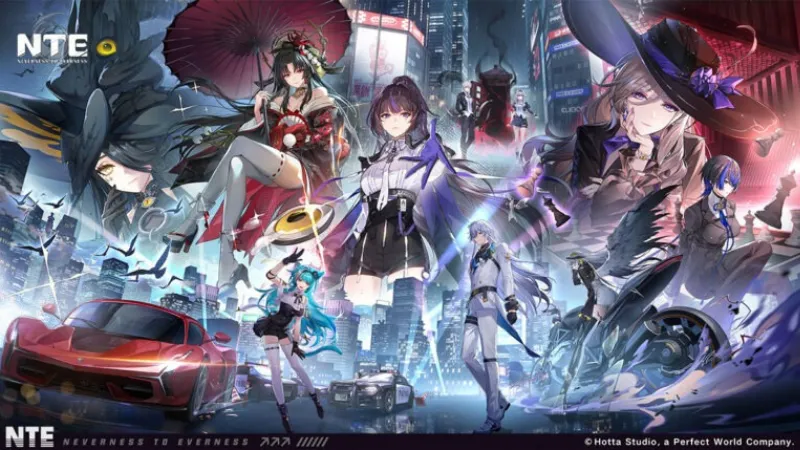
Neverness to Everness is generous with its character roster but demanding when it comes to making those characters genuinely powerful. The gap between a freshly pulled SSR Agent and a fully built one ready for endgame content is significant, and understanding the progression systems that bridge that gap is what separates players who feel perpetually underpowered from those who clear content efficiently and build for the future simultaneously.
 Follow us
 Follow us
This guide covers the fastest and most resource-efficient paths through NTE's character progression systems in 2026.
Understanding the Progression Layers
NTE character progression operates across several interconnected systems, each contributing to a character's overall strength in different ways. Resonance Level is the most straightforward — the character's base level, raised through experience materials and capped by the current Resonance Chain ceiling. Pushing Resonance Level as high as the cap allows is the baseline progression step for any character intended for serious use.
Above the base level system sits Resonance Chain, NTE's constellation equivalent. Obtaining duplicate copies of a character unlocks additional Resonance Chain nodes, each providing meaningful passive upgrades to kit performance. For limited SSR characters, duplicates come from pulling on the same limited banner across multiple appearances, making Resonance Chain a significant long-term investment rather than something most players complete quickly.
RECOMMENDED FOR YOU


W-Engine — the character's signature weapon — provides a substantial base stat increase and a unique passive ability tailored to the character's playstyle. Refinement levels for W-Engines, obtained through duplicate weapons, further amplify the passive effect. Getting a character's signature W-Engine to at least one refinement level is a meaningful upgrade; completing the full refinement path is a long-term goal for dedicated players.
Disk Drives are NTE's artifact system. Each character equips a set of Disk Drives providing base stats and set bonuses, and farming optimal Disk Drive substats is the most time-intensive part of the late-game progression loop. The randomness of substat rolls means this stage of progression is heavily influenced by RNG, and players should expect significant investment before reaching optimal configurations.
The Role of an NTE Top Up in Progression
Free resource income in NTE is consistent but limited in rate. Stamina caps out and regenerates over time, pulling free characters requires patience across multiple patches, and the gap between a naturally paced free-to-play progression and the pace needed to engage with limited character banners regularly can be significant.
An NTE top up serves the most important function when it directly addresses a specific resource gap: Polychrome for a banner character who unlocks a key team role, or Stamina refreshes during a time-limited Disk Drive farming event. The least efficient use of a top-up is reactive spending without a clear target — purchasing currency mid-banner without a pull budget in place tends to produce overspending without corresponding value.
For players approaching a critical progression milestone — a character who completes a core team composition, or a Resonance Chain node that significantly upgrades a main DPS — planning a game top-up around the banner availability date and calculating the exact Polychrome needed removes the guesswork and keeps spending purposefully.
LootBar operates as a reliable game top-up shop for NTE players who prefer to handle recharges outside the in-game purchase flow. The self-service model means no account credential sharing, transactions complete within minutes, and payment method support spans multiple regions. For players planning a targeted top-up around a specific banner or event, the processing speed and transaction reliability make LootBar a consistently strong option.
Prioritizing Which Characters to Build
Building every character simultaneously is the fastest route to having no character battle-ready. Resource spreading is the most consistent mistake newer NTE players make, and recovering from it requires weeks of focused investment.
The correct approach is to identify a core team of three characters — a primary DPS, a Sub-DPS or Stunner, and a Support — and funnel progression resources into those three before expanding. A fully built core team clears content that an eight-character roster at 60% investment cannot, and it does so while generating more in-game resources that accelerate the next phase of expansion.
Prioritize the team's primary DPS for Resonance Level progression first, then bring the support up to functional level for survival and buff uptime, then address the Sub-DPS. This ordering keeps the team functional through content that generates the materials needed for further progression.
Fastest Routes to Experience Materials
Resonance Level progression in NTE requires Dennies (the primary in-game currency for progression materials) and experience books obtained through multiple channels. Daily commissions and login rewards provide a consistent baseline. Story chapters and side quests front-load significant experience materials for players working through the narrative. Hollow Zero exploration — NTE's roguelike content mode — provides materials alongside its unique rewards.
Event participation during each patch cycle is one of the highest-density sources of progression materials per time invested. Events typically offer experience books, Polychrome, and Disk Drive materials in quantities that meaningfully accelerate character development during the weeks they are active. Neglecting event content is one of the most common reasons players feel resource-starved in NTE.
Stamina usage should be directed toward Disk Drive farming and ascension material domains before experience material domains for any character past the initial leveling phase. By mid-game, experience books accumulate faster than Disk Drive materials through natural play, making the stamina allocation decision relatively clear.
Efficiently Farming Disk Drives
Disk Drive farming is where most of NTE's long-term playtime investment goes, and approaching it without a plan wastes significant stamina on suboptimal outputs. Each character has a recommended set combination — typically two pieces of one set and four of another, or a full four-piece — that can be found in the community's character guides and the game's own team recommendation tool.
Before farming, confirm the target set combination, the priority main stats for each Disk Drive slot, and the substat priorities for the character's kit. Farming for a DPS character without knowing whether Crit Rate or Crit Damage should take priority on the fourth slot means potentially discarding pieces that would have been upgrades under the correct framework.
Locking promising Disk Drive pieces as they drop — rather than discarding immediately — prevents accidentally breaking down a piece with good substats that may become more valuable once other slots are filled. Disk Drive enhancement is expensive, so investing enhancement materials only into pieces with at least two desired substats before evaluating further is a reasonable filtering approach.
Resonance Chain Investment: When It's Worth It
Resonance Chain nodes in NTE range from modest stat increases to kit-transforming passive upgrades, and knowing which characters benefit most from duplication investment helps players decide where to spend additional pulls beyond the base copy.
For support and sustain characters, early Resonance Chain nodes often provide team-wide utility upgrades — additional shielding, buff duration increases, or cooldown reductions — that meaningfully improve the team's overall output. For DPS characters, the first Resonance Chain node typically provides a damage multiplier, making it the most cost-efficient duplication investment available.
Beyond the first node, the cost of duplicates on limited SSR characters makes further investment a decision for players with specific long-term targets rather than a general recommendation. The Polychrome cost of pulling three additional copies of a limited character is substantial, and for most players that resource is better directed toward building a second functional team.
Building Toward Endgame Content
NTE's endgame content — Shiyu Defense and its equivalents — requires two complete team compositions rather than one, which makes the eventual expansion beyond the initial core team a deliberate planning exercise rather than an afterthought.
Once the first core team is fully built and clearing endgame content efficiently, the same methodical approach applies to the second composition. Identify the roles needed, pull for or promote characters who fill them, and funnel resources in the same priority order. Players who rush to build a second team before the first is complete extend the time before either team functions at a high level.
Recommended Stories for You

Team SR Aug 21, 2026

Team SR Jun 5, 2026

Team SR Jun 18, 2026

Team SR Jun 29, 2026

Team SR Jan 5, 2026

Trending Stories
Credit Math For An AI Map Generator On Seed Budget

5 technical choices that make the difference between growth and stagnation

Is Gamification as a Service the Next Major Battleground for Startups?

Top 10 Backlink Agencies Businesses Trust for Real Authority

Are Working Students the Quietest Demographic Relying on the Essay Writing Service EssayService.com?

Why UK Startups Need Better Access to Legal Documents as They Scale

How Local Taxi Services Help Keep Highland Tourism Moving

Building a Startup While Still in University: A Practical Guide