

Home Solar Installation in Sussex: What the Surge in Residential Uptake Means for Grid Operators and Policymakers
Sep 10, 2026 | By Team SR
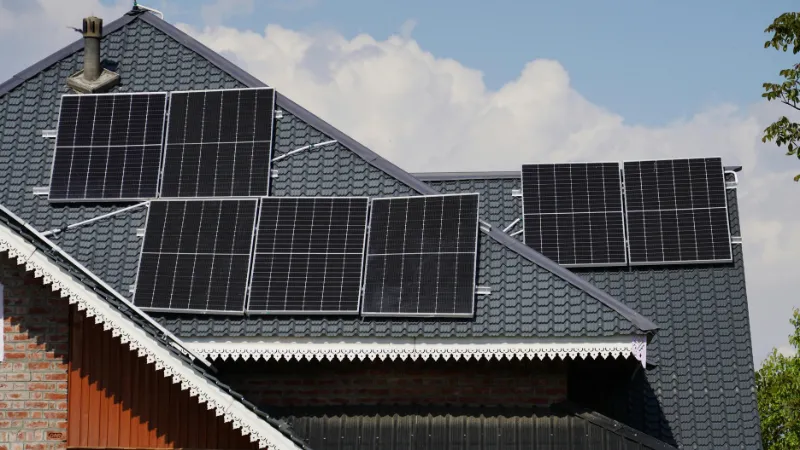
Residential solar deployment in the south of England has moved well beyond the early-adopter phase. In counties like Sussex, where solar irradiance levels are among the highest in the UK and housing stock skews toward owner-occupied properties with viable roof space, installation rates have accelerated sharply in response to sustained high electricity tariffs and falling system costs. The cumulative capacity now sitting on Sussex rooftops represents a distributed generation asset of genuine significance to local grid operators.
 Follow us
 Follow us
In this article, we examine what the residential solar surge in Sussex means for Distribution Network Operators managing local grid infrastructure, how the policy and regulatory environment is shaping both deployment rates and grid interaction, where the integration of battery storage and smart EV charging is creating new complexity, and what the Sussex experience signals for national energy planning in the UK.
The Scale of Residential Solar Deployment in the South East
The south-east of England, encompassing Sussex, Kent, and Surrey, has consistently led UK regional solar deployment tables. Sussex specifically benefits from annual solar irradiance levels that approach 1,100 to 1,200 kilowatt hours per square meter in many areas, a figure that places it in the top tier of viable UK solar markets and makes the economics of residential generation meaningfully more attractive than in northern regions.
The UK government's data on microgeneration capacity registered under MCS certification shows sustained year-on-year growth in residential solar across the south-east. Industry bodies including Solar Energy UK have reported that falling system costs, averaging roughly 60 percent below 2010 levels in real terms by 2025, have expanded the addressable market well beyond the early cohort of high-income, environmentally motivated adopters into mainstream homeowner consideration. For Sussex specifically, where median household incomes are above the national average and owner-occupancy rates are high, the conditions for continued rapid deployment are structurally strong.
RECOMMENDED FOR YOU

Honest Review of Unit4 2025: The Software that’s Modernizing Small Government
Team SR
Dec 3, 2025


What Accelerating Deployment Means for Distribution Network Operators
The central operational challenge for Distribution Network Operators managing Sussex networks is not the volume of installed solar capacity in isolation. It is the speed of change and the bidirectional nature of the power flows that distributed generation creates at the low-voltage network level.
Traditional network planning in the UK was built around a unidirectional assumption: power flows from transmission, through high-voltage distribution, down to low-voltage feeders, and out to end consumers. Residential solar inverts that logic at the substation level during periods of high generation and low local demand. A street of twenty homes, each with a 4kWp solar system generating at peak midday output, can collectively push several tens of kilowatts back up the feeder toward the substation. Multiply that across multiple feeders and the voltage management and thermal loading implications for local network infrastructure become non-trivial.
Voltage Rise and Network Hosting Capacity
Voltage rise is the most immediate technical constraint that DNOs encounter as residential solar density increases on low-voltage networks. When distributed generation output exceeds local demand, voltage at the point of connection can rise above the regulatory tolerance band defined under Engineering Recommendation G99 and the Low Voltage Network Connection Standard. Exceedances can trigger inverter disconnection, which limits effective generation and frustrates homeowner expectations of system performance.
UK Power Networks, the DNO serving Sussex, East Sussex, West Sussex, and surrounding areas, has published hosting capacity data indicating that portions of the existing low-voltage network are approaching the threshold beyond which new solar connections may require network reinforcement before approval. This creates a potential bottleneck for residential solar growth that policy frameworks have not yet fully addressed, and that MCS installers operating in the region are increasingly encountering in practice through delayed or conditioned connection approvals from the DNO.
The Role of Smart Inverters and G99 Compliance
The technical response to voltage rise at the device level is the smart inverter equipped with reactive power control and active power curtailment capability. Under G99 requirements, solar installations above certain capacity thresholds must incorporate protection relays and communication capability that allow the DNO to manage generation output under abnormal network conditions. For residential scale installations, the practical implementation of these requirements varies by installer competence and equipment specification.
The broader network management opportunity lies in aggregating smart inverter capability across a large residential solar fleet into a dispatchable distributed energy resource. This has been demonstrated at scale in other markets, notably South Australia, where the Virtual Power Plant program operated by SA Power Networks has shown that aggregated residential solar and battery assets can provide meaningful grid services including frequency response and voltage support. The UK regulatory and commercial framework for equivalent aggregation is still developing, but the Sussex residential solar base represents the raw material for exactly this kind of program.
Battery Storage: Shifting the Export Curve
Co-located battery storage is becoming an increasingly standard component of new residential solar installations across Sussex, driven by the growing awareness among homeowners that self-consumption, rather than export, is where the financial return is strongest. This behavioral and economic shift has a direct and underappreciated consequence for DNO network modeling.
Without battery storage, residential solar systems produce a predictable export profile that tracks irradiance closely and peaks around solar noon. DNOs can model this profile with reasonable accuracy using irradiance data and known installed capacity. With battery storage, that predictability is substantially reduced. Batteries introduce a household-level optimization layer that prioritizes self-consumption and can defer export to align with off-peak tariff windows, respond to dynamic pricing signals, or pre-charge in anticipation of the following day's generation forecast.
The aggregate effect of thousands of battery-equipped residential solar installations in Sussex is a flattened midday export peak and a new evening export event as batteries that reached full charge during the day discharge into the home while the solar system continues to export. For DNOs accustomed to modeling residential demand as relatively smooth and predictable, this introduces a new class of volatility that existing planning models were not designed to accommodate. Updated probabilistic forecasting approaches that incorporate battery behavior assumptions will be necessary as the proportion of battery-equipped installations grows.
The Smart Export Guarantee and Its Policy Implications
The Smart Export Guarantee, introduced in January 2020 as the successor to the Feed-in Tariff, provides the regulatory mechanism through which residential solar owners in Sussex receive payment for electricity exported to the grid. Licensed electricity suppliers with more than 150,000 customers are mandated to offer at least one SEG tariff, with the per-unit rate set competitively rather than prescribed by the government.
The SEG's design reflects a deliberate policy shift away from the above-market, long-duration support that characterized the Feed-in Tariff toward a market-integrated mechanism that values export at rates closer to wholesale. This has implications for the economics of residential solar that are not always well understood at the household level: the financial case for solar in Sussex today is predominantly built on avoided import costs rather than export income, which is precisely why battery storage and smart EV charging have become so economically relevant as complements to solar generation.
From a policy design perspective, the SEG creates a useful signal but stops short of enabling the full market participation that aggregated residential solar could theoretically provide. Export payments under current SEG arrangements do not vary by time of day, location on the network, or the value of the electricity to the system at the point of export. A location-marginal or time-differentiated SEG structure, aligned with the development of the UK's Balancing Mechanism and Ancillary Services markets, would better reward residential solar owners in Sussex for exporting at high-value times and would incentivize the kind of smart dispatch behavior that would materially benefit DNOs managing local network constraints.
The EV Charging Integration Challenge
The intersection of residential solar with EV home charging represents the most consequential planning challenge currently facing both DNOs and national grid operators in the UK. Sussex has one of the highest rates of EV ownership in England, reflecting its demographics, income profile, and the county's strong alignment with the environmental values that have historically driven early EV adoption.
A household with solar panels, battery storage, and a home EV charger represents a fundamentally different load and generation profile from anything that existing residential network infrastructure was designed to accommodate. The smart charging capability now embedded in most new EV charger installations allows the household to optimize charging around solar generation, time-of-use tariff rates, and battery state of charge simultaneously. This is beneficial for individual household economics but creates a new class of coordinated demand event when aggregated across many households on the same low-voltage feeder responding to similar price signals at the same time.
The risk of EV charging synchronization, sometimes described as the "tea-time problem" for EVs, has been well documented in academic literature and is increasingly a focus of Ofgem's work on smart charging standards and interoperability. For DNOs serving Sussex, where the combination of high solar penetration and high EV ownership creates the conditions for this synchronization risk most acutely, developing demand flexibility programs that can manage coordinated EV charging events is an operational priority that the current regulatory framework does not yet fully support.
What the Sussex Experience Signals for National Policy
Sussex is not an outlier. It is a leading indicator. The conditions driving rapid residential solar uptake in Sussex, including high irradiance, favorable demographics, above-average incomes, and strong owner-occupancy rates, exist in varying degrees across much of the south of England and are spreading to other regions as system costs continue to fall and policy support mechanisms evolve.
The network management challenges that UK Power Networks is navigating in Sussex today are the challenges that DNOs across the UK will face within the next five to ten years as residential solar deployment continues to accelerate. The regulatory and technical frameworks developed in response to Sussex's experience will therefore have national relevance. Three priorities stand out:
- Accelerated network hosting capacity assessment and publication: DNOs should be required to publish granular, regularly updated hosting capacity data at the feeder level to allow installers, aggregators, and policymakers to make informed decisions about where additional network investment is needed and where it is not.
- Time-differentiated and location-aware export incentives: Evolving the Smart Export Guarantee toward a structure that varies payment by time of day and network location would better align residential solar dispatch behavior with system needs and reduce the cost of network management.
- A regulatory pathway for residential solar aggregation: The UK needs a clear, commercially viable framework through which aggregators can access the flexibility value of residential solar and battery assets in balancing and ancillary services markets. The absence of such a framework leaves significant system value unrealised while DNOs manage network constraints with blunter instruments.
Conclusion
The residential solar surge in Sussex is not simply a consumer story. It is a grid modernization story, a regulatory design story, and a signal about the pace at which distributed energy resources are moving from marginal contributor to meaningful variable in UK power system operation. DNOs, policymakers, and national grid operators who treat residential solar as a background trend rather than an active planning variable are already behind the curve.
Sussex demonstrates what the distributed energy future looks like at scale, and the frameworks developed to manage it there will define how the UK handles the same transition everywhere else.
FAQs
Why Is Sussex a Particularly Significant Market for Residential Solar in the UK?
Sussex combines several structural factors that make it one of the UK's most active residential solar markets: above-average solar irradiance relative to the national mean, high owner-occupancy rates that give residents control over their properties, above-average household incomes that support the upfront investment, and a strong environmental orientation among the population that has historically driven early adoption of clean energy technologies. The resulting deployment density makes Sussex a leading indicator for grid integration challenges that other UK regions will face as solar costs continue to fall.
How Are UK Distribution Network Operators Responding to Rising Residential Solar Penetration?
UK Power Networks, the DNO serving Sussex, has introduced hosting capacity assessments to identify parts of the low-voltage network approaching connection limits, and has developed smart grid programs that use automated voltage management and demand flexibility to accommodate higher levels of distributed generation. At the national level, Ofgem has introduced regulatory frameworks including the Network Innovation Allowance that fund trials of new approaches to managing distributed energy resources. However, the pace of regulatory and infrastructure adaptation continues to lag behind the pace of residential solar deployment in high-growth areas.
What Role Does Battery Storage Play in the Grid Integration Picture?
Co-located battery storage changes the export profile of residential solar systems in ways that both help and complicate grid management. On the helpful side, batteries can reduce peak midday export events by storing generation for later self-consumption, which relieves voltage rise pressure on feeders during high irradiance periods. On the complicating side, battery dispatch behavior is less predictable than solar generation alone, and the aggregate behavior of many battery systems responding to similar price signals can create new demand and export events that existing network models do not anticipate. Improved data sharing between installers, aggregators, and DNOs is essential to manage this complexity effectively.
How Does the Smart Export Guarantee Shape Residential Solar Economics in Sussex?
The SEG provides a payment mechanism for exported electricity but at rates that are typically well below the cost of importing from the grid. This pricing structure means that the primary financial driver for residential solar in Sussex is avoided import cost rather than export income, which incentivizes homeowners to maximize self-consumption through battery storage and smart EV charging rather than optimizing for export volume. This behavioral response is economically rational for the individual homeowner but has aggregate network implications that the current SEG design does not account for or seek to manage.
What Policy Changes Would Most Improve the Integration of Residential Solar Into the UK Grid?
Three changes would have the greatest impact. First, mandating granular, regularly updated hosting capacity publication by DNOs would allow the market to direct solar deployment toward network-friendly locations without requiring central planning. Second, introducing time-of-use and location-differentiated SEG payments would align residential solar dispatch behavior with system needs rather than leaving it driven entirely by household economics. Third, establishing a clear regulatory and commercial pathway for aggregating residential solar and battery assets into balancing and ancillary services markets would unlock the system flexibility value that currently sits unrealised in millions of rooftop installations across the UK.
Recommended Stories for You

Team SR Jun 19, 2026

Team SR Dec 8, 2025

Team SR Nov 26, 2025

Team SR Aug 20, 2026

Team SR Sep 19, 2025

Team SR Sep 4, 2026
Trending Stories

Germany VPS Hosting: High-Performance KVM without Verification Delays

Smart Ways Startups Can Boost Business Efficiency

Startup CV vs corporate CV: What UK jobseekers need to know

WoW Forever Camping Guide: How Campfires and Professions Work Together

8 SEO Automation Tools Ranked by the Hours They Give Back (2026)

Top Career Skills Universities Don’t Teach (But Every Founder Needs)

Agentic AI Development: Transforming Patient Care and Hospital Operations

Why Niche Branding Is the Smartest Growth Move for Early-Stage Startups