
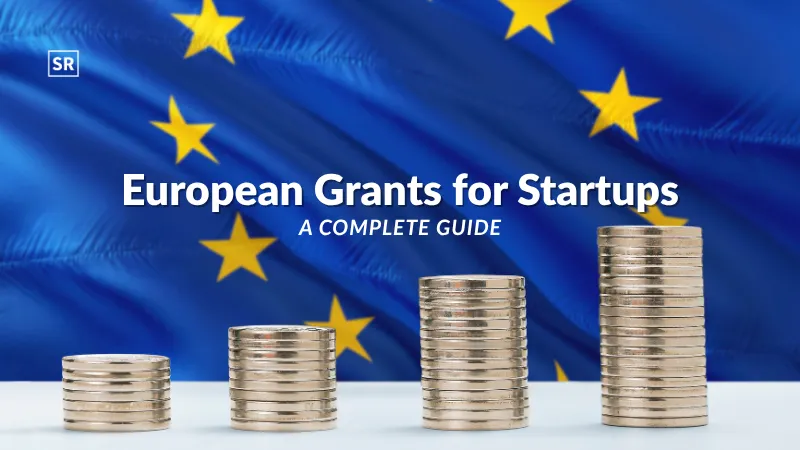
Startups today face intense competition for capital and scaling opportunities. While private venture capital and angel investment remain vital European grants for startups especially those backed by the European Union and regional governments, offer non‑dilutive funding that can be critical for innovation, research and early‑stage growth. In 2026, Europe continues to ramp up its funding ecosystem through flagship programmes like the EIC Accelerator, Horizon Europe initiatives, EIT support, and country‑specific grant schemes. Here Complete guide to the top European grants available in 2026, how to apply, and strategies to boost your chances of success.
 Follow us
 Follow us
Top Grants For Early-Stage Startups In Europe
- EIC Accelerator
The EIC Accelerator is a flagship European Union program designed to support innovative startups and SMEs with high-growth potential. It provides non-dilutive grants and equity investments to help companies develop breakthrough technologies, scale internationally and bring new products to market.
- EIC Pathfinder & Transition
The EIC Pathfinder program run by the European Innovation Council, supports early-stage research and breakthrough technologies. It focuses on high-risk high-reward ideas that could lead to radical innovations in science and technology.
- EIC STEP Scale‑Up
The EIC STEP Scale‑Up programme is a major European Innovation Council (EIC) initiative under the Strategic Technologies for Europe Platform (STEP) designed to help ambitious startups, SMEs, and small mid‑caps scale their breakthrough technologies. It fills a funding gap for high‑growth companies that need large investments to expand and compete globally.
RECOMMENDED FOR YOU


Carclo Share Price Prediction 2025, 2026 to 2030 – Expert Analysis
Team SR
Aug 28, 2025
- EIC Transition
The EIC Transition program is run by the European Innovation Council (EIC) to help startups and researchers turn breakthrough research into market-ready innovations. It’s designed for technologies that already have a proof-of-concept but need support to move toward commercialization.
- Horizon Europe
Horizon Europe is the European Union’s flagship research and innovation funding programme for 2021–2027. It aims to boost scientific excellence, support breakthrough innovations and address major global challenges like climate change, digital transformation, health, and sustainability.
- Digital Europe Programme
The Digital Europe Programme (DEP) is an EU initiative designed to help European startups, SMEs, and organizations adopt and scale advanced digital technologies. It provides non-dilutive funding through grants for projects that boost digital transformation across Europe.
- EIT Urban Mobility Financial Support to Startups
The EIT Urban Mobility Financial Support to Startups Open Call is one of Europe’s most significant grant and equity programmes for early‑stage companies focused on sustainable urban mobility solutions. Launched under the broader European Institute of Innovation & Technology (EIT) framework, this initiative aims to accelerate innovation, reduce city congestion and emissions and foster inclusive urban transport ecosystems across Europe.
Read Also - Government Grants For Women Owned Businesses 2024
Why European Grants Matter For Startups In Europe
European grants provide startups with critical early-stage support. Unlike equity funding, these grants offer non-dilutive capital, allowing founders to grow their business without giving up ownership. They also bring credibility and validation, signaling trust to investors, partners and customers which can open doors for collaborations and future funding.
Beyond money, many EU grants connect startups to networks, mentorship and industry expertise, helping accelerate innovation and market entry. By combining financial support with visibility and strategic resources, European grants are a powerful tool for startups aiming to scale, innovate and succeed globally.
How To Apply For European Startup Grants
Securing European startup grants can provide non-dilutive funding, credibility and access to networks but it requires careful preparation. Follow these steps to maximize your chances of success
Step 1 Validate Your Business Idea and Create a Solid Business Plan
Before applying, ensure your startup idea is clear, viable and well-documented. A strong business plan demonstrates that you understand your market, customers, and potential challenges. Include realistic financial projections, concrete steps to achieve your goals, and highlight what makes your startup innovative or unique. Thorough preparation signals to funders that your business is serious, capable and ready to execute its vision.
Step 2 Register Your Business Properly
To be eligible for grants, your business must be legally registered in Europe, comply with tax obligations and hold any required licenses or permits. Many grants also require proof that your startup can manage funds responsibly, giving funders confidence that their investment will be used effectively.
Step 3 Research and Identify Suitable Grant Opportunities
Not all grants are a fit. Study EU and regional startup grants, including Horizon Europe, EIC Accelerator and national innovation funds, and focus on those aligned with your startup’s objectives. Whether supporting innovation, sustainability, social impact, or regional development, a precise match with the funder’s goals increases your chances of success.
Step 4 Prepare Required Documentation
Gather all necessary documents, including financial records, projections, proof of registration and founders’ qualifications. Supporting materials like letters from mentors, partners or advisors can boost credibility. Well-organized, complete documentation demonstrates professionalism and improves your likelihood of being considered seriously.
Read Also - French government Grants €149M Subsidy To Lyft For Green Hydrogen Project
Step 5 Write a Compelling Grant Application
Your application is your story. Clearly explain the problem your startup solves, the impact it will create and why funding is essential. Show both need and opportunity, and link your objectives to the funder’s mission. Use clear, precise and passionate language, and describe concrete milestones and outcomes the grant will help achieve.
Step 6 Submit Your Application Before the Deadline
Ensure your application is complete, accurate and submitted on time. Even small mistakes can be disqualifying. Meeting deadlines demonstrates that your startup is organized, reliable and ready to manage funding responsibly.
Step 7 Follow Up and Prepare for Next Steps
After submission funders may request clarifications, interviews, or additional documents. Be responsive and professional, showing commitment to turning the grant into tangible results. Collaboration and transparency during this stage can make a significant difference.
GrantBite helps startups navigate these steps by identifying grants that match business stage, sector and location, simplifying the process so founders can focus on growth, innovation, and impact.
Conclusion
European grants offer startups a unique opportunity to secure non-dilutive funding, gain credibility and access valuable networks across the EU. In 2026 programs like Horizon Europe, EIC Accelerator, EIC Pathfinder, EIC Transition and country-specific grants continue to provide critical support for innovation, research and early stage growth.
By carefully validating your business idea aligning with the right grant, preparing strong documentation and submitting a compelling application on time startups can maximize their chances of success. With strategic preparation and persistence European grants can help startups scale innovate and make a lasting impact in the market.
What are European grants for startups?
Who is eligible for European startup grants in 2026?
How long does it take to receive funding?
Recommended Stories for You




Kailee Rainse Apr 3, 2025

Kailee Rainse Nov 28, 2025

Kailee Rainse Apr 3, 2026
Trending Stories

Petrotal Corporation Share Price Prediction (2025–2030): Expert Analysis & Predictions
Eqtec Plc Share Price Prediction (2025–2030): Expert Analysis & Predictions

Pod Point Group Holdings Plc Share Price Prediction (2025–2030): Expert Analysis & Predictions

SFM Compile: Comprehensive Guide to Understanding and Using It

Best Names for Newborns in Denmark
Threadality Technologies and Their Impact on the Modern Business World

SohoHindipro net: Trendy Bios and Creative Status Updates

Kingfisher Share Price Prediction 2025, 2026 to 2030 – Expert Analysis