

10 Early-Stage Fintech Startups in Europe to Watch in 2026
Oct 28, 2026 | By Oliver Bennett
 Follow us
 Follow us
Europe's fintech industry is changing how people manage money and how businesses handle payments. Startups are building new tools for digital payments, artificial intelligence (AI), accounting, investment management, and other financial services.
These tools help people manage their finances, make payments more easily, and save time on everyday tasks. Businesses are also looking for better ways to reduce costs, protect financial data, and improve their operations.
For entrepreneurs, investors, and technology professionals, these startups offer a closer look at how financial technology is developing across Europe.
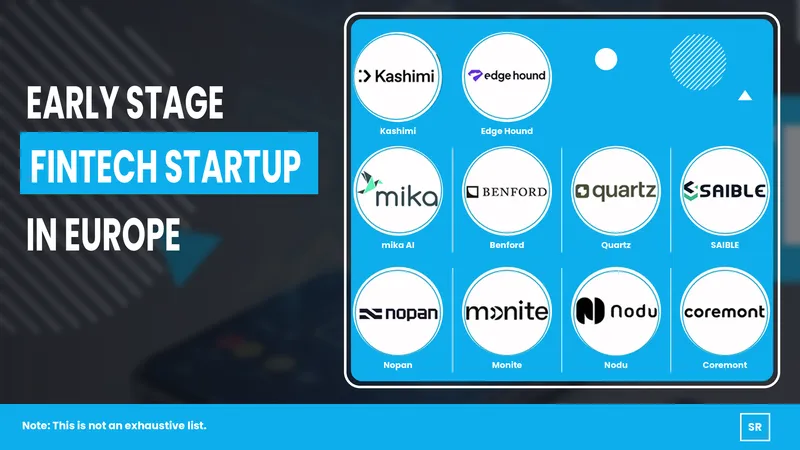
This article explores 10 fintech companies featured in the infographic. They work in different areas, from AI-powered finance to international payments. Some are early-stage startups, while others are more established companies in the European fintech market.
1. Kashimi
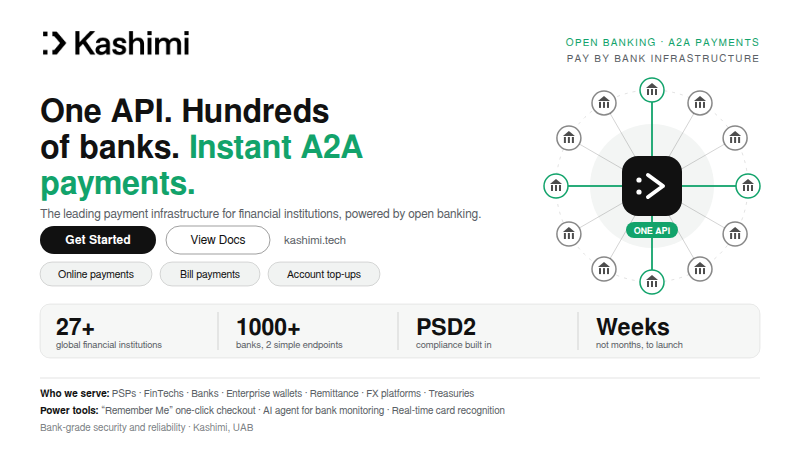
Kashimi is developing payment technology that helps financial institutions offer direct payments between bank accounts. It uses open banking technology to connect banks and make it easier for businesses to build payment services.
Traditional card payments often depend on card networks and several service providers. Account-to-account payments offer another way to move money directly between bank accounts.
Kashimi provides connections to banking services through APIs. This allows financial companies to connect with different banks without building each connection from scratch.
As more businesses look for flexible payment options, Kashimi aims to make it easier for financial service providers to develop and improve their payment systems.
2. Edge Hound
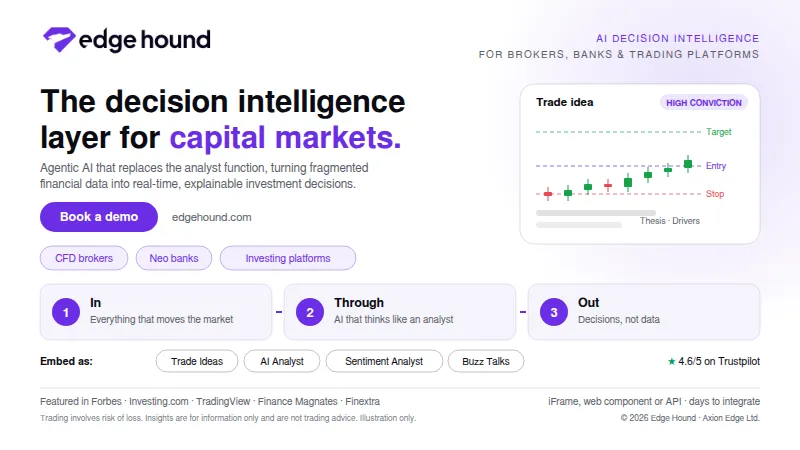
Edge Hound focuses on using AI to help people understand financial markets. Its platform gathers information from financial news, company reports, earnings calls, and market discussions.
Investors often need to review large amounts of information before making decisions. Finding useful details across different sources can take a lot of time.
Edge Hound aims to organise this information and turn it into insights that traders can use for their research. Its technology helps users follow market developments and explore possible investment opportunities.
The company reflects the growing use of AI in investment research. However, AI insights cannot guarantee investment returns, and investors still need to consider the risks before making decisions.
3. mika AI
RECOMMENDED FOR YOU



How Does AI Impact Small Businesses? Benefits, Challenges and Uses
Oliver Bennett
Sep 24, 2026
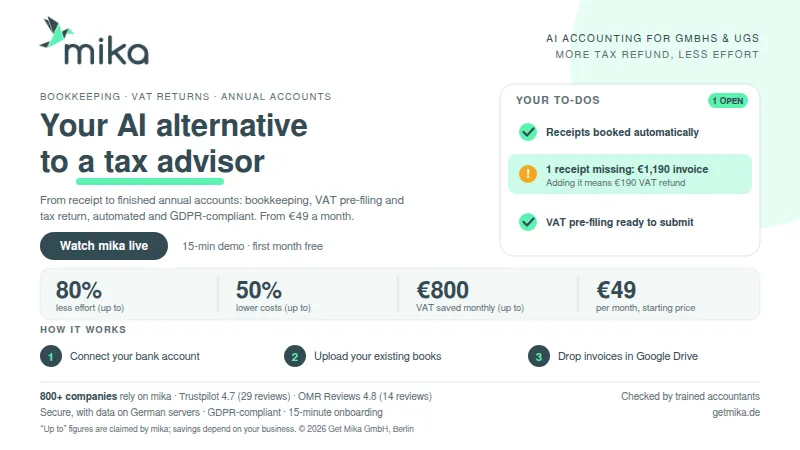
Berlin-based mika AI develops financial management software for small businesses. Its platform uses AI to help with tasks such as bookkeeping, tax preparation, VAT returns, and financial reporting.
Small business owners often spend hours managing invoices, preparing documents, and keeping their financial records up to date. These tasks can also be expensive when they require outside support.
mika AI aims to make financial administration easier by bringing important tasks into one platform. This helps business owners spend less time on paperwork and focus more on running their companies.
In September 2026, the company raised €6 million in seed funding led by Smedvig Ventures. The funding will help the startup develop its platform and support its growth.
4. Benford

Benford is a Norwegian fintech company that uses technology to make auditing easier. Instead of only selling software to audit firms, the company uses its own technology to carry out statutory audits.
Its AuditOS platform connects with company systems, collects financial documents, and supports different stages of the audit process.
Traditional audits can involve a lot of paperwork, repeated document requests, and manual checks. Benford aims to reduce this work through automation and better access to financial information.
The platform allows technology to handle routine tasks while qualified professionals focus on important decisions and complex financial issues.
In September 2026, Benford announced €5 million in pre-seed funding to develop its business and support expansion. The company shows how technology can improve services that have traditionally relied on manual processes.
5. Quartz
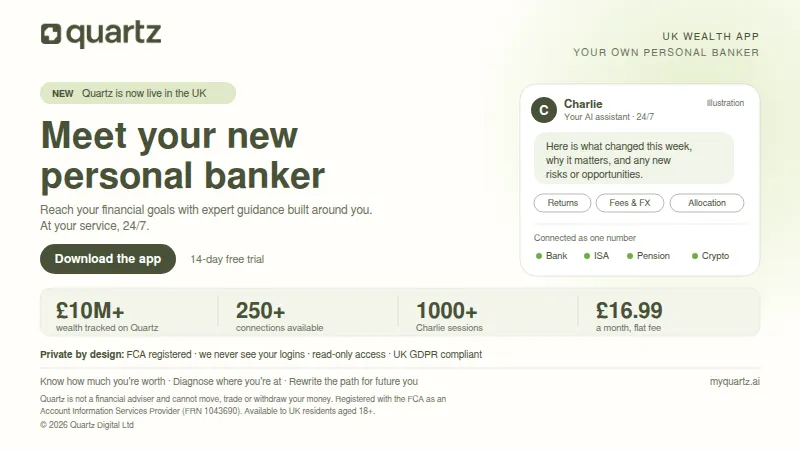
London-based Quartz is developing an AI-powered personal finance platform that helps people manage their money in one place.
People often keep their savings, investments, pensions, and other financial assets across different accounts. This can make it difficult to understand their overall financial position.
Quartz aims to bring this information together and provide personalised financial insights. Its AI assistant, Charlie, helps users understand their finances in relation to their goals and market developments.
The goal is to make personal financial management easier and help users make more informed decisions about their money.
In September 2026, Quartz raised £2.75 million in pre-seed funding as it launched its platform in the UK. Its approach reflects growing interest in digital tools that make financial guidance more accessible.
6.
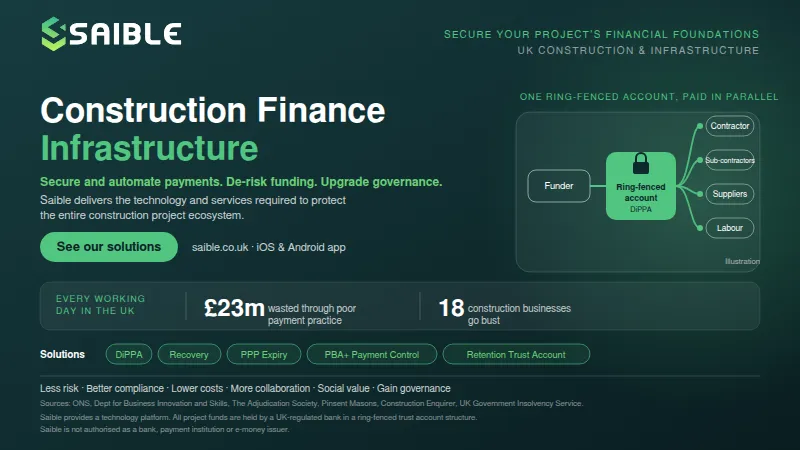
SAIBLE is a UK fintech company focused on payments in the construction industry. It aims to make it easier to manage payments between project owners, contractors, subcontractors, and suppliers.
Construction projects often involve several businesses working together. When payments are delayed, smaller contractors and suppliers can struggle to pay their own bills and manage cash flow.
SAIBLE provides tools for payment approvals, verification, reporting, and record-keeping. Its system works with a regulated banking partner that holds and manages project funds.
This gives businesses a clearer view of payment activity and helps them manage project payments in a more organised way.
In July 2026, SAIBLE raised £2.9 million to develop its platform and support business growth. The company shows how fintech can solve payment problems in industries beyond banking and retail.
Read Also- Human Resources Software: Features, Benefits, Types, and Best Solutions
7. Nopan
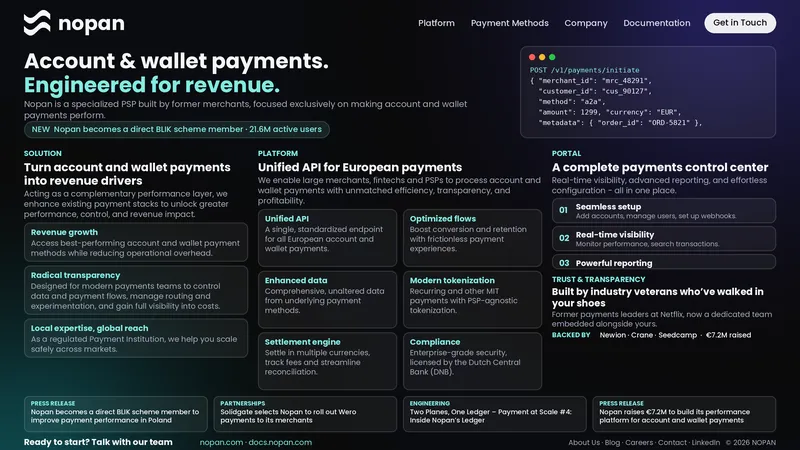
Amsterdam-based Nopan helps businesses improve digital payments, including payments made directly between bank accounts and through digital wallets.
Online businesses often offer several payment options to serve customers in different countries. However, some payments fail because of technical problems, payment provider limitations, or differences between markets.
Nopan provides technology that helps businesses manage how payments are processed. Its platform can help payment providers and merchants improve payment routing, reduce unnecessary costs, and create a smoother checkout experience.
The company aims to help businesses make more payments successful while giving customers a better payment experience.
In July 2026, Nopan reported total funding of €7.2 million following a round led by Newion, with support from existing investors and angel investors. Its work reflects the growing demand for better digital payment infrastructure across Europe.
8. Monite
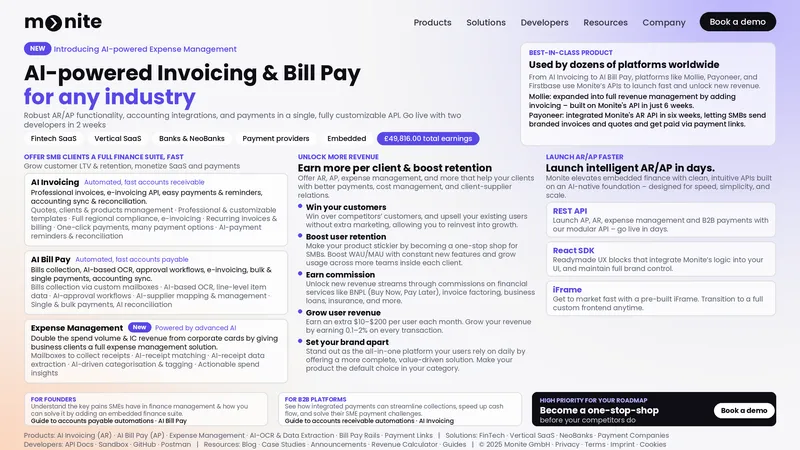
Monite provides financial automation tools for businesses, fintech companies, and software platforms. Its technology supports invoicing, supplier payments, customer payments, and other everyday financial tasks.
Many businesses use separate systems to manage invoices, pay suppliers, collect money, and update financial records. Managing these tasks across different tools can create extra work and increase the risk of errors.
Monite offers APIs that allow businesses to add financial features directly to their own software. This means a company can offer services such as invoicing and payment management without building the entire system itself.
Founded in 2020, Monite focuses on helping businesses automate routine financial work. Its technology can save time and make it easier for companies to manage their daily operations.
9. Nodu
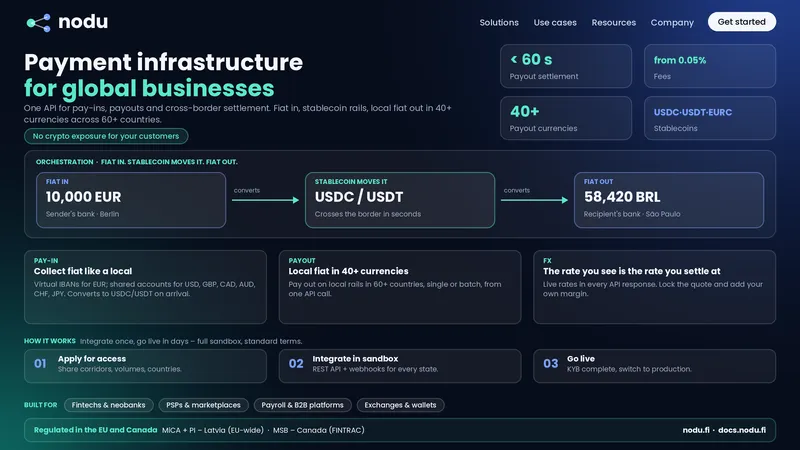
Nodu is developing payment technology for businesses that send and receive money across borders. Its platform connects traditional currencies with stablecoin-based payment systems to support international payments and settlements.
Cross-border payments can be slow and expensive because they may involve several banks and payment providers. Businesses that operate internationally need reliable ways to collect money and pay partners in different countries.
Nodu aims to simplify this process through a single API. Businesses can use its technology to manage collections, international transfers, and payouts in local currencies.
The company serves payment providers, marketplaces, fintech businesses, and other organisations that handle international transactions.
In July 2026, Nodu announced that it had received a crypto-asset service provider licence and a payment institution licence from Latvia's central bank. These licences support its regulated operations under the applicable rules.
10. Coremont
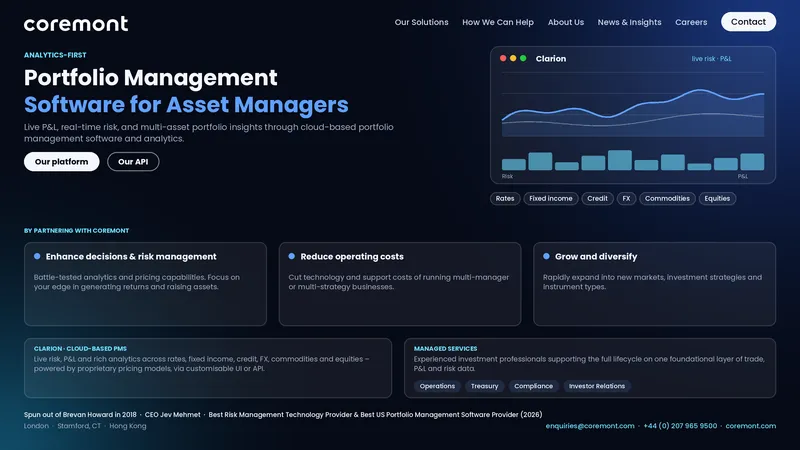
Coremont is a London-based financial technology company that works with investment managers and financial institutions. It was founded in 2018 as a spin-out from investment manager Brevan Howard, making it more established than a typical early-stage startup.
The company provides technology for portfolio management, financial data, risk analysis, and investment operations. Its Clarion platform helps investment professionals track portfolios, review performance, and understand financial risks.
Investment managers deal with large amounts of data and need to monitor changes across different markets and assets. Coremont brings important information and tools together to help them manage these tasks more efficiently.
Although Coremont is not a newly founded startup, it remains an example of how specialised technology is changing financial services for institutional investors.
Why Are Fintech Startups Important in Europe?
European fintech companies are working on different problems across the financial industry. The startups in this list highlight several important areas.
- AI and personal finance: mika AI, Edge Hound, and Quartz use AI to support accounting, investment research, and personal money management.
- Digital payments: Kashimi and Nopan focus on making payments easier and improving payment systems.
- Financial automation: Benford and Monite use technology to reduce manual work in auditing and business finance.
- International payments: Nodu is developing tools to help businesses move money across borders.
- Construction finance: SAIBLE focuses on payment challenges in construction projects.
- Investment management: Coremont provides financial technology for investment managers and financial institutions.
These areas offer opportunities for companies that can solve real customer problems. However, fintech startups must also manage competition, follow financial regulations, protect customer information, and build trust.
Conclusion
Europe's fintech industry includes companies working on payments, accounting, auditing, investment management, and financial automation. The 10 companies in this article show how technology is helping people and businesses manage money more efficiently.
Some focus on everyday financial tasks, while others develop payment infrastructure or tools for investment professionals. Their different business models highlight the wide range of opportunities in European fintech.
For founders and investors, the main lesson is that a successful fintech company needs more than a new technology. It must solve a clear problem, offer a useful product, protect financial information, and meet the rules of the markets in which it operates.
FAQs
1. What is a fintech startup?
A fintech startup is a company that uses technology to improve financial services. It may develop products for payments, banking, lending, accounting, insurance, or investment management.
2. Which fintech sectors are growing in Europe?
Important areas include AI-powered finance, digital payments, open banking, accounting automation, embedded finance, wealth management, and international payment systems.
3. What should investors look for in a fintech startup?
Investors should consider the problem the company solves, customer demand, revenue model, competition, founding team, regulatory requirements, and potential for growth.
4. How is AI changing fintech?
AI helps financial companies analyse data, automate repetitive work, support customer service, and provide personalised insights. Important financial decisions still require suitable checks and human oversight.
5. How can fintech help small businesses?
Fintech tools can help small businesses send invoices, collect payments, track expenses, manage accounts, and monitor cash flow. These tools can reduce paperwork and make financial management easier.
Recommended Stories for You

Oliver Bennett Oct 15, 2026
Oliver Bennett Jun 14, 2024
Kailee Rainse Sep 28, 2026

Team SR Jun 30, 2024

Team SR Jan 18, 2025

Kailee Rainse Dec 31, 2024
Trending Stories

Best Venture Capital Firms London 2024

The Top Disruptar brand, Revolutionizing the European

Business Credit Cards For Startups

Startups Hit €200 Million+ in 2024 Funding Report

Unique Business Ideas In Marseille For 2024

Top Incubators And Accelerator Of UK
Startup Ecosystem Of Netherlands

List of European Ecommerce Unicorn