

BII receives €25 million from the Novo Nordisk Foundation to support early-stage biosolutions startups in Europe
Feb 4, 2026 | By Kailee Rainse
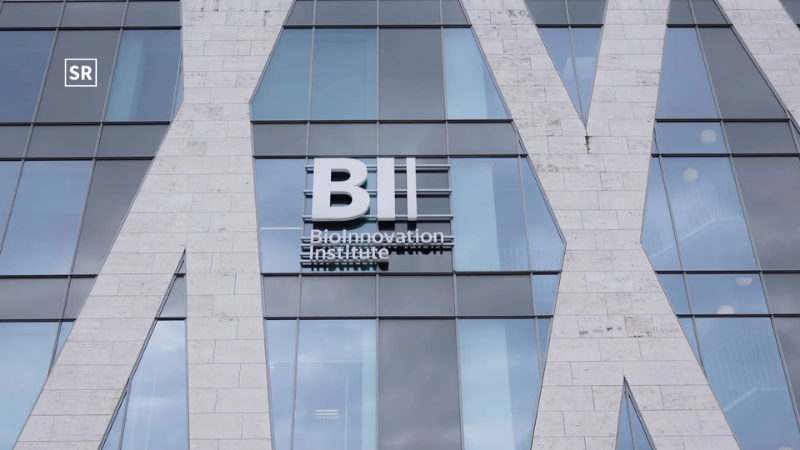
The Novo Nordisk Foundation has set aside up to €25 million for the BioInnovation Institute (BII) to launch a new programme called Upscalator. The initiative is designed to help early-stage startups in Denmark and across Europe by providing access to facilities, services, and expert support. Its goal is to help new biosolutions reach the market and contribute to the green transition.
 Follow us
 Follow us
BII is a life science and DeepTech innovation institute based in Copenhagen. Through programmes such as Venture Lab, Bio Studio, and BII Quantum Lab, it supports life science and DeepTech startups with guidance, industry connections, infrastructure, and funding. Each project can receive up to €3 million in support, while individual startups can receive up to €1.8 million.
“Biosolutions have been hailed as the next new Danish super sector – but if we are to fulfill our ambitions, strategic initiatives are needed. Thus, we are pleased that BII, with the support of the Novo Nordisk Foundation, can provide a much-needed opportunity to economically support early-stage biosolution startups from all of Europe by providing access to facilities and expertise to scale up their solutions,” says Jens Nielsen, CEO of BII.
Recent activity between 2025 and 2026 shows that early-stage investment in European biosolutions and related biotech is growing steadily, but it remains spread out and fragmented.
RECOMMENDED FOR YOU

eAgronom Funding News- Estonia’s Agritech eAgronom Raises Funding From Mondelēz
Kailee Rainse
May 9, 2025
Read Also - SmartyPlants raises £190K to develop smart plant care technology
Several startups across Europe have raised funding during this period. In Finland, Avenue Biosciences secured €4.8 million to scale its protein engineering platform for more reliable biologics manufacturing. Portugal-based PFx Biotech raised €2.5 million to develop precision-fermented human milk proteins. Denmark stands out, with Copenhagen startups Enduro Genetics raising €12 million in a Series A round for scalable bioproduction technologies, and EvodiaBio securing €6 million to expand its fermentation-based flavour solutions. In Sweden, Melt&Marble raised around €7 million to work on designer fats using industrial biotechnology.
Together, these funding rounds total about €32 million. They show that investors are backing areas like precision fermentation, protein engineering, and synthetic biology. However, most of the funding is still focused on building core platforms, rather than supporting the more expensive and complex phase of scaling up production.
This is where BII’s Upscalator programme plays an important role. It helps fill a key gap in Europe’s biosolutions ecosystem by combining funding with access to facilities and hands-on process expertise. This is especially valuable given Denmark’s strong concentration of biosolutions startups and the wider level of activity across Europe.
“Upscalator is designed to cut time to impact. By bringing funding, infrastructure, and deep biosolutions expertise together in one place, we expect that we can reduce development timelines by up to a year and help new green technologies reach the market faster, where they can make a real difference on the green transition,” adds Jens.
Data shared by the BioInnovation Institute (BII) shows the growing importance of biosolutions worldwide. By 2035, the global biosolutions industry is expected to almost double in value, reaching around €778 billion, and create more than 5 million jobs. In Denmark, biosolutions in areas such as agriculture, food, and biochemicals are projected to support over 34,000 jobs and play a major role in driving the green transition, as well as the success of Danish and European biosolutions startups.
Despite this strong potential, there is a serious lack of dedicated funding and practical support to help new biosolutions scale up. While Denmark has a strong global position in biosolutions through large companies like Novonesis, Arla, and Carlsberg, BII notes that startups often struggle to access the knowledge and facilities needed to grow their solutions to market scale.
Jens also highlights that discussions with 23 biosolutions companies supported by BII through its acceleration and company-building programmes revealed common challenges. The biggest obstacles are limited know-how around scaling up and the high cost of using Contract Development and Manufacturing Organizations (CDMOs), which many startups cannot afford.
To tackle these challenges, the Upscalator initiative will focus on five main areas: an advisory service, a process design unit with a small-scale lab for testing and validation, a network of service providers, dedicated funding to support scaling efforts, and a strong community of biosolutions companies and stakeholders.
BII’s experience in supporting more than 130 startups—together raising over €1 billion in external funding—along with its strong biosolutions portfolio and location in Copenhagen’s Innovation District, were key reasons the Novo Nordisk Foundation chose BII to lead the Upscalator programme.
Founded in Denmark in 1924, the Novo Nordisk Foundation is an enterprise foundation with philanthropic goals. Its mission is to support research and innovation in preventing and treating cardiometabolic and infectious diseases, while also advancing knowledge and solutions that contribute to a greener society.
“The green transition depends on our ability to move promising biosolutions from early development to real-world application. BII has demonstrated a unique capability to support companies at this critical stage, and with Upscalator, we are further strengthening the European biosolutions ecosystem to enable faster scaling, real impact and long-term value creation for society,” says Mikkel Skovborg, Vice President of Innovation, Novo Nordisk Foundation.
Jette Thykær has been appointed director to lead the Upscalator initiative. She brings strong industry experience from Novo Nordisk, along with academic expertise from her role as an Associate Professor of Fermentation Technology at DTU.
Upscalator will operate across two three-year phases, running from Q1 2026 to Q1 2029 and from Q1 2029 to Q2 2032.
Recommended Stories for You
Kailee Rainse Jul 17, 2025


Kailee Rainse Jan 28, 2026


Kailee Rainse Nov 25, 2024

Trending Stories

Scoptvision Funding News- Belgium’s Scoptvision Raises €1M Funding

Avantium Funding news-Amsterdam- based Avantium Raises €10Million Funding

Smart Green Shipping funding news – Smart Green Shipping Secures £1Million from Drax

Berlin’s Integral Raises €12 Million, Expands Services With Cleverlohn Acquisition
[Funding alert] Türkiye Venture Capital Firm Revo Capital Secures $100 million in Funding
British Startup Phasecraft Raises €29 Million In Series B Round

uRoutine secures £555k To Launch AI-powered ‘Productive Social Network’

All Gravy funding news – Danish Startup All Gravy Secures $2.9 Million in Funding