

Astral Systems Raises €26 Mn in Series A Round led by Mercia Ventures
Jun 23, 2026 | By Oliver Bennett
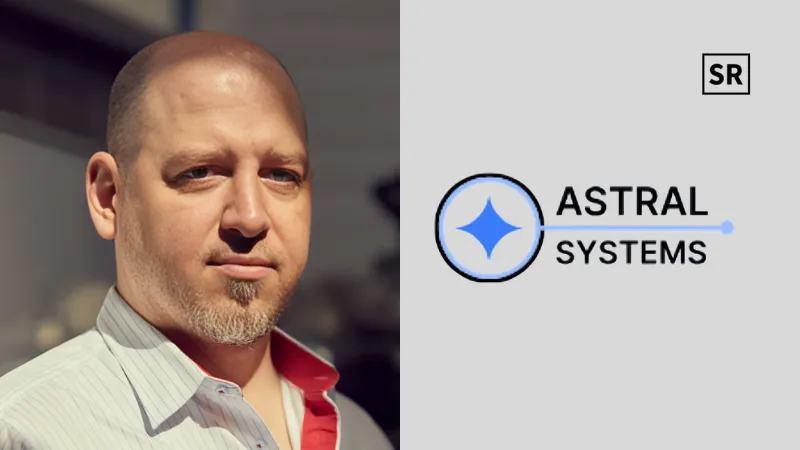
Astral Systems, a UK-based deeptech company developing advanced fusion technology, has raised €26 million (£23 million) in a Series A funding round.
 Follow us
 Follow us
The company will use the funding to bring critical medical isotopes to market by early 2027, expand production of its modular fusion reactors, and continue advancing its fusion technology research.
Read Also- Synthflow AI Partners with AVANT to Expand Enterprise Voice AI Adoption
The investment round was led by Mercia Ventures, with participation from technology-focused investors including Tees River, Daphni, and Blast Club. Existing investors Speedinvest and Playfair also joined the round.
RECOMMENDED FOR YOU


Cognigy funding news – Düsseldorf-based Cognigy Secures €93 Million in Series C Round Funding
Oliver Bennett
Jun 12, 2024
Talmon Firestone, CEO and co-founder of Astral Systems, says: “We are rewriting how we approach fusion and, in doing so, redefining what it means to be a fusion company. This is evident in our novel technology and its near-term applications in modern medicine, as well as facilitating the search for hybrid energy.
“With this new funding we can accelerate our ambition of building a profitable, impactful fusion business, and build on the momentum of the past 12 months with the backing of our investors.”
Lee Lindley, who led the investment on behalf of Mercia Ventures, adds: “We’re incredibly proud to have led this investment into Astral Systems are excited about working with Talmon and Tom. Astral’s technology has the potential to transform the manufacturing and supply of medical isotopes, which are vitally important for diagnostic and therapeutic purposes. Astral Systems is a perfect example of the bold ideas that Mercia likes to back.”
Founded in 2021 by Talmon Firestone and Dr. Tom Wallace-Smith, Astral Systems is a UK-based deeptech company that developed and commercialized Multi-State Fusion (MSF), a new type of nuclear fusion technology designed to deliver high performance.
The company believes its fusion technology can help address the growing shortage of medical radioisotopes, which are essential for diagnosing and treating cancer. Supply chain challenges and limited production capacity have created concerns about the availability of these critical materials worldwide.
With its newly raised funding and a new facility being built at the former Berkeley Power Station site, Astral Systems plans to operate several next-generation compact fusion reactors at full capacity by the end of 2026.
The advanced performance of these compact fusion reactors is expected to help Astral Systems build what could become the world's most powerful privately operated fusion neutron source, capable of producing a continuous and high-intensity stream of neutrons for research, medical, and industrial applications.
Recommended Stories for You

Kailee Rainse Nov 26, 2024

Oliver Bennett Jan 26, 2024

Kailee Rainse Jan 15, 2025

Kailee Rainse Feb 11, 2025

Oliver Bennett Jul 8, 2026
Oliver Bennett Mar 30, 2024
Trending Stories

Enty funding news – Talinn-based Enty has Secures €700k in Seed Funding

[Funding alert] Paris-based Jow Secures $13Million in a Series A Extension Round Funding

Just Move In funding news – Bournemouth-based Just Move In Raises €7.6 Million in Series A Round Funding
FION Energy Raises €1.4M To Expand AI-Powered Industrial Battery Solutions

[Funding alert] Stockholm-based Fever Secures €10 Million in Seed Funding

Top Funding Wrap Of The Week – November 24 – November 28 2025

Silverflow Raises €37M Series B To Expand Globally And Grow Team

Nordic Knots Raises €86M Funding To Expand Globally, Valued At €1.9B