

5 Hidden Stress Factors That Are Costing You Kilograms at Processing
Mar 9, 2026 | By Team SR
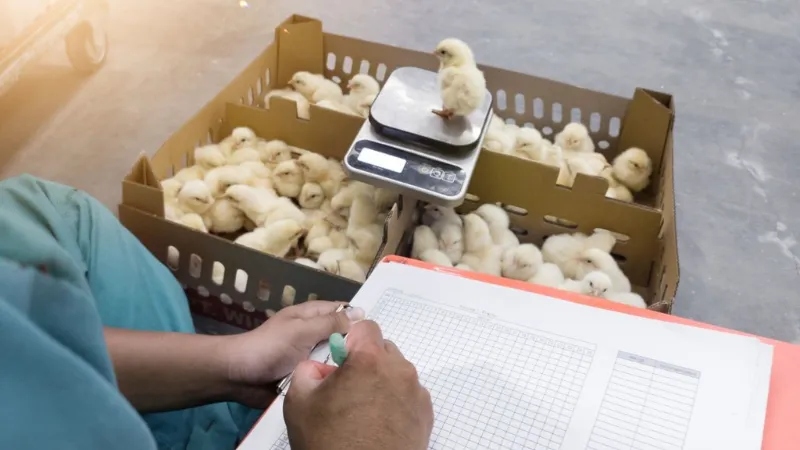
Your birds are eating. The feed looks right. But the numbers on the poultry scale keep falling short of target. Sound familiar? The answer is almost always the same: stress. Not the dramatic, birds-dropping-dead kind. The quiet, chronic kind that shaves 10–15% off daily weight gain without a single visible symptom.
 Follow us
 Follow us
Here are five stress factors that silently drain your flock’s performance — and what you can do about each one.
1. Heat Stress
The biggest seasonal killer of broiler performance. When the house exceeds 30°C, birds start panting, feed intake drops, and growth stalls. The critical problem isn’t the extreme events — it’s subclinical heat stress in poultry at 28–30°C where birds look fine but quietly lose 100–200 grams per cycle.
What helps: tunnel ventilation at 2.5–3.0 m/s, flushing water lines before peak heat, and — most importantly — daily weight monitoring to catch the dip before it compounds. Adding electrolytes to drinking water during heat waves helps maintain feed conversion when appetite drops. Birds under heat stress drink 1.5–2x more than usual — if water flow is restricted, the weight loss accelerates fast.
RECOMMENDED FOR YOU



2. Poor Air Quality
Ammonia above 25 ppm suppresses growth and damages airways. The problem peaks in winter when growers reduce poultry ventilation to save heat. The birds stay warm. Their lungs pay the price.
What helps: maintain minimum ventilation rates even in cold weather. If weight gain slows while temperature and feed intake are stable, air quality is your most likely culprit. CO2 above 3,000 ppm is another hidden growth inhibitor — often overlooked because birds don’t show obvious symptoms until levels are far higher. A basic gas monitor pays for itself quickly when you consider what a week of suppressed growth costs across 20,000 birds.
3. Stocking Density
Exceeding 33–35 kg/m² at processing weight leads to feather pecking, uneven feeder access, and worse flock uniformity. Dominant birds eat more, smaller birds fall behind. The result is a wider weight distribution and more downgrades at the plant. Planned thinning — removing a portion of the flock at an earlier live weight — is one of the most effective tools for managing density in the second half of the cycle. It reduces competition, improves litter condition, and gives remaining birds room to hit target weight.
TIP: Calculate your stocking density at projected processing weight, not at placement. A house that looks spacious with day-old chicks becomes overcrowded by day 35.
4. Light Disruption
Poultry lighting affects feeding patterns, melatonin production, and immune function. Birds on constant 23:1 light eat more but convert feed less efficiently. A properly managed dark period (6–8 hours) gives birds time to rest, repair tissue, and produce growth hormone.
What helps: gradual transitions (1 hour/day), consistent intensity, and no sudden schedule changes. Any abrupt shift triggers a stress response that takes days to recover from. Light spectrum also matters — blue-enriched light during the active period supports alertness and feed intake, while warmer tones in the evening signal wind-down. It’s a small detail that most growers overlook, but it shows up in feed conversion data.
5. Not Weighing Often Enough
Every stress factor above shows up in the weight data before it becomes visible in the flock. A flattening growth curve or widening uniformity spread is your earliest warning signal.
Manual sampling once a week gives a rough picture. Automatic poultry weighing systems collect thousands of data points daily, showing you exactly when and where performance starts to slip — often 48 hours before you’d notice any behavioural signs of stress in chickens.
The difference between catching a problem on day 2 and day 7 can easily be 50–100 grams per bird. Across a full house, that’s the kind of number that pays for a poultry weighing system many times over.
The Common Thread
All five of these factors share one thing. They’re invisible until they’re expensive.
You can walk a house every morning and miss every single one of them. Heat stress at 29°C looks like a normal day. Ammonia at 22 ppm smells slightly off, nothing more. Overcrowding at day 30 just looks like a full house. Light problems are invisible to the human eye. And infrequent weighing doesn’t feel like a mistake — it feels like management.
The data doesn’t lie, though. Weight curves catch every one of these stressors — if you’re measuring often enough and at enough scale to see the trend. That’s the case for continuous automatic weighing. Not as a luxury. As the earliest warning system you have.
Recommended Stories for You

Team SR Oct 21, 2025

Team SR Aug 23, 2025

Team SR Jan 28, 2026


Team SR Sep 27, 2025

Team SR Mar 12, 2026
Trending Stories

Women in Business: Setting Up a Secure Tech Office as a New Start-Up Founder

Healthcare Finance Beyond Billing: RCM and AP Alignment

Wealthify Stocks and Shares ISA: A Full Review for UK Residents

Should UK Startups Outsource Their Cybersecurity in 2026? (Probably Yes)

What is intellectual property, and how is it protected in the UK

Why Pre-Seed and Seed-Stage Startups Need a Growth Marketing Engine

The Best rated UK Debt Collection Agencies for 2026
Product Fit