


Healthcare does not lack ideas. It lacks the discipline to turn them into results.
 Follow us
 Follow us
Every year, new models promise better outcomes. New platforms claim to reduce cost. New strategies aim to transform care delivery. And yet — for most organizations — results come slowly, if they come at all.
The issue is rarely strategy. The issue is operations.
The Gap Between Plans and Reality
Healthcare leaders invest enormous time in strategic planning. They build roadmaps. They align on goals. They approve budgets for new systems and programs.
RECOMMENDED FOR YOU



Then Monday morning comes.
Frontline teams are dealing with unclear workflows. Data doesn't match across systems. Nobody is sure who owns what. Meetings multiply. And the strategy that looked clean on a slide deck starts breaking apart the moment it meets the real world.
Steve Valdiserri, founder of Avanti Strategy Group and SVP of Operations at Tally and Accurio, has spent more than a decade inside this gap. He spent nearly ten years at VillageMD as one of its earliest employees, building value-based care operations from the ground up across Medicare, Medicare Advantage, and commercial payer programs. He now runs operations at Tally, an AI-powered healthcare finance company, while advising healthcare organizations through Avanti.
His perspective is consistent: "Strategy lives in slides. Operations live in the mess. And the mess is where the money is."
The pattern repeats across organizations of every size. Leaders set direction. But the operational infrastructure underneath — the workflows, the data, the ownership structures — can't support it. And nobody realizes it until performance lags and the finger-pointing starts.
The Data Problem Is Bigger Than It Looks
Data drives every major decision in healthcare. But the data most organizations rely on is more fragile than they think.
Up to 30% of healthcare data is inaccurate or incomplete. Nearly 70% of transformation efforts fail due to execution gaps. And clinicians spend roughly two hours on administrative work for every one hour of direct patient care.
Bad data creates bad decisions. Teams lose trust in the numbers. They start working around the system instead of with it. Reports get generated, but nobody acts on them because nobody believes them.
Valdiserri points to attribution in value-based care as one of the clearest examples. Attribution — the process by which payers assign patients to specific providers for performance measurement — is the front door to everything downstream. If your panel is wrong, every investment you make in care management, quality programs, and payer engagement produces less return than it should.
He has seen this firsthand. One organization believed it was managing 12,000 attributed patients. After a thorough data audit, the real number was closer to 9,500. The rest were duplicates, misassignments, or patients who had long since left the practice.
"That one fix changed everything," Valdiserri says. "They stopped investing resources in patients who weren't even on their panel. The financial impact was immediate."
Too Many Tools, Not Enough Clarity
Healthcare has no shortage of technology. New platforms. New reporting layers. New integrations. But tools don't fix broken workflows — they amplify them.
Valdiserri sees this constantly. An organization adds a new system to solve a reporting problem. Six months later, they have two systems nobody trusts. The original problem wasn't technology. It was that nobody had defined who owns the data, what the workflow looks like, or what happens when something breaks.
"Before you add a tool, answer three questions," Valdiserri says. "Who owns this process? What data feeds it? And what actually happens on Monday morning? If you can't answer those, no technology is going to save you."
Without those answers, every new tool adds noise instead of clarity.
Ownership Is Often Missing
One of the most common — and most expensive — problems in healthcare operations is unclear ownership.
When a process breaks, no one is sure whose job it is to fix it. Tasks get passed around. Problems sit in no-man's land. And the organization bleeds time and money while people assume someone else is handling it.
Valdiserri gives a simple example from a clinic he worked with. Patient follow-up was falling through the cracks. Care coordinators assumed providers owned it. Providers assumed care coordinators handled it. Leadership assumed the EHR automated it.
In reality, nobody owned it. Patients were falling out of care, follow-ups were missed, and outcomes suffered — not because of a strategy failure, but because nobody stopped to assign a name to the process.
"Clear ownership solves more problems than a new strategic plan ever will," Valdiserri says. "One person. One process. That's where accountability starts."
Strategy Moves Fast. Operations Move Slow.
There's a natural mismatch in healthcare between how quickly strategy changes and how slowly operations can absorb those changes.
Strategy can shift in a board meeting. Operations take weeks or months to retrain, rebuild, and stabilize. When leaders push for fast results without giving operations time to catch up, the result is rework, burnout, and frustrated teams.
Valdiserri has seen this pattern play out repeatedly. An organization rolls out a new care model in 30 days. Six months later, they're still fixing basic workflow issues that should have been solved before launch.
"Speed without structure creates rework," he says. "Every time. The organizations that move fastest long-term are the ones that slow down enough to get the foundation right."
What Actually Works in Practice
The fixes are not complicated. They are basic. That's what makes them powerful — and also why organizations skip them.
Start With One Workflow
Don't try to fix everything at once. Pick one process. Map it out end to end — the way it actually runs, not the way it's supposed to run. Identify where it breaks and why.
Valdiserri describes a clinic team that mapped their intake process on a whiteboard. It took 45 minutes. They found three duplicate steps and one missing handoff. They fixed it the same day. No new technology. No consulting engagement. Just clarity.
Assign One Owner
Every process needs one clear owner. Not a committee. Not shared responsibility. One person who tracks performance, fixes issues, and keeps the process updated.
Without ownership, improvements don't stick. The process drifts back to dysfunction because nobody is accountable for maintaining it.
Fix Data at the Source
Don't build reports on data you don't trust. Go upstream. Find where the data enters the system. Validate it. Clean it.
One team Valdiserri worked with reduced reporting errors by 40% by fixing a single intake field. One field. The downstream impact on reporting, decision-making, and trust was immediate.
"Small changes at the source create outsized impact downstream," he says. "Most organizations are building reports on top of data nobody has validated in years."
Reduce the Number of Metrics
More metrics do not mean better insight. Valdiserri's framework is deliberately reductive: identify the two or three measures that actually describe performance, and resist the pull toward comprehensive dashboards that create noise without driving better decisions.
One team cut their dashboard from 25 metrics to 5. Meetings got shorter. Decisions got faster. And for the first time, everyone in the room was looking at the same numbers and understanding what they meant.
Test Changes in Small Batches
Don't roll out changes across the entire organization at once. Test in one clinic. One team. One region. Learn what works, adjust what doesn't, and expand from there.
This approach reduces risk, builds confidence, and gives frontline teams time to adapt — instead of being overwhelmed by an organization-wide overhaul they had no voice in shaping.
The Role of Technology
Technology has an important role in healthcare. But timing matters more than most leaders realize.
Adding tools before fixing operations creates confusion and wasted spend. After fixing workflows, technology can help scale what's already working.
AI is a good example. Valdiserri sees this daily at Tally, where his team is building AI-powered automation for revenue cycle management, financial reporting, and claims processing. The tools work — but only when the underlying operational environment supports them.
"AI won't fix broken processes," he says. "But it can amplify good ones. The organizations getting real value from AI right now are the ones that did the boring operational work first."
One team used AI to flag high-risk patients. Initially, results were poor — not because the AI was wrong, but because the data feeding it was unreliable and the workflow for acting on its output didn't exist. After fixing the data and building a clear response workflow, accuracy improved dramatically and the clinical team actually trusted the output.
Technology worked once the basics were in place.
Culture Drives Execution
Operations ultimately depend on culture. Teams need clarity, accountability, and trust. Without those, even well-designed systems break.
Valdiserri points to a simple litmus test. The organizations he works best with are the ones where leadership asks direct questions: Who owns this? What does success look like? What happens if this fails? And they actually want honest answers.
One leader he worked with made a small change that had an outsized impact. Every meeting started with one question: "What decision are we making today?" Meeting time dropped. Output improved. The team stopped treating meetings as status updates and started treating them as decision points.
"Culture shapes behavior," Valdiserri says. "Behavior drives results. You can have the best systems in the world, but if your culture avoids accountability, nothing sticks."
Why This Problem Persists
Healthcare is genuinely complex. Regulations change constantly. Systems vary across organizations. Stakeholders have competing priorities. Nobody disputes that.
But the persistence of the operations problem isn't really about complexity. It's about habits.
It is easier to build a new strategic plan than to fix an old process. It is easier to add a tool than to remove one. It is easier to talk about change in a meeting than to walk the floor and see how work actually gets done.
That's why the problem persists. Not because leaders don't care — but because operational discipline is harder and less glamorous than strategic vision.
What Leaders Should Do Next
Focus on execution. This week.
Walk through one real workflow with the team that runs it. Ask frontline staff where it breaks. Look at how work actually gets done — not how it's documented.
Ask direct questions: Where does this break? Who owns it? What data do we trust? What happens when something goes wrong?
Fix one thing. Track the result. Build from there.
"Healthcare rewards people who stay long enough to understand the mess," Valdiserri says. "Then do the work to clean it up."
The Bottom Line
Healthcare does not need more ideas. It needs better execution.
Plans matter. But the organizations that win are the ones that build systems — real, repeatable systems — that turn strategy into daily action.
When operations improve, results follow. When operations fail, it doesn't matter how good the strategy was.
The path forward is simple. Not easy. But clear.
Fix the basics. Then build.
About Steve Valdiserri
Steve Valdiserri is a healthcare operations executive and entrepreneur based in Traverse City, Michigan. He is the founder of Avanti Strategy Group, a healthcare strategy and operations firm focused on helping organizations solve real problems and realize the financial value of better execution. He serves as SVP of Operations at Tally and Accurio, where he is building the operational infrastructure for AI-powered healthcare finance. He previously spent nearly a decade at VillageMD as one of its earliest employees, building value-based care operations across Medicare, Medicare Advantage, and commercial payer programs. He completed a certificate in AI in Health Care from Harvard Medical School in October 2025 and holds a BA in Economics from DePauw University. Connect with him at stevevaldiserri.com.
Recommended Stories for You

Team SR Feb 18, 2026

Startup Rise Sep 12, 2025

Team SR Nov 19, 2025

Team SR Nov 14, 2025

Team SR Feb 4, 2026
Team SR Feb 21, 2026
Trending Stories

From Agency to Independent Studio: Building a Creative Practice With Intention

Industrial Metals Watch: What Zinc Can Signal About Manufacturing Demand

Understanding biometric security and Nedap Security Management

Career Change After 40: Proven Strategies for Professionals Seeking Meaningful Work

From Classroom to C-Suite: How Student Entrepreneurs Can Turn Academic Projects into Startup Success Stories
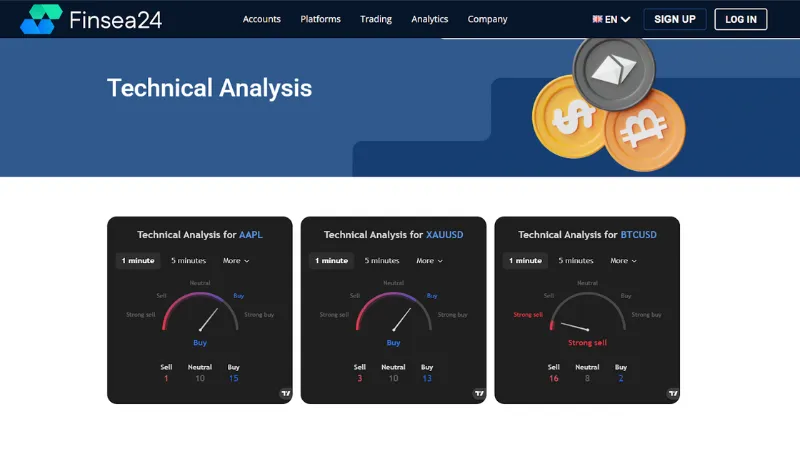
Finsea24 Review: Tips to Navigate Through Forex Market Volatility [finsea24.com]

Mistakes to Avoid When You Rent a Convertible Car in Dubai for a Short Trip

Best Instagram Video Downloaders in 2026