

Why Every Growing Entrepreneur Needs a Label Printer for Small Business
Aug 27, 2026 | By Team SR
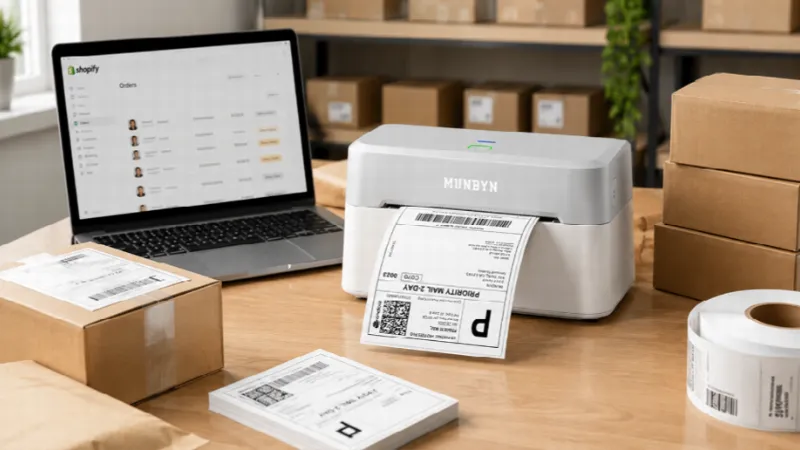
When you're bootstrapping a startup or running a lean operation, every pound counts. You're handling inventory spreadsheets in the evenings, packing orders in your spare room, and managing a dozen tasks that weren't in your job description.
 Follow us
 Follow us
Here's what most new business owners overlook: a label printer isn't a luxury item or a "nice-to-have" for larger operations. Whether you're an e-commerce seller, a subscription box service, a craft business, or a logistics startup, a quality label printer for small businesses can reclaim hours of your week and give your brand a professional edge that competitors without proper systems simply can't match.
In this guide, we'll explore why this seemingly simple piece of equipment matters, how it transforms your operations, and what to look for when choosing the right solution for your business.
The Hidden Cost of Manual Labeling
Before diving into solutions, let's talk about the problem most entrepreneurs face. When you're starting, you might think printing labels on your home inkjet printer or handwriting them is "good enough." It costs nothing upfront, right?
RECOMMENDED FOR YOU


What are the safety features you must look out for when purchasing a new car?
Team SR
Nov 13, 2025
Wrong.
Consider this scenario: You're fulfilling 50 orders on a Saturday afternoon. Handwriting addresses takes 3-4 minutes per parcel. That's nearly 3 hours—time you could spend developing your next product, reaching out to customers, or building marketing campaigns. Multiply this across weeks and months. You're essentially paying yourself minimum wage to do a task a printer could complete in seconds.
Beyond time, there are invisible costs: illegible writing causes shipping delays and returns, basic labels damage your brand perception, and errors create customer support headaches. A customer receives a package with a smudged handwritten label and wonders if your business is truly professional. That impression sticks.
The professional small businesses that scale successfully have solved this problem. They've invested in a label printer for small businesses—and discovered it's not just a time-saver; it's a growth accelerator.
Operational Efficiency: Your Competitive Edge
When you implement a proper labeling system, several things happen simultaneously:
Speed: A thermal printer can generate high-quality 4x6 shipping labels in seconds. What took 15 minutes can now take 60 seconds. Over a week, that's hours reclaimed—time you can redirect toward customer acquisition or product development.
Consistency: Every label looks identical. Professional. Branded. This consistency builds customer trust. When someone receives a package from you, they know exactly what to expect, from the packaging quality to the label presentation.
Accuracy: Barcode-integrated systems mean fewer misplaced packages, fewer customer complaints, and reduced refund requests. Your shipping partner and your customers both get clearer information, reducing friction throughout the supply chain.
Scalability: As your business grows, your labeling process scales with you. Whether you're processing 20 parcels or 200, the system works the same way. You're not manually accelerating your work—the system does.
For businesses handling even modest volumes—and we're talking 20-30 shipments weekly—these efficiency gains translate into real savings and measurable improvements in customer satisfaction metrics.
The Financial Case for a Label Printer for Small Business
Let's be concrete about the economics. A quality label printer for small business costs between £150 and £400, depending on features and speed. The thermal labels themselves cost roughly 0.3p to 1p per label. Compare this to:
- Inkjet printer running costs: 5-8p per label (and those pages often jam)
- Outsourced label printing services: 2-5p per label plus delivery fees, plus you're waiting for fulfillment
- Your time value: At any sensible hourly rate, manual labeling is catastrophically expensive
By the numbers: if you're doing 100 shipments per month, investing in a proper labeling system pays for itself within the first month. After that, it's pure profit—in time savings and operational efficiency.
But there's another financial angle most entrepreneurs miss: brand perception. Professional labels aren't just functional—they're part of your unboxing experience. Customers who receive a parcel with a crisp, clear, professionally printed label are more likely to leave positive reviews, share unboxing content on social media, and purchase again. That brand lift is worth measurable revenue.
Choosing the Right Label Printer: Key Considerations
Not all label printers are created equal. Here's what matters:
Printing Technology: Thermal printers (which use heat instead of ink) are ideal for small businesses because they eliminate consumable costs and rarely jam. They're the standard for shipping labels, barcodes, and product identification.
Print Speed: For small operations, 100- 150 mm per second is sufficient. You're not running an industrial warehouse, but you don't want to wait around either.
Label Size Compatibility: Most small businesses use 4x6 shipping labels, but verify compatibility with your chosen carrier (Royal Mail, DPD, Hermes). Some printers also handle smaller labels for product branding.
Integration and Software: Modern solutions include free label design software and integration with major e-commerce platforms (Shopify, WooCommerce, Amazon) and shipping platforms. This integration is what transforms a printer from a tool into a system.
Wireless Connectivity: For flexibility, look for Bluetooth or Wi-Fi-enabled options. Printing from your phone while packing orders makes a real difference.
Durability: You're going to use this daily. Build quality matters. Compact, robust construction means fewer repairs and longer equipment lifespan.
The MUNBYN Advantage for Growing Businesses
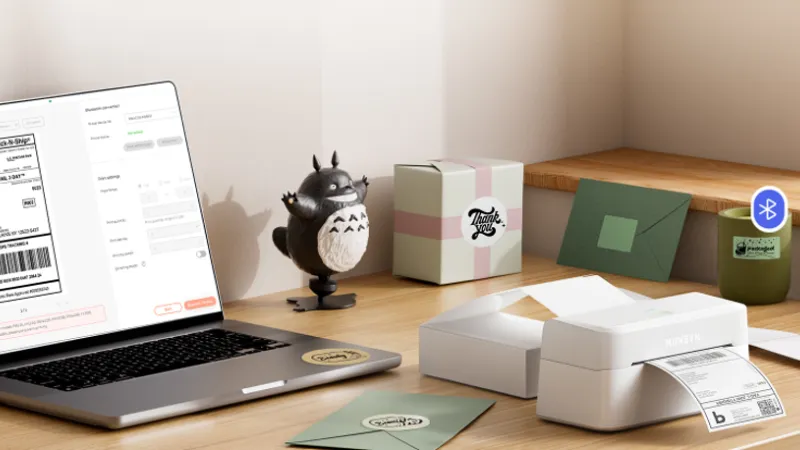
When evaluating options, the MUNBYN label printers deserve serious consideration. They've built their reputation specifically serving small businesses and entrepreneurs—not large-scale industrial operations.
MUNBYN printers are engineered with the small business owner in mind: compact enough for modest office spaces, intuitive enough that you don't need IT support, affordable enough to make the ROI immediately obvious. They support all major UK carriers and integrate seamlessly with popular e-commerce platforms. The company backs its equipment with reliable UK-based customer support—not buried in an automated phone menu.
For entrepreneurs specifically, this matters. You need a vendor who understands your constraints, your growth trajectory, and your zero-tolerance policy for downtime.
Real-World Impact: Three Business Scenarios
Scenario 1: E-Commerce Reseller
Sarah runs a Shopify store selling refurbished tech accessories. With a label printer for small businesses, she's reduced packing time by 40%, allowing her to process orders same-day (a major selling point in her marketing). Her error rate dropped from 1 in 25 orders to less than 1 in 500. The customer experience improvement translated to a 5-point increase in her average Google reviews rating.
Scenario 2: Craft Business
James makes premium handmade soaps. His handwritten labels were charming but unprofessional. After implementing a proper labeling system, his product photos improved dramatically—consistent, branded labels made his boxes shelf-ready. Wholesale buyers responded positively. He's now stocked in five local boutiques, all due partly to the perceived professionalism that quality labels conveyed.
Scenario 3: Subscription Box Service
Megan launched a monthly book club subscription box. Without a label printer, she was handwriting everything. At 200 subscribers, this became unsustainable. Implementing a thermal printer and integrating it with her subscription platform allowed her to automate the entire process. She now handles 400+ subscribers with the same workload.
These aren't theoretical scenarios—they're common outcomes when small business owners upgrade their systems.
Building Professional Operations from Day One
The broader lesson here is about business fundamentals. Successful entrepreneurs don't get bogged down in manual, repetitive tasks. They systematize. They automate. They invest in tools that let them focus on high-leverage activities: strategy, customer relationships, and growth.
A label printer for small business is a tool that signals something important about how you approach your operations. It says you're serious. It says you've thought beyond the absolute minimum viable operation. It says customer experience matters enough to get the details right.
That mindset—that attention to systems and professionalism—separates businesses that plateau at "profitable side income" from those that scale into genuine enterprises.
Conclusion
If you're running a small business today and still managing labels manually, you're operating at a significant disadvantage. You're burning time, accepting brand compromises, and leaving money on the table.
A quality label printer for small businesses isn't an expense—it's an enabler. It saves time, improves brand perception, reduces errors, and builds the operational foundation that lets your business scale smoothly.
If you're ready to upgrade your operations, explore the MUNBYN printer collection. Designed specifically for businesses like yours, they're a smart choice for entrepreneurs committed to building professional, scalable operations. Your future self will thank you for solving this problem now.
Recommended Stories for You

Team SR Mar 20, 2026

Team SR Jul 15, 2026

Team SR Jan 22, 2026

Team SR Nov 5, 2025


Team SR Sep 17, 2026
Trending Stories

Why UK Startups Need Better Access to Legal Documents as They Scale

Is Gamification as a Service the Next Major Battleground for Startups?

Top 10 Backlink Agencies Businesses Trust for Real Authority

How Local Taxi Services Help Keep Highland Tourism Moving

Are Working Students the Quietest Demographic Relying on the Essay Writing Service EssayService.com?

Building a Startup While Still in University: A Practical Guide

What to Know Before Adding Battery Storage to Your Home

How to choose between growing your team and improving your process