

What Is a Dark Kitchen? Meaning, Business Model, Benefits and Challenges
Oct 20, 2026 | By Oliver Bennett
 Follow us
 Follow us
A dark kitchen is a food business that prepares meals exclusively for delivery or takeaway, without a traditional dining area where customers can sit and eat. Customers order food online through delivery apps, websites or other digital platforms, and the kitchen prepares and packs the meals for delivery.
Also known as a cloud kitchen, ghost kitchen or delivery-only kitchen, this business model allows food entrepreneurs to operate without the cost of a conventional restaurant dining space. Dark kitchens focus on food preparation, online orders, packaging and delivery rather than customer seating and table service.
As online food ordering becomes an important part of the restaurant industry, dark kitchens offer an alternative way to start and manage a food business. However, their success depends on food quality, delivery speed, pricing, customer satisfaction and effective cost management.
How Does a Dark Kitchen Work?
A dark kitchen operates through a simple process. Instead of visiting a restaurant, customers browse a digital menu and place an order online. The kitchen receives the order, prepares the food, packs it and hands it to a delivery partner or arranges collection.
Here is how the process works:
- Customers place orders: Orders arrive through food delivery apps, the business website or other online channels.
- The kitchen receives the order: Staff check the order details and begin preparing the meal.
- Food is prepared: Chefs cook the dishes according to the menu and the customer's requirements.
- Meals are packed: Food is packed in suitable containers to maintain quality during transport.
- Orders are delivered: A delivery partner collects the order and takes it to the customer.
For example, an entrepreneur could operate a biryani business from a commercial kitchen in Jaipur without opening a traditional restaurant. Customers would discover the brand online, place orders through a delivery app and receive their meals at home.
What Is the Dark Kitchen Business Model?
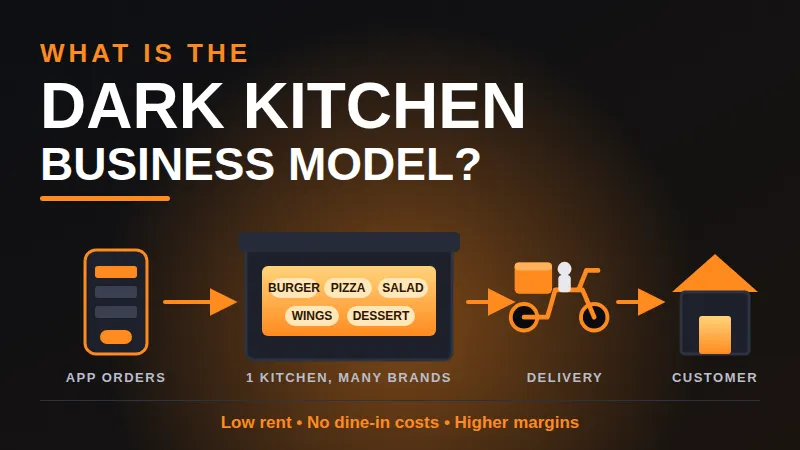
The dark kitchen business model focuses on preparing food for online orders while keeping unnecessary operating expenses under control. Since there is no dining room, the business does not need restaurant seating, table service or a large customer-facing space.
Dark kitchens commonly use three business models.
1. Single-Brand Dark Kitchen
A single-brand dark kitchen operates under one restaurant name and usually focuses on a particular cuisine or type of food. For example, a kitchen might specialise in burgers, Indian meals, pizza or healthy food.
This model is suitable for entrepreneurs who want to build a focused food brand and test demand before expanding.
2. Multi-Brand Dark Kitchen
A multi-brand kitchen operates several food brands from the same location. One kitchen could prepare biryani under one brand, burgers under another and desserts under a third.
Sharing equipment, staff and kitchen space can help reduce costs. However, each brand needs clear positioning, accurate order management and consistent food quality.
3. Shared or Rental Dark Kitchen
In this model, entrepreneurs rent space in an existing commercial kitchen instead of setting up their own facility. Depending on the arrangement, the kitchen provider may supply equipment, storage, utilities and other services.
This option can help new food businesses test their concepts without committing to a large initial investment.
What Are the Benefits of a Dark Kitchen?
Dark kitchens offer several potential advantages for restaurant owners and food entrepreneurs.
Lower setup costs: Without a dining room, expensive interiors, customer seating and front-of-house facilities, a dark kitchen may cost less to establish than a comparable dine-in restaurant.
Flexible location choices: Owners can select a suitable kitchen based on delivery coverage and operating costs rather than relying on a busy high street.
Faster business testing: Entrepreneurs can introduce a limited menu, study customer feedback and improve their offering before investing in a larger operation.
Multiple revenue opportunities: Multi-brand kitchens can serve different customer groups using shared facilities, provided the menus and operations work well together.
Focus on online customers: Owners can concentrate on digital marketing, menu presentation, delivery performance and customer reviews to attract repeat orders.
However, lower setup costs do not automatically mean higher profits. Rent, ingredients, staff, packaging, delivery charges and marketing can still place considerable pressure on margins.
What Are the Challenges of Running a Dark Kitchen?
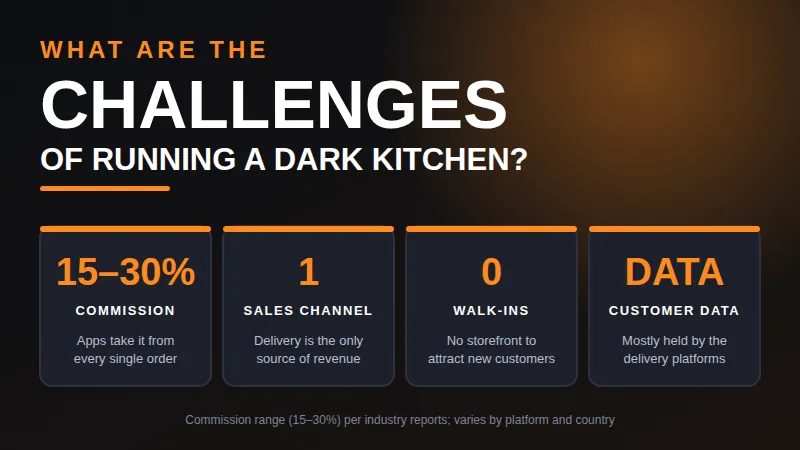
Although dark kitchens can reduce certain expenses, they also face challenges that restaurant owners must consider.
High competition: Customers can compare many food brands on delivery apps. Businesses need attractive menus, reliable service and competitive prices to stand out.
Delivery platform dependence: Third-party apps can provide access to customers, but commissions, promotions and platform rules may affect profitability.
Limited customer interaction: Without a physical restaurant, customers cannot experience the atmosphere or speak directly with staff before ordering. Online reviews and clear communication therefore become especially important.
Food quality during delivery: Meals must remain fresh, properly packed and appealing throughout the journey. Poor packaging or long delivery times can damage the customer experience.
Food safety and compliance: Dark kitchens must maintain proper hygiene, safe food storage, temperature control and applicable food-business licences. Requirements vary by country and local authority.
Profitability management: Owners need to monitor ingredient costs, order volumes, wastage, packaging expenses and marketing returns. A kitchen can receive many orders and still lose money if its costs are too high.
Dark Kitchen vs Traditional Restaurant
The main difference between a dark kitchen and a traditional restaurant is how customers access the food.
| Feature | Dark Kitchen | Traditional Restaurant |
|---|---|---|
| Dining space | No customer dining area | Usually includes seating |
| Ordering | Mainly online | Walk-in, online or both |
| Main focus | Food preparation and delivery | Dining experience and food service |
| Location | Based on delivery coverage and costs | Often influenced by foot traffic |
| Staffing | Kitchen and order fulfilment | Kitchen and customer-facing staff |
| Customer experience | Online ordering and delivery | In-person service and dining |
| Operating costs | Potentially lower setup costs | May require higher property and service costs |
RECOMMENDED FOR YOU


Neither model is automatically more profitable. The right choice depends on the target market, food concept, location, operating expenses and customer preferences.
How to Start a Dark Kitchen Business
Starting a dark kitchen requires careful planning, even if the business does not have a traditional storefront.
1. Choose a food concept: Decide what you will sell and identify the customers you want to serve. A focused menu can make purchasing, preparation and inventory management easier.
2. Research the local market: Study competing brands, customer demand, delivery coverage and popular cuisines in your target area.
3. Select a suitable kitchen: Choose a commercial space with appropriate facilities, storage, ventilation and access for delivery partners.
4. Obtain the required licences: Check food-business registration, hygiene requirements, tax obligations and local permissions in your jurisdiction. In India, food businesses generally need the appropriate FSSAI registration or licence.
5. Build your menu and pricing: Calculate ingredient, packaging, labour and delivery-related costs before setting prices.
6. Set up online ordering: Register with suitable delivery platforms and consider a direct-ordering website or channel to reduce dependence on third-party services.
7. Focus on marketing: Use high-quality food photographs, clear descriptions, customer reviews and local promotions to improve visibility.
8. Track performance: Monitor orders, repeat purchases, customer complaints, food wastage and profit margins. Use this information to improve the business.
What Is the Future of Dark Kitchens?
Dark kitchens are part of the wider shift towards online food ordering and delivery-focused restaurant operations. Their flexible setup can help entrepreneurs test new food concepts, while established restaurant groups can use shared kitchens to expand delivery services.
Technology also plays an important role. Digital ordering systems, kitchen management software, sales analytics and inventory tools can help operators manage orders and reduce waste.
However, long-term growth will depend on more than convenience. Businesses must deliver consistent food quality, maintain customer trust, comply with food safety rules and build a sustainable financial model.
For entrepreneurs, a dark kitchen can be a practical way to enter the food industry, but careful research and cost control remain essential.
Conclusion
A dark kitchen is a delivery-focused food business that operates without a traditional restaurant dining area. It can help entrepreneurs reduce certain setup expenses, test new menus and reach customers through online platforms.
However, success requires more than a kitchen and a delivery app. Food quality, efficient operations, customer satisfaction, legal compliance and careful financial planning are essential to building a sustainable dark kitchen business.
Recommended Stories for You

Oliver Bennett Sep 22, 2026

Team SR Sep 21, 2024

Team SR Oct 6, 2024

Team SR Jun 30, 2024
Oliver Bennett Oct 13, 2026

Kailee Rainse Nov 7, 2024
Trending Stories
Best Insurance For Startups 2024

Best Platforms for Startup Promotion

Best Startups In Europe 2024

Top Student Startup in Europe
10 Important Business Skills Every Professional Needs

Best Venture Capital Firms London 2024
The Top Disruptar brand, Revolutionizing the European
Business Credit Cards For Startups