


Every trading platform likes to talk about technology. Far fewer are willing to talk about the people who had to survive the market before that technology existed.
 Follow us
 Follow us
The team behind Elvitix did not start with algorithms, dashboards, or automated analysis. It started with charts printed on paper, delayed data feeds, manual calculations, and mistakes that cost real money. That history defines how the platform was built and why its specialists approach trading the way they do today.
How the team was formed
The Elvitix team did not appear overnight. It formed gradually, through years of individual work in different corners of the market.
Some team members began in traditional currency trading long before online platforms became standard. Others worked with commodities, indices, or early digital assets during periods when liquidity was thin and infrastructure was unreliable. Each specialist arrived with a different background, but the same pattern repeated: experience was earned through loss, not theory.
RECOMMENDED FOR YOU

How to Build Global Supply Chains That Actually Work: A Step-by-Step Guide
Team SR
Oct 21, 2025

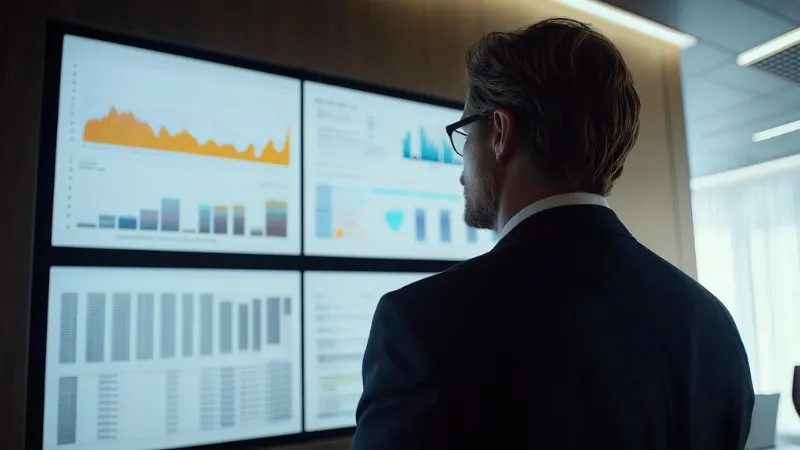
Across the team, trading experience spans well over a decade per specialist. That time was spent inside real markets, under real pressure, with capital at risk.
What early trading actually looked like
Before modern analytical systems became accessible, decision-making relied on limited tools and incomplete information. Traders worked with what was available at the time, often learning the hard way where those limits were.
Common realities included:
- Delayed price feeds that distorted timing
- Manual chart analysis without broader market context
- Isolated indicators treated as decision anchors
- News arriving after price had already reacted
- Execution errors caused by platform latency
These conditions shaped habits. Every entry carried uncertainty that could not be measured properly. Every mistake became expensive, both financially and psychologically.
Losses were not theoretical. They were personal.
The cost of experience
Every trader on the Elvitix team can point to specific periods where progress came at a price. Strategies that worked for months stopped working without warning. Markets shifted behavior faster than tools could adapt. Emotional decisions followed technical frustration.
What mattered was not avoiding loss altogether, but understanding why it happened.
Those years created a shared conclusion inside the team: effort alone does not compensate for a limited perspective. Discipline helps, but discipline without context still fails.
Why the old approach reached its limits
As markets became faster and more interconnected, traditional methods began to fall behind. Manual analysis could not process the volume of data influencing price movement in real time.
At the same time, traders were expected to react to:
- Global macro shifts
- Cross-asset correlations
- Policy decisions across multiple regions
- Structural changes in liquidity
- Technological disruptions affecting execution
Handling all of this manually required unsustainable effort. The workload grew, but clarity did not.
This mismatch forced a re-evaluation of how trading should be approached going forward.
The decision to move toward modern analysis
The shift toward advanced analytical systems was not driven by trend-following or marketing appeal. It came from necessity.
The team recognized that modern trading demanded tools capable of processing more information than a human could handle alone. Not to replace judgment, but to support it.
Artificial intelligence offered something previous methods could not: the ability to continuously analyze changing conditions, identify recurring patterns across large datasets, and update context without fatigue.
This marked a turning point in how Elvitix was conceived.
How experience shaped the use of AI
AI was not introduced as a shortcut or a promise of effortless trading. The team’s background made them skeptical of such claims.
Instead, AI was treated as an extension of experience. It allowed specialists to:
- Compare current conditions with thousands of historical scenarios
- Observe how similar setups behaved across different environments
- Detect shifts in volatility before they became obvious
- Monitor correlations that manual analysis often misses
These systems did not remove responsibility. They reduced blind spots.
The specialists’ role today
Despite the technological shift, the team’s role remains central. Human judgment guides how analytical models are structured, adjusted, and interpreted.
Each specialist contributes:
- Practical market knowledge
- Awareness of behavioral patterns that data alone cannot explain
- Experience with risk under stress
- Understanding of when models lose relevance
Technology handles scale. People handle meaning.
What this means for the platform
Elvitix reflects the combined history of its specialists. The platform does not aim to simplify trading into a set of rules or promises. It reflects how trading actually feels when capital is at risk.
That means:
- No shortcuts presented as solutions
- No outcomes framed as certainty
- No tools detached from real-world behavior
Every feature exists because someone on the team needed it at some point and did not have access to it at the time.
Why this background matters
Many platforms are built first and tested later. Elvitix followed the opposite path. Experience came first. Losses came first. The need for better tools came first.
Only then did technology enter the picture.
This order matters. It determines what problems the platform tries to solve and which ones it refuses to pretend away.
Final view
The Elvitix team did not come from theory or marketing. It came from years spent inside markets that did not forgive mistakes.
That history shaped a simple conclusion: modern trading requires modern tools, guided by people who understand the cost of error.
Artificial intelligence did not replace experience. It gave that experience room to operate without exhaustion.
And that decision defines how Elvitix works today.
Recommended Stories for You

Team SR Dec 8, 2025

Team SR Jan 15, 2026

Team SR Jan 27, 2026

Team SR Mar 28, 2025

Team SR Jul 2, 2025

Team SR May 31, 2025
Trending Stories
Why Pre-Seed and Seed-Stage Startups Need a Growth Marketing Engine

What is intellectual property, and how is it protected in the UK

The Growth of Automated Networking in Startup Environments
Why Data-Led Decisions are the Secret to Retail Growth

The Best rated UK Debt Collection Agencies for 2026

Gravesend Property Market: Stable Prices and Strong Demand for Terraced Homes
Dmitriy Makarov and the Secrets of Expanding Business Across Borders

Why Streamlined Field Operations Improve Efficiency And Accuracy