

Synthesia Business Model: How the AI Video Platform Makes Money
Aug 26, 2026 | By Oliver Bennett
 Follow us
 Follow us
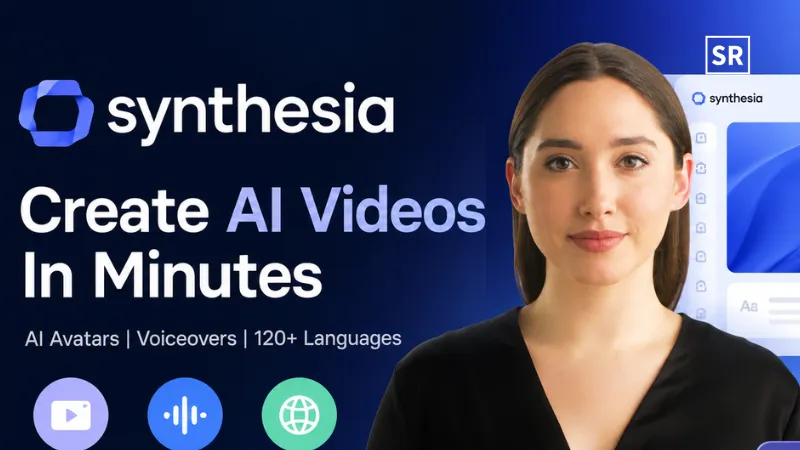
Creating a professional video traditionally meant dealing with cameras, studios, actors, voice-over artists, editors, and plenty of time. Synthesia approaches the problem differently. Its platform allows businesses to turn written content into videos using AI avatars, synthetic voices, templates, translations, and other automated tools. Teams can use it for training, onboarding, product explanations, sales content, customer education, and internal communications.
That simple idea sits at the heart of the Synthesia business model: instead of charging customers for individual video-production projects, Synthesia sells access to an AI-powered software platform through recurring subscriptions and larger enterprise agreements.
The model has become increasingly enterprise-focused. Synthesia said in April 2025 that it had surpassed $100 million in annual recurring revenue (ARR). With existing customers, it expands their use of the platform beyond traditional training and internal communications into areas such as product marketing, customer support, and sales enablement.
So, how does Synthesia actually make money, who pays for it, and why does the model work? Let’s break it down in simple terms.
What is Synthesia?
Synthesia is an AI video creation platform designed to help businesses produce videos without requiring a traditional video-production setup.
A user can choose an AI voice and avatar, arrange scenes, add branding, give a script or other source material, and create a final film. Depending on the plan, the platform can additionally include features like dubbing, translation, interactive content, and AI-generated materials.
This makes Synthesia particularly useful for organizations that need to produce large volumes of business videos rather than occasional promotional films.
How Does the Synthesia Business Model Work?
The Synthesia business model is primarily a B2B SaaS model.
While larger businesses can buy specialized enterprise packages, customers may pay recurring fees to access the site.
RECOMMENDED FOR YOU

Amelie McCann: Story of Strength and Success Despite Tragedy
Kailee Rainse
Apr 1, 2026
SFM Compile: Comprehensive Guide to Understanding and Using It
Kailee Rainse
Apr 7, 2026

Is the eCryptoBit.com Wallet Safe? A Clear and Honest Review
Kailee Rainse
May 9, 2026
Their business model can be understood through Various connected revenue sources:
- Subscription plans
- Enterprise contracts
- Usage-based credits
- Custom AI avatars
- API access and integrations
- Additional AI features and services
This combination allows Synthesia to generate recurring revenue while also increasing revenue from customers as their usage grows.
1. Subscription Plans
Subscriptions are one of the clearest parts of Synthesia’s business model.
The company provides a free Basic plan alongside its paid Starter and Creator plans. As of 2026, its published monthly prices are $29 for Starter and $89 for Creator, while Enterprise pricing is customized according to the organization’s requirements.
The plans are designed to serve different customer groups.
A smaller user might only need a limited number of video minutes and basic AI video capabilities. A growing team may need more editors, avatars, video minutes, and collaboration features. A large enterprise may need much greater usage, security, administration, and integration capabilities.
2. Enterprise Contracts
Enterprise customers are especially important to Synthesia’s business model.
Large organizations often need hundreds or thousands of videos across departments and countries. They may also require features such as SSO, team collaboration, brand controls, dedicated customer support, onboarding, implementation assistance, and higher usage limits.
Synthesia’s Enterprise plan therefore uses custom pricing rather than a simple public monthly price. Enterprise customers can receive features such as unlimited video minutes, larger avatar libraries, SAML/SSO, live collaboration, brand kits, SCORM export, tailored onboarding, implementation services, and dedicated customer success support.
This is where the business model becomes much more valuable.
Instead of trying to acquire thousands of individual customers paying small amounts, Synthesia can build relationships with large companies that spend significantly more and use the platform across multiple departments.
Synthesia itself reported that thousands of organizations on its Enterprise plan were using the platform daily by 2025.
3. Usage-Based Credits
Synthesia has also introduced a credit system to measure usage across several AI features.
Credits act as a shared currency for certain AI-powered functions, including video generation, dubbing, bulk personalization, API usage, custom AI video assets, and AI image generation.
This is an important part of the monetization strategy because customers don’t simply pay for access to software; they can also consume computing-intensive AI capabilities.
For example, the current self-serve plans provide different credit allowances. The Basic and Starter plans provide 1,200 credits per month, while Creator provides 3,600 credits per month. Annual plans have corresponding annual credit balances.
This approach gives Synthesia a way to connect revenue with actual usage.
The more customers use certain AI features, the more valuable the platform becomes to them and the more important their subscription and usage allocation becomes.
4. Custom AI Avatars
Another revenue opportunity comes from personalized avatars.
Instead of using a standard Synthesia avatar, organizations can create custom avatars representing a particular person or brand.
This can be especially useful for companies that want consistent presenters for:
- Employee training
- Executive communication
- Product education
- Customer support
- Marketing
- Corporate announcements
Custom avatars also make the platform more deeply embedded in a customer’s communication workflow.
Once a company has created a library of branded presenters and content around the platform, switching to another solution becomes less convenient.
5. API and Integrations
Synthesia also extends its business model beyond the main video editor through API capabilities.
The API allows businesses and developers to integrate AI video creation into their own applications and workflows. The Creator plan, for example, currently includes API access.
This opens up another way for Synthesia to make money.
Instead of a customer simply visiting Synthesia’s website to create a video, a company can incorporate video generation into its own software, learning-management system, customer platform, or internal workflow.
That makes Synthesia more than a standalone video tool. It can become part of a company’s technology infrastructure.
6. Add-Ons and Premium Features
Synthesia can also increase revenue by offering additional capabilities around its core video-generation product.
These can include:
- AI dubbing
- Translation
- Personal avatars
- Bulk personalization
- Additional AI-generated content
- API usage
- Enterprise services
- Higher usage limits
The company’s credit system now covers several usage-based capabilities, including dubbing, personalization, API access, and AI-generated assets.
This creates an expansion model where a customer can start with basic video creation and gradually adopt more sophisticated AI capabilities.
Synthesia Business Model
| Business Model Element | Synthesia |
| Customer Segments | Enterprises, teams, SMBs, creators and developers |
| Value Proposition | Create professional AI videos faster without traditional production workflows |
| Revenue Streams | Subscriptions, enterprise contracts, usage-based credits, avatars, API and premium features |
| Channels | Website, sales team, online product, enterprise sales and demonstrations |
| Customer Relationships | Self-service support for smaller customers and dedicated support for enterprises |
| Key Activities | AI video generation, platform development, avatar and voice technology, infrastructure and customer support |
| Key Resources | AI technology, video platform, avatars, voices, software infrastructure and talent |
| Key Partners | Technology and AI ecosystem partners, enterprise integrations and service providers |
| Cost Structure | AI infrastructure, research and development, employees, sales, marketing, customer support and operations |
Who Are Synthesia’s Customers?
Synthesia serves a broad range of business users.
Its platform is particularly suited to companies that need to create and update video content regularly.
Typical use cases include:
Corporate training
Businesses can create employee training material without organizing a new filming session every time information changes.
Human resources
HR teams can use AI presenters for onboarding, policy explanations and internal communications.
Sales teams
Sales departments can create product explanations and enablement material for employees and customers.
Marketing teams
Marketing departments can produce localized and personalized video content more quickly.
Customer education
Companies can turn product documentation and explanations into videos that are easier for customers to consume.
Global organizations
Translation and dubbing capabilities make it easier to adapt video content for audiences speaking different languages.
Why Synthesia’s Business Model Works
The real strength of the Synthesia business model is not simply that it uses AI.
It is the combination of AI automation + recurring subscriptions + enterprise demand + usage expansion.
Traditional video production can require people, equipment, studios, travel, editing and repeated production work.
Synthesia turns much of that workflow into software.
A company can make a video, change the script, regenerate it, translate it and create additional versions without rebuilding the entire production process.
That makes the economics attractive for organizations producing content at scale.
Synthesia’s Pricing Strategy
Synthesia uses a tiered pricing strategy.
The free plan gives users an opportunity to experience the product. Paid plans then introduce more capabilities and higher usage. Enterprise customers move into customized contracts.
As of 2026, the public pricing structure is:
- Basic: Free
- Starter: $29 per month
- Creator: $89 per month
- Enterprise: Custom pricing
How Synthesia Increases Customer Value
Getting a customer is only the first step.
Synthesia’s model encourages customers to increase their usage over time.
A company might initially use the platform for employee onboarding. Later, the same organization may use it for sales training, customer education, product videos, internal communications and international localization.
That means one customer can gradually become a much larger account.
The business can increase customer value through:
- More seats
- Higher usage
- More video creation
- Additional AI features
- Custom avatars
- API access
- Enterprise services
- More departments using the platform
This is a classic SaaS expansion strategy, but AI makes the underlying product considerably more powerful.
Synthesia’s Cost Structure
Synthesia’s major costs come from operating and improving an advanced AI software platform.
It consists of:
- Research and development of AI
- Engineering software
- Infrastructure and computing
- Processing videos
- The creation of AI models
- Salaries for employees
- Marketing and sales
- Customer service
- Implementation for enterprises
AI video generation requires significant computing resources, particularly when customers generate large volumes of videos, dubbing, personalized content or other AI assets.
What Makes Synthesia Different?
Synthesia isn’t simply trying to replace video-editing software.
Its bigger opportunity is to make video a normal part of business communication.
Instead of asking, “Do we have the budget to produce this video?” a company can increasingly ask, “How quickly can we create it?”
That shift is important.
If video becomes easier and cheaper to produce, companies can create more of it. More content can then lead to greater platform usage, which strengthens the recurring-revenue model.
Synthesia Business Model: Key Takeaways
The company starts by giving users an easy way to make AI-generated videos. It then monetizes that demand through its subscriptions, usage-based credits, enterprise contracts, custom avatars, APIs and premium capabilities.
Its enterprise strategy is particularly important because large organizations can use Synthesia across multiple departments and workflows. The company’s reported $100 million-plus ARR milestone in 2025 shows how far this enterprise SaaS strategy has developed.
The bigger lesson for entrepreneurs is that Synthesia isn’t making money from AI simply because AI is popular. It is making money by turning a costly, time-consuming business process into a repeatable software workflow that customers are willing to pay for every month.
Conclusion
The Synthesia business model is a good example of how modern AI companies can combine software subscriptions with enterprise sales and usage-based monetization.
The platform starts with a straightforward problem: businesses need more video content, but traditional video production can be slow and expensive. Synthesia uses AI avatars, voices, automation, translation and other tools to simplify that process.
From there, the business model becomes scalable. Smaller customers can start with self-service subscriptions, while larger companies can move into customized enterprise arrangements. Additional features, usage and integrations create opportunities to grow revenue from existing customers.
That is ultimately what makes Synthesia’s model interesting. The technology gets customers’ attention, but recurring value, enterprise adoption and deep integration into everyday workflows are what turn the technology into a business.
FAQs
What is Synthesia’s business model?
Is Synthesia a SaaS company?
Who uses Synthesia?
Does Synthesia offer an enterprise plan?
Does Synthesia charge per video?
What are Synthesia credits used for?
Why is the enterprise market important to Synthesia?
What is Synthesia’s main value proposition?
Can Synthesia’s business model be replicated?
Recommended Stories for You

Kailee Rainse Jun 20, 2025

Kailee Rainse Jun 20, 2025

Oliver Bennett Aug 14, 2026

Oliver Bennett Sep 10, 2026

Team SR Sep 17, 2025
Trending Stories

Best PayPal Alternatives for Freelancers in the UK 2026
How to Become a Freelancer in 2026: A Step-by-Step Guide

ImmuPharma Share Price Prediction (2025–2030): Expert Analysis & Predictions

10 Best t-shirt brands for custom printing in 2026
EnergyPathways Share Price Prediction (2025-2030): Expert Analysis & Predictions
Ilika Plc Share Price Prediction (2025–2030): Expert Analysis & Predictions
Invinity Energy Share Price Prediction (2025–2030): Expert Analysis & Predictions

Tax Code 1257L Explained: Meaning, Tax-Free Allowance, W1, M1 & X