

Monzo Business Model Explained: How the Digital Bank Generates Revenue
Aug 22, 2026 | By Olivia James
The banking world used to be built around branches, paperwork, and long waits. Monzo took a very different route.
 Follow us
 Follow us
Instead of asking customers to visit a branch, Monzo put the bank in their pocket. Its app lets people manage everyday spending, savings, payments, borrowing, and other financial products from their phones.
That simple idea helped Monzo grow from a small challenger bank into one of the UK’s best-known digital banking brands.
But a great app alone does not make a bank profitable. So, how does Monzo make money?
RECOMMENDED FOR YOU



Ted Lasso Season 4: Cast, Release Date & Everything You Know
Kailee Rainse
Aug 20, 2025
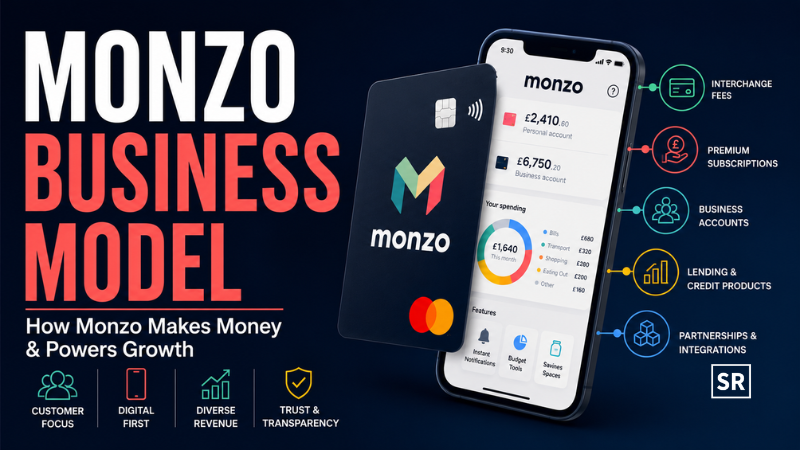
Monzo uses several revenue models, such as earning interest from lending and deposits, card transaction income, paid subscription plans, business banking, and other financial products and partnerships. The model has gradually evolved from a simple current-account proposition into a broader financial platform.
What Is Monzo?
Monzo is a UK digital bank founded in 2015 by Tom Blomfield, Jonas Huckestein, Jason Bates, Paul Rippon, and Gary Dolman.
The company originally operated under the name Mondo and initially used prepaid cards while it worked toward becoming a fully licensed bank. After receiving its banking authorization, Monzo moved toward offering full current accounts.
It was a straightforward appeal that made banking easy, fast, and more transparent through technology.
Customers could see transactions almost immediately, organize money into savings pots, track spending, receive instant notifications, and manage their accounts without visiting a branch.
That customer-first approach became a major part of Monzo’s competitive advantage.
How Does Monzo’s Business Model Work?
Monzo follows a digital-first banking model. Instead of maintaining a large network of physical branches, the company delivers most of its services through its mobile app. This allows Monzo to build products, communicate with customers, and manage many banking activities digitally.
The business model can be understood through four connected ideas:
- Acquire customers with a simple and attractive banking experience.
- Increase engagement by making the app useful for everyday financial decisions.
- Offer additional products as customers become more comfortable with Monzo.
- Monetize those relationships through lending, subscriptions, transactions, and financial services.
This is important because a current account by itself may not generate enough revenue to support the entire business.
The real opportunity comes when a customer uses Monzo for several financial needs.
For example, someone might start with a free current account, then open a savings product, use the Monzo card regularly, take out a loan, subscribe to a paid plan, or use Monzo Business.
The more products a customer uses, the greater their potential lifetime value.
Monzo Revenue Streams
Monzo has built a diversified revenue model rather than depending on one source of income.
1. Interest Income From Lending
Lending is one of the most important ways a bank generates revenue, and Monzo is no exception.
Monzo offers products such as personal loans and overdrafts to eligible customers. When customers borrow money, Monzo earns interest on those balances.
2. Interest Earned From Customer Deposits
Banking is also about managing deposits.
Customers keep money with Monzo, and the bank can use deposits within the rules that apply to regulated banks. One important source of bank income can therefore come from the difference between what a bank earns on assets and what it pays to customers on deposits.
This is often described through the concept of net interest income.
The larger the deposit base becomes, the more important this part of the business can become.
3. Card and Transaction Revenue
Everyday spending can also generate revenue.
When customers use their Monzo cards, the bank can receive income associated with card transactions, including interchange-related revenue.
Individually, these amounts are small. But Monzo has millions of customers making payments regularly, so transaction activity can become meaningful at scale.
This creates an interesting relationship between customer experience and revenue.
If Monzo makes its card and app convenient enough that customers use them for everyday purchases, higher engagement can translate into more transaction-related income.
4. Paid Subscription Plans
Monzo also uses a subscription model.
Its paid plans have historically included products such as Monzo Plus and Monzo Premium, giving customers additional features and benefits in exchange for a monthly fee.
This is attractive from a business perspective because subscription revenue can be more predictable than relying entirely on transactions.
Not everyone needs a premium banking account, which is why Monzo can keep a basic offering available while giving more financially engaged customers the option to pay for additional features.
The strategy is similar to many successful digital businesses: offer a useful free product, then create premium options for customers who want more.
5. Monzo Business
Monzo’s business banking operation extends the same digital-first approach to freelancers, sole traders, and small businesses.
Business customers can use Monzo for everyday banking and access features designed around running a company.
The opportunity is particularly interesting because business customers can have more complex financial needs and potentially generate more revenue than a basic personal account.
Monzo can earn money through paid business plans, financial products, and the transaction activity associated with business accounts.
This also gives the company another way to increase revenue without relying entirely on personal banking customers.
6. Other Financial Products and Partnerships
Monzo has gradually expanded beyond traditional current-account banking.
The app has increasingly become a place where customers can discover and manage different financial products.
Partnerships can create additional revenue opportunities through commissions or other commercial arrangements when customers use financial products offered through the platform.
This approach allows Monzo to broaden its offering without necessarily building every financial product entirely on its own.
Why Monzo’s App Is So Important to Its Business Model
Monzo’s app isn’t simply a digital version of a traditional bank branch.
It is the main customer relationship platform.
Customers use it to:
- Check balances
- Make payments
- Track spending
- Create savings pots
- Manage cards
- Apply for financial products
- Monitor budgets
- Communicate with the bank
Its frequent interaction gives Monzo something extremely valuable: customer engagement.
How Monzo Keeps Its Costs Lower
Operating without a traditional branch network gives Monzo a different cost structure from conventional banks.
The company does not need to maintain thousands of high-street branches, but that doesn’t mean running a digital bank is cheap.
Some of the major expenses are:
- Technology and cloud infrastructure
- Software development
- Employee salaries
- Cybersecurity
- Fraud prevention
- Customer support
- Regulatory compliance
- Marketing
- Credit losses
- Banking and payment infrastructure
Regulation is particularly important.
Monzo is a regulated bank, so it has to meet requirements around capital, risk management, customer protection, reporting, and financial crime prevention.
Why Monzo’s Business Model Works
The most interesting part of Monzo’s strategy isn’t any single revenue stream. It’s the combination.
A customer may initially join because they like the app. Once they’re using it regularly, Monzo has opportunities to offer savings, lending, subscriptions, business services, or other financial products.
That means Monzo can potentially increase the value of each customer over time.
This is a much stronger strategy than simply trying to acquire as many customers as possible.
The goal is to build a long-term financial relationship.
Challenges in Monzo’s Business Model
Monzo still operates in a highly competitive and regulated market.
Traditional banks have enormous customer bases and established brands. At the same time, digital competitors such as Revolut and Starling compete for customers who want mobile-first financial services.
There are also risks around lending, fraud, cybersecurity, regulation, and the cost of acquiring customers.
Another challenge is profitability.
A growing customer base is valuable, but Monzo ultimately needs its revenue from each customer to justify the cost of serving and acquiring that customer.
That means expanding into profitable products while maintaining the simple, customer-friendly experience that helped build the brand in the first place.
The Future of the Monzo Business Model
Monzo’s next stage is likely to focus on getting more value from its existing customer relationships.
That could mean expanding lending, savings, investments, business banking, insurance, financial planning, and other services.
AI and automation could also make the banking experience more personalized. Instead of simply showing customers what happened with their money, digital banking platforms can increasingly help customers understand what they should do next.
The bigger opportunity is turning Monzo from an app people use to check their bank balance into a financial platform customers rely on for much of their financial life.
Conclusion
Monzo’s business model is a good example of how technology can reshape an old industry without completely changing what the industry does.
At its core, Monzo is still a bank. It takes deposits, facilitates payments, lends money, and provides financial services.
What changed is how those services are delivered and monetized. The company attracts customers with a convenient digital experience, keeps them engaged through useful financial tools, and generates revenue from multiple parts of the relationship.
That combination of technology, customer experience, product expansion, and diversified revenue is what makes the Monzo business model worth studying.
FAQs
How does Monzo make money?
Is Monzo a profitable business?
Does Monzo make money from free accounts?
What is Monzo’s main source of revenue?
How does Monzo make money from its cards?
Does Monzo charge monthly fees?
How does Monzo make money from loans?
How does Monzo Business make money?
Why is Monzo’s mobile app important?
What can other businesses learn from Monzo?
Recommended Stories for You
Kailee Rainse Mar 30, 2026

Kailee Rainse Jun 10, 2025


Team SR Jun 10, 2025


Kailee Rainse May 7, 2026
Trending Stories

Best PayPal Alternatives for Freelancers in the UK 2026

How to Become a Freelancer in 2026: A Step-by-Step Guide

ImmuPharma Share Price Prediction (2025–2030): Expert Analysis & Predictions

EnergyPathways Share Price Prediction (2025-2030): Expert Analysis & Predictions

Invinity Energy Share Price Prediction (2025–2030): Expert Analysis & Predictions

Ilika Plc Share Price Prediction (2025–2030): Expert Analysis & Predictions

Tax Code 1257L Explained: Meaning, Tax-Free Allowance, W1, M1 & X

10 Best t-shirt brands for custom printing in 2026