


After a bruising couple of years, it would be easy to assume investors have fallen out of love with UK tech. Global deal volumes are still below their 2021 peak, and founders complain about down rounds, tougher term sheets and longer fundraising cycles. Yet behind the caution, money is quietly re-organising itself. Technology, media and telecoms still account for the largest slice of global deal value, and the UK remains one of the few markets that can credibly claim global scale in artificial intelligence, fintech and creative tech.
 Follow us
 Follow us
This next wave is unlikely to look like 2021’s growth-at-all-costs binge. Instead, it is being shaped by infrastructure-heavy AI projects, defensive cybersecurity bets, tools for creators and gaming, and a slow but real rebalancing away from London. For founders in Manchester, Bristol or Edinburgh, the question is no longer whether capital exists, but whether the rules on visas, tax relief and local networks make that capital reachable in time.
What Does the 2025 Funding Landscape Really Look Like?
The headline picture is paradoxical. Globally, mergers and acquisitions are recovering, with total deal value up around 10 per cent in the first nine months of 2025 compared with the previous year. Technology, media and telecoms deals alone reached roughly 536 billion dollars, about 17 per cent of global M&A value, underlining that tech remains the most targeted sector even in a cooler market.
Within that, the UK still punches above its weight. Estimates put the country’s broader tech ecosystem at about 1.2 trillion dollars, with UK start-ups raising around 16.2 billion dollars in 2024, nearly twice the capital raised by their German and French peers combined. In AI specifically, government and industry figures suggest a domestic market value of about 92 billion dollars in 2024, making the UK the third largest AI market globally after the United States and China.
RECOMMENDED FOR YOU

How to Cope with a Startup Closing: Ruslan Tymofieiev Breaks Down Main Points
Team SR
Oct 15, 2025


Key point
Despite the slowdown, UK tech still commands deep pools of global capital, particularly in AI, which anchors the country in the top tier of innovation economies.
Beneath those headline numbers, the composition of capital is shifting. Late-stage mega-rounds and eye-watering valuations are less common, while early stage and spinout funding are comparatively more resilient. Data from Dealroom and HSBC, for example, show that early-stage UK investments in the first quarter of 2024 actually ticked up, suggesting investors are still willing to back new ideas even as they mark down older ones.
For founders, that means the bar has moved from pure growth metrics towards evidence of product-market fit, capital discipline and a plausible route to profitability. In practice, investors say they are less interested in the number of users and more in unit economics, cash burn and whether a team can reach breakeven without assuming a return to zero-interest money.
Where Is the Money Now Flowing in UK Tech?
The most obvious magnet for capital is AI infrastructure. The launch of the Isambard-AI supercomputer in Bristol, backed by 225 million pounds of government funding as part of a wider 1.34 billion pound supercomputing package, signals a strategic bet on compute as national infrastructure rather than a niche research asset. That in turn is pulling in startups focused on model optimisation, developer tools and sector-specific AI applications in health, climate and robotics.
Key point
The UK’s AI strategy has shifted from funding individual algorithms to building the compute, data and security rails that every serious AI business will depend on.
Alongside AI infra, investors consistently highlight four clusters where deal-flow is still healthy:
-
Cybersecurity and “human risk management” platforms
-
Fintech and payments infrastructure
-
Creator and marketing tools
-
Gaming and interactive entertainment
Cybersecurity raises remain robust, with Manchester-based firms like CultureAI closing multi-million euro Series A rounds and newer players such as Cytix attracting seven-figure seed funding to help organisations manage cyber risk. In fintech, UK companies pulled in about 1.5 billion dollars in the first half of 2025 alone, essentially flat on late-2024, which in a tighter market reads as a sign of resilience rather than stagnation.
Creator tools and gaming sit slightly under the radar but benefit from similar dynamics. As marketing budgets shift toward performance content and shoppable media, investors look favourably on software that helps small businesses manage video, assets, and simple customer interactions at scale. That can be as mundane as analytics dashboards or workflow tools, or as visible as the software that lets brands create qr code entry points between physical packaging and digital experiences without hiring a full engineering team.
Can Regional Founders Access Capital on Fair Terms?
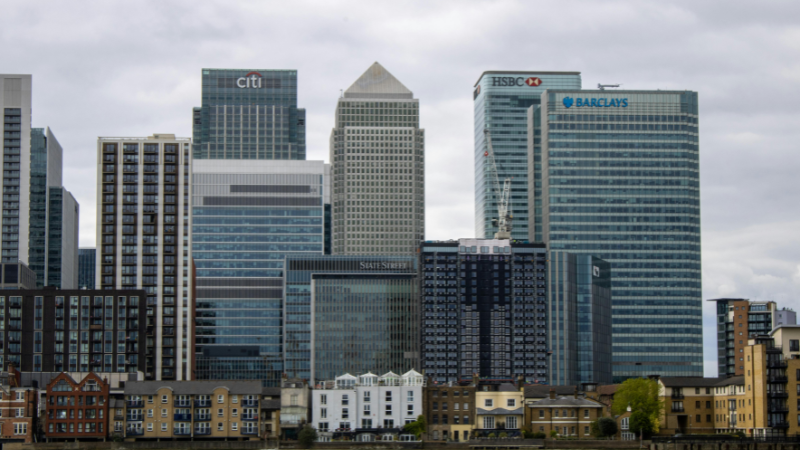
For founders outside London, access to this capital depends on a patchwork of tax schemes, visa routes and regional funds. At a national level, the Enterprise Investment Scheme (EIS) and its seed-stage cousin SEIS remain the workhorses of early-stage funding, offering generous income and capital gains tax reliefs to investors who back eligible UK startups. For angels in Manchester or Edinburgh, those schemes often make the difference between writing a cheque locally and sending money into a London fund.
Key point
EIS and SEIS turn local high-net-worth individuals into de facto regional VCs, but only if founders can navigate the rules and present themselves as tax-efficient bets.
The British Business Bank’s programmes are also starting to matter. Its Small Business Equity Tracker points to a growing network of regional funds and an expanded 25.6 billion pound balance sheet, with a Regional Angels Programme explicitly designed to reduce geographic imbalances in access to equity. In practice, this means more co-investment vehicles that will match local angels in the North West or South West, giving founders a realistic shot at raising a full pre-seed round without flying to Shoreditch every week. For deeply practical SaaS businesses that help manufacturers standardise product data or create qr code labels so customers can re-order from a smartphone, that kind of regional capital is often a better cultural fit than a purely consumer-oriented London fund.
Immigration rules add another layer. The Innovator Founder visa allows entrepreneurs to build an innovative, scalable business in the UK provided they secure an endorsement from an approved body, while the Global Talent visa targets leaders and potential leaders in digital technology, including AI, gaming, cybersecurity and fintech. Recent updates have simplified some endorsement processes and signalled that Tech Nation, after a period of uncertainty, will continue to play a role in Global Talent endorsements for digital technology.
For founders in places like Bristol or Edinburgh, those routes can be double-edged. They offer paths to permanent residence and flexibility to build a company without being tied to a single employer, but they also introduce paperwork and timing risks. A foreign founder who has just closed a seed round with Manchester investors does not want to discover that a missing endorsement letter or a delayed visa decision puts their next milestone at risk.
Key point
The UK is actively using tax relief and visa routes to attract and retain tech founders, but the complexity of these schemes can still deter teams that lack specialist advice.
How Do Manchester, Bristol and Edinburgh Turn Ecosystems into Deals?
Manchester’s pitch to investors is increasingly clear: a dense cluster of AI, cybersecurity and data-driven startups anchored by major universities and a lower cost base than London. Recent data show Manchester-based spinouts raising about 64 million euros in 2024, a record for the city, with companies like CultureAI leading human cyber-risk management and others building AI-driven security platforms. Local funds such as EHE Ventures are leaning in, using SEIS and EIS structures to write small tickets across multiple AI startups, from logistics optimisation tools to software that helps small merchants create qr code-enabled receipts that feed straight into accounting systems.
Bristol, by contrast, leans heavily on deep tech. The city is now home to Isambard-AI, the national supercomputer that has become a poster child for the UK’s AI sovereignty agenda. Around it sit robotics labs, university spinouts and a growing set of early-stage companies experimenting with AI in transport, manufacturing and health. Local stories include robotics startups winning government grants to build AI-based transport safety systems and incubator programmes that help hardware teams access shared labs and test spaces.
Edinburgh offers a different mix again: fintech, data science and games. AI fintech startup Aveni.AI, for example, recently closed an 11 million pound Series A round to build sector-specific language models for financial services, one of the largest such rounds in Scotland this year. At the same time, Scotland’s gaming industry has expanded from around 15 companies in 2010 to roughly 130 in 2024, generating about 340 million pounds in turnover and doubling headcount over the last decade. For founders, the practical value lies not in the headline numbers but in the density of peers, publishers and investors who understand the economics of live-ops games and creative tools.
Key point
Manchester, Bristol and Edinburgh succeed not by copying London, but by specialising: cyber and AI risk in the North West, deep-tech and compute in the South West, and fintech plus games in Scotland.
For founders choosing a base, these hubs now offer credible alternatives to the capital. That does not mean London’s dominance is over; it still hosts the majority of later-stage funds and corporate buyers. But it does mean a team can realistically incorporate in Manchester, raise its first institutional round locally, recruit through regional universities and only travel south when a strategic investor or acquirer enters the picture.
Conclusion
The UK’s 2025 tech funding landscape is not the exuberant, low-rate era many founders grew up in, but nor is it the funding winter some feared. Instead, it is a more selective, infrastructure-driven market where capital concentrates in AI infra, cybersecurity, fintech rails, creator tooling and gaming, and where regional hubs around Manchester, Bristol and Edinburgh are starting to turn narrative into numbers.
For founders, the practical playbook is becoming clearer. Anchor your proposition in a defensible problem, not a trend. Treat schemes like EIS, SEIS and the British Business Bank’s regional funds as part of your capital strategy, not an afterthought. If you are building from outside London, invest early in relationships with local angels, sector-specialist funds and university partners. And if you are coming from overseas, treat visas as a strategic workstream, not a formality.
The next investment wave is unlikely to lift every boat at once. But for UK tech teams who can plug into the right mix of capital, talent and regional ecosystems, it still looks like a tide worth catching.
FAQ
How healthy is UK tech funding compared with pre-pandemic levels?
Deal volumes are lower than the 2021 peak, but overall UK startup funding in 2024 remained strong by historical standards, with around 16 billion dollars raised and a continued focus on AI, fintech and deep-tech.
Which tech sectors are most attractive to investors in 2025?
Investors are prioritising AI infrastructure, cybersecurity, fintech infrastructure, and tools for creators and gaming. These areas combine clear commercial demand with defensible data or technology moats, which makes them more resilient in a cautious market.
Are regional hubs really a viable alternative to London for raising capital?
Yes, particularly at pre-seed and seed. Manchester, Bristol and Edinburgh now host active spinout ecosystems, specialised funds and angel networks, supported by national schemes such as EIS, SEIS and British Business Bank regional programmes. Later-stage capital still concentrates in London, but early rounds increasingly happen locally.
What should overseas founders know about UK visas for tech entrepreneurs?
Routes such as the Innovator Founder visa and the Global Talent visa allow entrepreneurs and senior technologists to build businesses in the UK without traditional sponsorship, provided they secure an endorsement and meet eligibility criteria. Processing times and requirements can change, so specialist immigration advice is advisable before committing to a move.
Will the next wave of tech investment favour growth at all costs again?
Unlikely. Investors now expect clearer paths to profitability, better unit economics and more disciplined cash use. Teams that can show capital efficiency and realistic growth plans are more likely to secure funding than those relying purely on aggressive top-line projections.
Recommended Stories for You

Team SR Feb 10, 2026

Team SR Dec 3, 2025

Team SR Sep 29, 2025

Team SR Aug 13, 2025


Team SR Sep 23, 2025
Trending Stories

The Rise of Glitter and Specialty Kits in Modern Makeup Culture

Scaling Small Businesses Into Global Brands With the Latest Tech Trends

Best Order Management Systems by Business Type: Retail, eCommerce, Wholesale, and Manufacturing

What is intellectual property, and how is it protected in the UK

Gravesend Property Market: Stable Prices and Strong Demand for Terraced Homes

The Post-Purchase Gap: Where Startups Are Rebuilding E-Commerce Trust

Dmitriy Makarov and the Secrets of Expanding Business Across Borders
Top 5 Access Control Systems for European Startups in 2025