

Integrated Solar Panels That Don’t Sit On Top Of Your Roof Like An Afterthought
Dec 17, 2025 | By Team SR
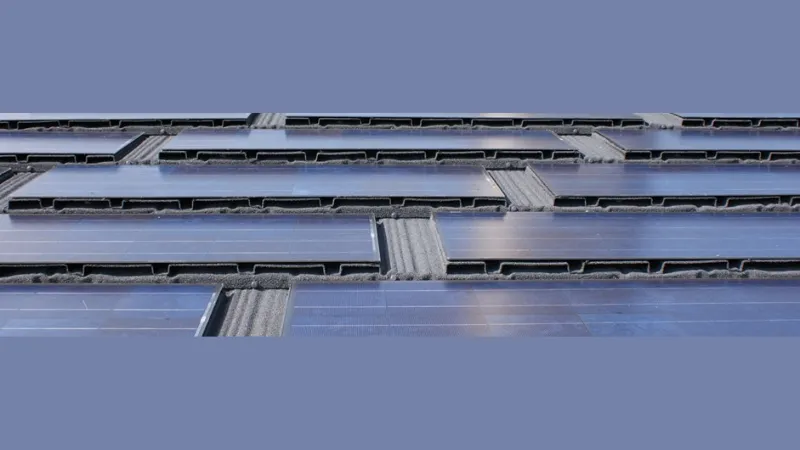
Your roof features integrated solar panels which serve as both roofing material and electricity-generating devices. The system provides both roof finishing and power supply capabilities through a single unit which avoids the appearance of retrofitted buildings that result from bolt-on additions. The first step for your decision-making process should be to evaluate integrated solar panels.
 Follow us
 Follow us
A trend does not represent the essential requirement. Your building requires a roof which matches both your construction design and your operational schedule and your scheduled maintenance activities.
What Changes When Solar Becomes Part Of The Roof
“Panels” vs “Integrated”
Most people envision framed modules which they place above their roof structure. The system functions properly but it creates additional height requirements and it needs brackets and additional wind resistance points and it displays two separate visual elements.
Integrated systems operate through different methods. These elements sit within the roof covering area. The appearance of your roof becomes important when you want to maintain its roofline and flashings and overall street view. The design choice becomes important when you need a roof structure which does not have elements extending past the roof surface.
RECOMMENDED FOR YOU

Why That Matters In The UK Right Now
Current energy expenses remain above pre-crisis levels despite quarterly cap adjustments. Small-scale solar adoption continues to grow because UK rooftop solar installations reached their highest point in 2025 according to certification records. This shows that generation on-site remains popular because it continues to deliver positive results for homes and buildings.
When roof refurbishment costs are already planned, ignoring generation removes a one-time opportunity to perform an affordable system upgrade.
The Roof Still Has One Job First
Weatherproofing Must Happen Before All Other Work Can Begin
Solar doesn’t get a free pass. Your roof needs to function as a water-shedding system while withstanding wind forces and enduring freeze-thaw conditions without issues. Integrated solar functions correctly only when the roof remains the primary system instead of acting as a base for added equipment.
You need to understand systems as a whole instead of focusing only on individual tiles. Final roof quality depends on underlay and battens and fixings and ridges and verges and valleys and abutments and ventilation routes and penetrations working together.
The Weak Points Are Never In The Middle
The first sign of a leak usually appears outside the main field area. The starting point exists where different elements connect.
Roof-to-wall junctions. Valleys. Chimney details. Ridges. Edges. Vent pipes. Any change in plane.
An integrated solar design must treat these points as part of the design process instead of problems to be resolved during construction. Weather patterns expose shortcuts quickly, especially during winter months.
What You Should Check Before You Spend A Penny
Pitch And Layout Reality
Analysis should begin by determining roof pitch and usable roof area. The brochure does not replace reality.
In some cases, the correct solution involves placing generation on one roof plane while using standard roofing elsewhere. You don’t need full coverage. You need dependable output where it matters.
Rooflights and vents and irregular shapes interrupt the clean rectangles solar prefers. A neat layout performs better than a forced one.
Paperwork That Doesn’t Waste Your Time
Projects fail to progress when required documents are missing or unclear.
Request product data, installation instructions, and warranty conditions written as actual contractual terms. You need clear answers about what voids coverage, what qualifies as correct installation, and who verifies installation quality.
Unclear explanations usually lead to additional cost.
Maintenance And Access
Commercial roof teams plan access early. Homeowners sometimes don’t.
The system requires inspection access along with defined cable routing and inverter and connector placement. A suitable system allows inspection of one component without removing roof sections.
If the solution resembles “rip up half the roof,” walk away.
What “Lightweight” Actually Buys You
Less Structural Escalation
Roof weight determines whether a project remains a standard roofing task or becomes an engineering exercise.
Many UK buildings carry history in their rafters. Extensions. Alterations. Old timber sizes. Conversions that changed load paths. Adding heavy coverings can trigger calculations and reinforcements and delays and extra cost without improving comfort or performance.
Lightweight systems prevent that sequence. This is physics and programme control, not marketing.
Speed Comes After Completeness
“Fast install” does not happen automatically.
Speed depends on planning and completeness. Installation continues smoothly when trims and fixings and ridge solutions and flashing details arrive together. Delivering only main units forces improvisation and delays.
You don’t need speed on day one. You need speed on day ten when weather and schedules tighten.
Real-Life Examples Of Sensible Decisions
Your starting point should be the boundaries you face instead of the options you want.
A repeatable method helps avoid purchasing incorrect solutions multiple times.
Start with roof pitch and usable area.
Shading and orientation.
Structural constraints and dead load comfort.
Roof complexity and penetrations and edges.
Access and maintenance reality.
Tolerance for disruption.
Systems must demonstrate effectiveness through clear detailing and defined installation processes and understandable warranty conditions and realistic maintenance approaches.
Profile and aesthetics should come last. Choosing them first risks forcing the roof to behave like something it is not.
What You Should Expect From A Supplier
Answers should remain consistent.
No vague promises. No blanket assurances. No ignoring how your roof actually functions.
A reliable supplier explains the uninteresting details without hesitation. Flashings. Ventilation. Overlaps. Edge details. Cable routing. Sign-off procedures. That’s where good roofs come from.
The Simple Next Step
Treat integrated generation as part of the roof decision during refurbishment instead of a separate discussion. Measure the roof. Map penetrations. Confirm pitch. Define acceptable output. Select the system that fits the facts.
Recommended Stories for You

Team SR Feb 24, 2026

Team SR Jan 16, 2026

Team SR Nov 13, 2025

Team SR Jan 28, 2026

Team SR Jan 10, 2025

Team SR Feb 14, 2026
Trending Stories

Understanding biometric security and Nedap Security Management

Career Change After 40: Proven Strategies for Professionals Seeking Meaningful Work

From Agency to Independent Studio: Building a Creative Practice With Intention

From Classroom to C-Suite: How Student Entrepreneurs Can Turn Academic Projects into Startup Success Stories

CoinKnow Review 2026: Is This the Best Coin Identifier App for US Coin Beginners?

Mistakes to Avoid When You Rent a Convertible Car in Dubai for a Short Trip

Finsea24 Review: Tips to Navigate Through Forex Market Volatility [finsea24.com]
Best Instagram Video Downloaders in 2026