

India’s Inbound Travel Renaissance: From Tourism Revival to Medical Mobility
Feb 20, 2026 | By Kailee Rainse
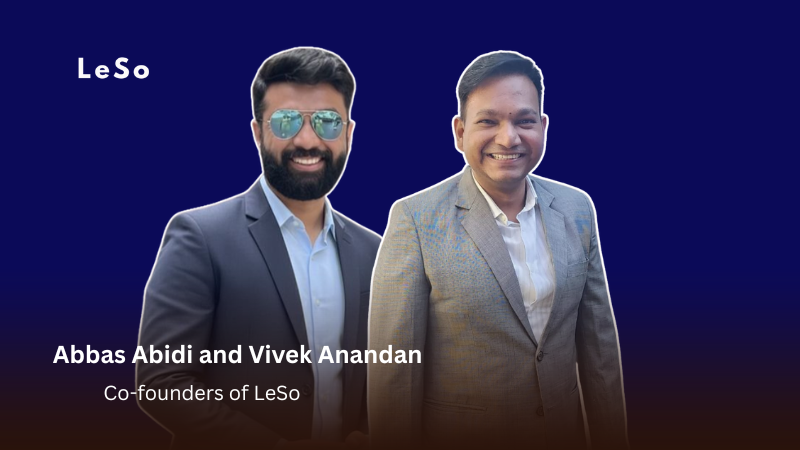
Global travel has returned. Airports are crowded again, long-haul routes are full, and international arrivals worldwide are nearing pre-pandemic highs. In the middle of this recovery, India is quietly entering a different phase of its inbound journey.
 Follow us
 Follow us
In 2024, international arrivals to India crossed the 20-million mark. Foreign tourist arrivals approached 10 million. What stands out isn’t just the rebound — it’s where the recovery is coming from. Europe has nearly returned to its earlier volumes, while North America has moved beyond 2019 levels. For travellers from markets that value regulatory clarity and service consistency, that shift signals confidence.
For decades, India was seen largely as an outbound-heavy market — a country whose citizens were travelling outward in increasing numbers. That narrative is changing. India is attracting travellers in growing numbers — for leisure, business, spiritual exploration, and increasingly, healthcare.
The more important question now isn’t whether inbound travel is growing. It’s whether the systems supporting it are evolving at the same pace.
RECOMMENDED FOR YOU

Pluvo Raises $5M In Seed Funding To Transform AI‑Driven Financial Analysis
Kailee Rainse
Mar 2, 2026

Quivo Secures €5.2 M To Expand Its Streamlined e-commerce Logistics To The Gulf Region
Kailee Rainse
Oct 13, 2025

A Broader Inbound Profile
Inbound travel to India looks different today than it did even five years ago.
The winter peak remains strong, air connectivity continues to expand, and major metros are seeing consistent footfall. But travellers are coming with more varied intentions. Beyond the traditional Golden Triangle routes, visitors are spending time in Rishikesh for yoga residencies, Kerala for Ayurveda programs, Rajasthan for heritage stays, and across smaller towns for cultural immersion.
“The inbound traveller today does far more research than before,” says Vivek Anandan, co-founder of LeSo. “They expect structure. They expect clarity. India has extraordinary depth — but the way that depth is organised determines the experience.”
Abbas Abidi, his co-founder, points to a perception shift that has been years in the making. “Infrastructure has improved dramatically — airports, highways, domestic connectivity. But what builds trust for someone flying in from London or New York is predictability. It’s knowing what to expect at every step.”
That predictability, he argues, starts well before the aircraft lands.
Entry as the First Impression
Every inbound journey begins with a visa.
India’s eVisa system has expanded over the years, but for many first-time applicants the process still feels opaque. Eligibility categories, documentation nuances, technical errors — small uncertainties often create hesitation.
“Visa friction is rarely dramatic,” Abbas explains. “It’s usually subtle — a doubt about a document, a mismatch in a field, a lack of clarity. But for a traveller sitting abroad, that uncertainty can delay or even derail plans.”
Rather than beginning with flights or hotel aggregation, LeSo chose to focus on that first mile.
“We’re not replacing government systems,” Vivek says. “We’re simplifying the way people interact with them. Structured guidance, clearer documentation pathways, fewer avoidable mistakes — those things matter more than most people realise.”
The aim isn’t flashy innovation. It’s quiet reliability. If entry becomes simpler, intent converts more smoothly into arrival.
Inbound growth, in that sense, is less about promotion and more about removing hesitation.
Organising a Fragmented Ecosystem
Once travellers arrive, another reality becomes clear: India’s supply is abundant, but it is also dispersed.
Transfers, boutique hotels, heritage properties, regional guides, spiritual circuits, domestic flights, experiential stays — much of the ecosystem operates through localised networks. For seasoned India visitors, that complexity can be part of the charm. For first-time inbound travellers, it can feel overwhelming.
“There’s incredible supply across the country,” Vivek notes. “But a traveller from Frankfurt or Toronto doesn’t want to coordinate six different operators. They want coherence.”
LeSo’s next phase has focused on that coordination layer — bringing together transfers, sightseeing, curated experiences, domestic logistics and specialised circuits under one structured framework.
The ambition isn’t to replicate a global OTA model. It’s to reduce India-specific friction.
“Inbound travel here has cultural, logistical and linguistic layers,” Abbas says. “If you organise it thoughtfully, it becomes seamless. If you don’t, it can feel chaotic. The difference lies in integration.”
The Expanding Role of Medical Mobility
Parallel to leisure travel, another segment has been growing steadily: medical tourism.
In 2024, medical purposes accounted for just over six percent of inbound visits — a meaningful share within a market approaching 10 million foreign tourists. Behind that percentage is a structural shift.
India’s healthcare ecosystem now attracts patients for cardiac procedures, oncology treatments, orthopaedics, fertility programs and advanced diagnostics. Cost differences compared to Western systems remain substantial, and waiting periods are often significantly shorter.
But medical travel carries a different emotional weight.
“A leisure traveller can adjust dates,” Vivek says. “A medical traveller often cannot. Their timelines are tied to health, finances, sometimes urgency.”
That makes system clarity even more critical.
“If the very first interaction — the visa application — feels confusing,” Vivek adds, “it creates doubt. And doubt is the last thing a medical traveller needs.”
LeSo’s longer-term vision includes deeper integration into medical mobility — extending beyond visa navigation to structured coordination around transfers, accommodation, and recovery logistics.
“We don’t see medical tourism as separate from inbound tourism,” Abbas explains. “It’s a high-trust extension of it. India has world-class hospitals. The next step is building the connective framework around them.”
A Moment of Opportunity
India generated over $35 billion in foreign exchange earnings from tourism in 2024. International arrivals have rebounded, and connectivity continues to expand.
The ingredients are present.
What comes next is less about scale and more about refinement — entry clarity, integrated logistics, structured experiences, specialised support for segments like medical travel.
“Inbound travel isn’t just about attracting more visitors,” Abbas reflects. “It’s about making their journey feel considered.”
LeSo’s cofounder Abbas who himself is navigating the operational gaps to build a seamless medical tourism infra in India adds. “We’re building this in stages — first entry, then experience, then deeper segments like medical mobility. India’s inbound story is still unfolding.”
As global mobility becomes more competitive, the destinations that stand out will not only be those with cultural richness, but those that reduce friction at every step.
India has the depth. The opportunity lies in how it organises it.
Recommended Stories for You

Kailee Rainse Mar 22, 2025

Kailee Rainse Jan 27, 2026


Kailee Rainse Sep 3, 2025
Kailee Rainse Jan 7, 2026
Kailee Rainse Nov 22, 2024
Trending Stories

Zelt funding news – London-based Zelt Secures $6M in Funding

Outmin Funding News -Ireland’s Outmin Secures €4M Fresh Funding To Expand Its AI Finance Platform

Vox AI Secures $8.7M Funding In Pre-Seed Round
BIOWEG Raises €16M To Expand Biodegradable Microplastic Alternatives
UK Government-Backed Fund For Female Founders Reaches £130 Million First Close

Uk-based Orbiri Secures £320k Investment

Paris-based Phagos Secures €25 Million To Advance Sustainable Antibiotic Alternatives
ODOS Raises €680K to Boost Sustainability In The Agri-Food Industry