

How Ripple Price Movements Are Shaping the Future of Cross-Border Payments for Small Businesses
Feb 3, 2026 | By Team SR

Cross-border commerce is growing as remote work increases and globalization accelerates. If you're a small business looking to work with foreign businesses, customers, or freelancers, traditional payment methods (which are expensive, slow, and cumbersome) create quite a bit of friction. Digital assets are offering new solutions for payment systems. Ripple and XRP pricing is becoming an increasingly important factor in doing cross-border business; pricing changes in value for Ripple will affect (1) timing, (2) cost, and (3) working capital for the small business.
 Follow us
 Follow us
Three Problems with Traditional Cross-Border Payment Systems:
1. Long Waits. International payments have historically been conducted through correspondent banking, utilizing nostro and vostro accounts, which can take considerable time to process across multiple banks. For standard payment methods, processing can take several days, and funds may not be available to you until then.
2. Paying Too Much. Each intermediary takes a cut of the transaction; therefore, buyers will pay more than the market price for the currency they are purchasing. Each intermediary will also charge additional fees and currency-conversion costs.
3. Liquidity Issues. Often, both banks and businesses must maintain cash reserves in foreign currencies, tying up working capital. As a result, it becomes disproportionately harmful to smaller, cash-poor businesses with tighter margins.
RECOMMENDED FOR YOU



Ripple and XRP may play a fundamental role in improving the global financial system.
Ripple is a blockchain-based network that enables the transfer of money using XRP, a digital currency. As Ripple develops its network, tank tech will continue to reduce the current inefficiencies and costs associated with cross-border transactions.
Using the Ripple platform to transact in XRP enables near-instantaneous, low-cost settlement of transactions across different currencies worldwide.
For example, if a business in one country wants to buy something from a business in another country, it first converts its domestic currency to XRP (e.g., USD to XRP). Then it sends XRP across the Ripple blockchain to the business in the second country (e.g., to a company in Australia). Finally, the business in Australia converts the XRP to Australian dollars (AUD) at the end of the transaction.
In addition to saving time and costs, the system eliminates the need to maintain foreign currency accounts (i.e., pre-funded foreign currency accounts), which can be a significant drag on cash flow and liquidity.
For small businesses, the benefits of using Ripple can be multiplicative: they can receive payments from overseas suppliers faster and/or receive payments from foreign customers more quickly, and manage their working capital with less friction.
As one guide pointed out, improvements in cash flow and liquidity, as well as in costs and customer/partner relationships, can be achieved through the Ripple solution.
Effect of Ripple Price Movement on Real-World Applications
Many advantages of using RippleNet rely on XRP being highly liquid and remaining within a reasonable price range. The Ripple price can significantly impact the use of XRP for cross-border payments by the small business community. Here are some examples of how XRP price fluctuations affect the use of XRP for cross-border payments by small businesses.
Liquidity & Bridge Currency Availability
As the value of XRP increases and the volume of XRP traded increases, more institutions and payment service providers are willing to hold XRP for settlement purposes. The increased adoption of XRP increases liquidity, thereby enhancing the overall reliability of the Ripple Network. If the price of XRP decreases to the point that payment service providers no longer hold XRP, the Ripple Network's liquidity decreases substantially, leading to slower transactions or forcing the use of traditional payment rails.
Cost Predictability
When XRP experiences volatile price swings, foreign exchange risk is introduced into the transaction process. If an XRP payment is made and held for even a short period, the extreme volatility of price fluctuations could lead one party to lose money while the other makes a profit. This uncertainty may deter small businesses from using XRP unless the settlement occurs nearly instantaneously (the shorter the settlement period, the lower the potential for price fluctuations).
Financial institution Integration With RippleNet
Standardized RippleNet price growth will attract new financial institutions.
As more banks, remittance companies, and payment providers adopt RippleNet, this will improve small-business services and enable small businesses to secure a more diverse range of providers in their geographical region, thereby enhancing corridor coverage. Current estimates indicate XRP can capture upwards of 15% of cross-border payment volume from legacy systems.
Small Business Provides Better Payment Infrastructure For Small Businesses through Consumer Acceptance Of XRP.
Small businesses' confidence in XRP will increase when they see its price rise, accept it as a viable payment infrastructure, and view it as a long-term payment infrastructure rather than a speculative investment. This consumer confidence will help drive real-world adoption among all consumers, beyond the crypto-native community.
Small Business Owners Considering How To Use XRP In Their Business Should Examine These Aspects:
Many experts agree that XRP's potential is significant, but it comes with risks and no guarantees. Examples include:
1. Regulatory & Legal Issues - Depending on where businesses are located, there may be some uncertainty about what XRP is (i.e., currency, commodity, security, etc.) since these classifications differ from region to region. Therefore, this uncertainty could create complications when small businesses conduct cross-border transactions.
2. Liquidity Issues In Emerging Markets - Unlike some developed economies, a number of emerging market regions do not have well-established exchange networks for XRP. As a result, converting XRP to the local currency can pose significant fees and delays for businesses operating in these regions.
3. Volatility Risk – RippleNet has created an environment for rapid settlement of cross-border payments; however, outside market conditions can still result in extreme price fluctuations on XRP, which may deter some risk-averse merchants from using it to accept payments.
4. Adoption & Integration Issues - For small businesses to take advantage of XRP-based cross-border payment solutions, the remittance providers or payment processing companies the merchant uses must accept XRP-based payments. Currently, a significant percentage of global money transfer companies have yet to accept XRP as a valid form of payment; however, an increasing number are beginning to adopt it.
Small Businesses Should Take Advantage of XRP's Strategic Timing
Currently, the entire Payments industry is transitioning from traditional methods towards something more digital, crypto-enabled, and therefore superior. In fact, some of the largest payment networks have already begun launching or piloting new services that enable stablecoin-based cross-border payments, using less capital with faster Settlement cycles.
In addition to increasing Institutional Adoption rates, Small Businesses are also seeing the emergence of an Infrastructure that supports this new Digital Payment ecosystem. This convergence of: (A) Growing Infrastructure, (B) Increasing Rates of Institutional Adoption, and (C) Improved Clarity in Regulation, may have created a point of inflection for the small business community.
Ripple has provided a mechanism for Market participants and their clients to express growing confidence in the Utility of XRP, not simply speculation about its Long-Term Price appreciation. A highly liquid, widely adopted marketplace creates a scenario in which there are real economic and Speed advantages to using XRP for payments by Small businesses. Conversely, if the stability of XRP's Price or its usage in Payments declines, the perceived Utility of XRP may suffer.
Speed and Low Cost are Critical Factors for Small/Medium-Sized Companies
Take a look, for instance, at a small business based in a developing country that engages in e-commerce, such as one that purchases supplies from two overseas vendors - one in Southeast Asia and another in Eastern Europe. In the traditional banking environment, when this small business wants to make payments to either vendor and uses a traditional banking method of payment, it must first pre-fund a foreign currency account for both vendors, then transfer funds through multiple banks (intermediaries), and then wait anywhere from 2 to 5 working days before funds actually arrive at either vendor. In addition to delaying the time it takes to manufacture or ship goods, this also reduces working capital.
Now consider when this small business uses XRP through RippleNet. In this example, the business obtains its local currency and converts it into XRP. The business then sends the XRP instantly through RippleNet. Finally, the vendor receiving the XRP can convert it into their local fiat currency on the same day.
The result is a significant reduction in lead times, an increase in inventory turnover, and improved cash flow, all of which are very important to small companies operating on thin margins.
Additionally, as with small service providers, XRP payments would enable nearly instant payouts to remote contractors and freelancers worldwide, allowing these small companies to compete effectively when hiring globally.
Summary: Ripple Price Movement as a Measure for a New Way of Conducting Cross-Border Business
Today, more than ever before, the injection of many small businesses into the global marketplace is felt. Most companies also aim to maximize their profits by obtaining the best-priced products possible through an international supply chain, accessing the best international talent, serving their international customers completely and efficiently, and/or working with business partners around the world. However, traditional banking/money transfer systems create many barriers that make this very difficult.
The growing acceptance of XRP and Ripple (i.e., a digital payment network that is “backed” by assets) can provide a clear solution to these challenges. It offers businesses a fast, reliable, and low-cost source of funds, with the added benefit of global access. Ultimately, it provides businesses with low-cost, flexible, and quick access to foreign currencies.
Thus, if XRP can be stabilized for businesses, given its critical factors of utility, liquidity, and broad market acceptance, it opens the opportunity for the vast majority of small businesses to simplify cross-border transactions without the extraordinary complexities or delays.
Therefore, small-business owners willing to experiment, track their liquidity, and find a payment processor that is supportive and compatible with cryptocurrency should seize the opportunity to utilize XRP for cross-border payments. Simply stated, as Ripple and XRP gain momentum in the global financial services marketplace, the small business market is expected to be one of the largest beneficiaries of their adoption.
Recommended Stories for You


王海青 May 28, 2024

Team SR Mar 30, 2026

Team SR Jan 16, 2026


Team SR Nov 14, 2025
Trending Stories

Understanding biometric security and Nedap Security Management

Career Change After 40: Proven Strategies for Professionals Seeking Meaningful Work

From Agency to Independent Studio: Building a Creative Practice With Intention

From Classroom to C-Suite: How Student Entrepreneurs Can Turn Academic Projects into Startup Success Stories

CoinKnow Review 2026: Is This the Best Coin Identifier App for US Coin Beginners?

Mistakes to Avoid When You Rent a Convertible Car in Dubai for a Short Trip
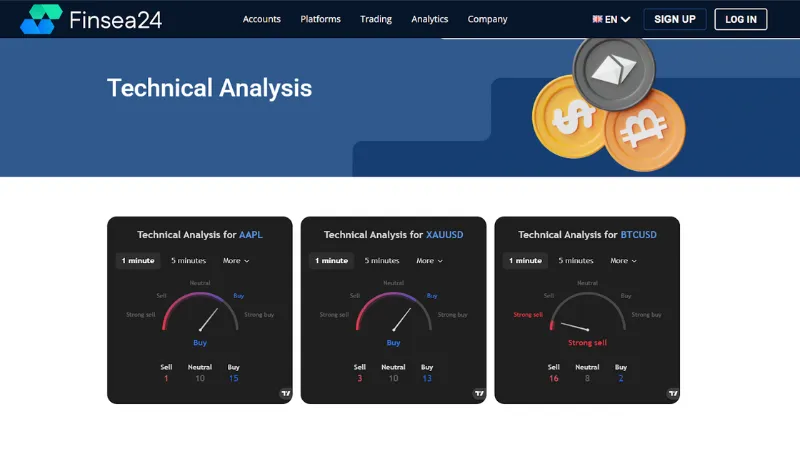
Finsea24 Review: Tips to Navigate Through Forex Market Volatility [finsea24.com]

Best Instagram Video Downloaders in 2026