

How Poki is helping game developers across Europe scale globally and Compare with Other Platforms
May 28, 2026 | By Kailee Rainse
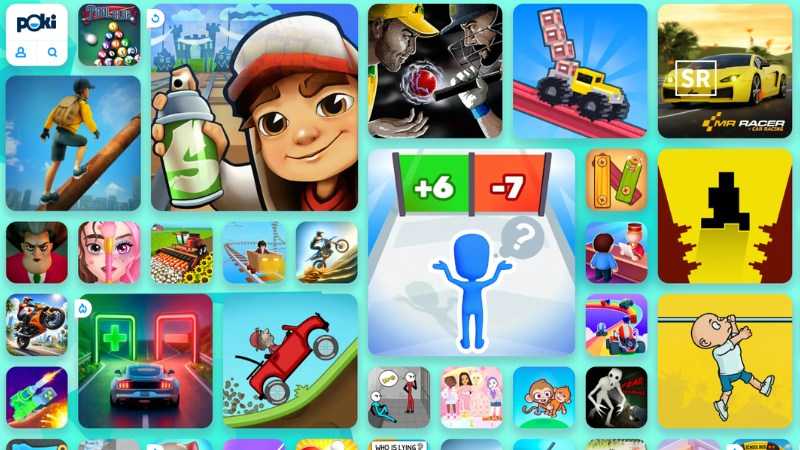
Founded in Amsterdam in 2014 and fully self-funded, Poki has evolved into the world’s largest web gaming platform, attracting 100 million monthly players and surpassing 1 billion gameplays in a single month in 2025. Yet for Europe’s indie developer community, the platform’s real significance lies not only in its scale but in the unique approach that fueled its growth.
 Follow us
 Follow us
Rather than acting as a passive storefront like traditional app stores or publishers, Poki positions itself as an active development partner. The company collaborates directly with more than 600 developers across a curated catalog of over 1,500 games while intentionally limiting releases to just one game per day. This selective strategy helps maintain quality and prevents smaller studios from being overwhelmed by excessive competition.
Unlike ecosystems such as the App Store or Google Play, where visibility often depends heavily on marketing budgets, Poki gives independent developers a more level playing field. Its recommendation algorithm prioritizes player engagement metrics such as average playtime and conversion to play, instead of rewarding large acquisition spending. As a result, solo creators can compete alongside larger studios based on the strength of their games rather than the size of their advertising budgets.
Poki’s business model is also built entirely around advertising revenue, eliminating the need for developers to manage payment systems or monetization infrastructure. Revenue is shared directly with creators and, according to the company, even moderately successful titles can provide a reliable monthly income stream. For many developers transitioning from the mobile gaming market, where rising user acquisition costs have made growth increasingly difficult for smaller teams, Poki offers a notably different environment with no UA spending required and built-in distribution support.
RECOMMENDED FOR YOU

Izzie Balmer and Will Hawley: A Story of Shared Values and Quiet Support
Kailee Rainse
Mar 27, 2026

Todd Bradley Net Worth: Professional Journey, Compensation and Ventures
Kailee Rainse
Sep 12, 2025
Romy Halfweeg, Business Development Manager at Poki, describes the company’s philosophy as a long-term partnership rather than a simple content arrangement. “We sign a developer more so than a game,” Halfweeg said in a recent interview with Next Big Games. “The first game is usually not a breakout success. The second will be better, the third might be a huge success.”
Poki
Poki is one of the world’s largest browser-based gaming platforms offering thousands of free online games that can be played instantly without downloads, installations or subscriptions. Founded in Amsterdam in 2014, the company has grown into a major destination for casual gaming, attracting millions of players globally every month. Unlike traditional gaming ecosystems that rely on app stores, gaming consoles or high-end hardware, Poki focuses entirely on web gaming, making games accessible through any modern browser on desktop, tablet or mobile devices.
The platform is designed around simplicity and accessibility. Users can visit the website choose a game and begin playing immediately without creating an account or purchasing software. This frictionless experience has helped Poki become especially popular among younger audiences, students, casual gamers and users in regions where app downloads or expensive devices may not be practical.
Comparison Between Poki and Other Platforms
The gaming industry offers developers several ways to distribute and monetize their games ranging from browser-based platforms like Poki to mobile app stores, console ecosystems, PC storefronts and traditional publishers. Each model comes with its own advantages, costs, challenges and audience reach. Poki has emerged as a unique alternative particularly for indie developers seeking lower barriers to entry and easier access to global audiences.
Poki vs Mobile App Stores
Mobile app stores such as Apple’s App Store and Google Play dominate the gaming industry in terms of downloads and revenue. However, they are also highly competitive and expensive environments for developers.
Discoverability
On mobile platforms, discoverability is often tied to marketing budgets and paid user acquisition campaigns. Thousands of new games are released every week making it difficult for smaller developers to stand out organically.
Poki approaches discoverability differently. Its platform focuses more on engagement metrics such as average playtime and player retention rather than advertising spend. This creates a more level playing field where smaller studios can compete alongside larger developers.
Distribution Process
Publishing on app stores typically involves approval processes, platform guidelines and review timelines that can delay launches. Developers must also optimize games separately for different operating systems and device requirements.
Poki simplifies this process by allowing games to run directly in web browsers. There are no app downloads or lengthy approval procedures which makes publishing faster and more flexible.
Costs
Mobile gaming often requires significant investment in user acquisition campaigns to attract players. Rising advertising costs have made it increasingly difficult for indie developers to remain profitable.
Poki eliminates much of this burden. Developers do not need to spend heavily on user acquisition because distribution is built into the platform itself.
Monetization
Mobile games frequently rely on in-app purchases, subscriptions or aggressive monetization systems. Poki, by contrast, operates entirely on advertising revenue allowing developers to earn income without managing payment systems.
Evaluating the game before committing
One of Poki’s most practical offerings is its free playtesting infrastructure, which developers can access even before signing any publishing agreement. Through developers.poki.com, studios are able to upload early prototypes and expose them to real players, gaining valuable insights such as session duration, player drop-off points, and screen recordings showing how users interact with onboarding flows. Importantly, developers are under no obligation to publish their games on Poki after using the tool. According to the company, one developer was able to increase average session length from three minutes and 49 seconds to more than seven minutes in only four days by making rapid improvements based on the collected data.
For European indie developers, browser gaming provides a pathway to global distribution without the high financial barriers typically associated with mobile or console publishing. There are no app store fees, no lengthy or unpredictable approval processes and no requirement for large marketing budgets to achieve initial visibility. By combining free playtesting tools, a transparent revenue-sharing system and a long-term partnership approach, Poki has positioned itself as one of the more developer-friendly platforms for small studios seeking sustainable revenue opportunities without sacrificing equity or relying on traditional publishers.
FAQs
Why is Poki attractive for European developers?
How does Poki’s distribution model work?
Does Poki charge developers publishing fees?
How is Poki different from mobile app stores?
Recommended Stories for You
CracksTube: Comprehensive Analysis of Crackstube Features, Content, Dangers and Online Hype
Kailee Rainse May 22, 2026

Oliver Bennett Aug 18, 2026

Oliver Bennett Aug 26, 2026


Coyyn Rare Coins: Discovering the True Worth of Today’s Most Valuable Collectible Coins
Kailee Rainse May 13, 2026

Team SR Oct 7, 2025
Trending Stories
TRON (TRX) Price Prediction (2025 – 2030)
EnQuest Share Price Prediction (2025–2030): Expert Analysis & Predictions

Europa Oil & Gas Share Price Prediction (2025–2030): Expert Analysis & Forecasts

Genflow Biosciences Share Price Prediction 2025, 2026 to 2030 – Expert Analysis

Italy – Democracy Country, Population, Economy and Business Growth
Haydale Graphene Industries Share Price Prediction 2025, 2026 to 2030 – Expert Analysis

Made Tech Group Share Price Prediction 2025, 2026 to 2030 – Expert Analysis

Great Western Share Price Prediction (2025-2030): Expert Analysis & Forecasts