
How IoT Is Quietly Rewiring Europe’s Cities, Cars, Factories, and Farms
Jun 16, 2026 | By Oliver Bennett
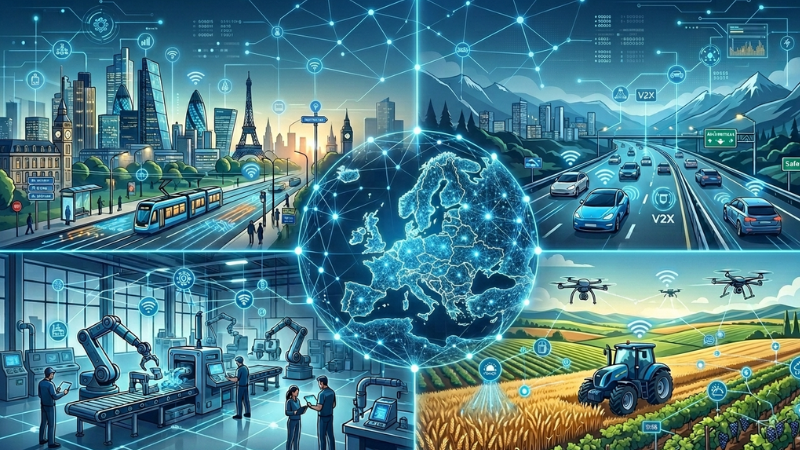
The Internet of Things (IoT) is no longer just an idea for the future. All over Europe, billions of connected devices are changing how cities run, how cars talk to each other, how factories make products, and how farms use resources. Even if most people do not notice these changes every day, IoT is quickly becoming a key driver of Europe’s digital transformation.
 Follow us
 Follow us
From smart traffic systems in cities to precision farming in the countryside, it helps businesses and governments become more efficient, save money, and achieve sustainability goals. IoT is becoming more important in determining the future of Europe as the continent makes significant investments in green initiatives and digital infrastructure.
What Is IoT and Why Does It Matter?
The Internet of Things is a network of physical devices connected to the internet that collect, share, and analyze data. These devices can be sensors, cameras, vehicles, machines, appliances, and many other everyday objects.
IoT systems gather information and make decisions in real time, so organizations do not have to rely only on people to monitor things. This helps them respond more quickly, run operations better, and cut down on waste.
RECOMMENDED FOR YOU
Smarter Scheduling, Happier Clients: Why Businesses Can’t Ignore Time Management
Team SR
Sep 18, 2025


For Europe, IoT is especially important because it supports several major priorities: smart urban development, sustainable transportation, industrial modernization, environmental protection, agricultural efficiency, and energy conservation. Across these areas, real-world IoT connectivity case studies clearly demonstrate how connected systems are already delivering measurable impact at scale.
With better 5G networks and more cloud computing, the number of IoT devices in Europe is growing quickly.
Smart Cities Are Becoming Smarter
More and more European cities are using IoT technology to make public services better and manage cities more efficiently.
Intelligent Traffic Management
Every year, traffic congestion costs cities millions of euros. In order for traffic control systems to automatically modify signal timings, IoT sensors and cameras monitor how cars travel in real time.
These smart systems can:
- Reduce traffic jams
- Shorten commute times
- Lower fuel consumption
- Decrease carbon emissions
Cities like Barcelona, Amsterdam, and Copenhagen have put in place advanced smart mobility solutions that depend on connected infrastructure.
Smart Street Lighting
Many European muniMany European cities now use streetlights powered by IoT, with motion sensors and remote monitoring systems.:
- Dim when roads are empty.
- Brighten when pedestrians approach.
- Report maintenance issues automatically
- Reduce electricity consumption
This leads to lower costs and better energy efficiency.
Waste Management Optimization
Connected waste bins let collection services know when they are almost full. Instead of sticking to set schedules, waste trucks can use real-time data to plan the best routes.
This approach helps cities:
- Reduce fuel use
- Lower emissions
- Improve cleanliness
- Save taxpayer money
Connected Cars Are Changing Europe is a top automotive market, and IoT is now a big part of modern vehicles. European vehicles.
Real-Time Vehicle Monitoring
It Connected cars continuously gather information about:
- Engine performance
- Fuel efficiency
- Tire pressure
- Battery health
- Driver behavior
Car makers can use this data to spot maintenance needs before bigger problems happen.
Vehicle-to-Vehicle Communication
Cars interacting with road infrastructure: Cars that can talk to road infrastructure and to each other will be key for future transportation systems. Change traffic data
- Inform drivers of possible hazards.
- Increase traffic safety
- Promote the usage of driverless cars
Automakers that continue to make significant investments in connected mobility solutions include Mercedes-Benz, Volkswagen, and BMW.
Factories Are Entering the Industry 4.0 Era
Manufacturing is oManufacturing is one of the areas changing the most because of IoT.
Conventional maintenance Plans frequently result in unplanned equipment failures or needless downtime. The capacity to keep an eye on machines and spot wear indicators before they break down.
Some of its Advantages include:
- Less downtime
- Reduced maintenance expenses
- Extended equipment life* Increased output
Smart Production Lines
During production, connected machines share information with each other. Makes it possible:
- Instantaneous quality assurance
- Quicker modifications to production
- Improved distribution of resources
- Less waste
To stay competitive worldwide, many European companies are using Industry 4.0 strategies.
Precision Farming
One of the most important ways IoT is changing agriculture is through precision farming. Important data regarding soil and environmental conditions is continuously gathered by sensors placed across fields. These tools give farmers a thorough grasp of what their crops require at any given time by measuring variables including soil moisture, nutritional content, temperature, and humidity.
Farmers can use this information to make well-informed decisions about crop management, fertilization, and irrigation instead of depending on conjecture or conventional farming schedules. As a result, crop yields frequently increase, operating costs can be decreased, and resources are used more effectively. Precision farming is assisting European agriculture in producing more while using less at a time when sustainability and food security are becoming more and more crucial.
Smart Irrigation Systems
Many parts of Europe still worry about not having enough water.
IoT-powered irrigation systems automatically adjust water usage based on:
- Weather forecasts
- Soil conditions
- Crop requirements
This helps save water and keeps crops healthy.
Livestock Monitoring
Wearable sensors attached to livestock allow farmers to monitor:
- Animal health
- Activity levels
- Feeding patterns
- Location tracking
Finding health problems early can help farmers avoid losses and take better care of their animals.
Sustainability Benefits of IoT
One of the main reasons Europe is adopting IoT is to support sustainability.
Organizations benefit from connected systems:
- Cut back on electricity use
- Reduce waste
- Lower greenhouse gas emissions
- Boost the effectiveness of resources
IoT directly helps the environment, whether it is a factory saving energy, a city improving traffic, or a farm using less water.
Connected technology is expected to become even more important as Europe works to meet its climate goals.
Challenges Still Remain
IoT has some drawbacks as well. Such as Potential entry points for hackers when more devices are connected. Organizations must invest in strong security procedures to protect sensitive data.
Data Privacy Concerns
Europe has strict privacy rules, so businesses must make sure their IoT systems follow data protection laws. Structure CostsSetting up large IoT networks often means spending a lot on sensors, connections, and cloud systems.e.
Interoperability Issues: Many devices and platforms use different standards, which makes it harder to connect everything together.
Solving these challenges is key to getting the most out of IoT in Europe.
The Future of IoT in Europe
The next stage of The next wave of IoT growth will likely come from advances in the use of artificial intelligence:
- The use of edge computing
- Digital twins
- Self-sufficient systems
As these technologies improve, IoT networks will get faster, smarter, and better at handling complex tasks with less help from people.
Conclusion
Europe's cities will become mEurope’s cities will be more productive, its transportation networks more connected, its factories more efficient, and its farms more sustainable. Works quietly behind the scenes, but its impact on Europe . From reducing traffic congestion and supporting electric vehicles to modernizing factories and enabling precision agriculture, connected devices are transforming nearly every aspect of daily life and economic activity.
IoT will keep driving Europe’s technological and sustainable future as long as governments, businesses, and communities keep embracing digital innovation. Millions of connected devices are slowly making cities smarter, industries stronger, transportation safer, and farming more efficient, but this change will take time.
FAQs
What exactly is IoT in simple words?
The Internet of Things, or IoT, is a system in which common machines and gadgets are linked to the internet and may exchange data with one another. This enables them to operate more intelligently and frequently without continual human intervention.
Why is IoT such a hot topic these days?
Because IoT is altering how we work and live. IoT is improving the speed, safety, and efficiency of numerous systems, from connected cars and smart traffic lights to automated industries and contemporary farms.
How does IoT make cities smarter?
IoT helps cities collect real-time data from sensors placed on roads, streetlights, public transport systems, and waste bins. This information helps city authorities improve services and reduce unnecessary costs.
Is it possible for IoT to actually lessen traffic jams?
Indeed. Real-time traffic flow analysis allows smart traffic systems to modify signal timings. Travel times are shortened, fuel is saved, and traffic congestion is lessened.
What distinguishes connected cars from ordinary cars?
Cloud-based services, road infrastructure, and other automobiles can all communicate with connected cars. They can monitor the condition of the car, give navigation updates, and even warn drivers about possible dangers.
What does supply chain visibility mean?
It means businesses can track products throughout their journey—from manufacturing to delivery. With IoT, companies know where shipments are, how they are being stored, and when they are expected to arrive.
Is IoT only useful for large businesses?
Not at all. Small businesses, farmers, local governments, and even individual households can benefit from IoT technologies through better efficiency, automation, and cost savings.
Recommended Stories for You


Kailee Rainse Dec 1, 2025

Team SR Oct 13, 2025

Team SR Jan 27, 2026
Team SR May 13, 2026

Team SR Mar 26, 2025
Trending Stories

How to Cope with a Startup Closing: Ruslan Tymofieiev Breaks Down Main Points
Modern Slavery Policy vs Statement: Why You Need Both
The Future of PropTech: How AI Interior Design Startups Are Transforming Real Estate and Home Renovation Markets

Streamlining Payments: A Guide for Service-Based Businesses

The Connection Between Hosting and Brand Reputation

F-01 Fireguard Practice Test 2025: Complete Study Guide to Pass Your Fire Safety Exam with Confidence
Top Influencer Marketing Agencies in Europe for Startups in 2025

Top Digital Marketing Agencies According to Client Reviews